

Helsinki Lab of Interdisciplinary Conservation Science
Helsinki, Finland
Joined March 2019
- Tweets26
- Following167
- Followers383
- Likes143




🌟Paper out in Nature Review Biodiversity: "Global Trends and Impacts of the Online Illegal Wildlife Trade." Our paper provides a comprehensive overview of how online illegal wildlife trade threatens species, ecosystems, and public health. Link: rdcu.be/fBDcI


🌍 HELICS at #ECCB2026! 🌱
• @Miquel_TT: Large carnivores & online news media , 7 July, 15:10.
• Federico: Biodiversity complexity , 8 July, 10:00.
• Haozhong: Birds & conservation interest , 9 July, 11:30.
📍Want to learn more about our work? Come meet us at the conference!


🚨🚨New publication: “Community-level functional stability in East African herbivores amid major environmental change”
Interdisciplinary work with contribution from #HELICS , advancing understanding of ecosystem resilience and functional stability. 🔍
sciencedirect.com/science/ar…

New research! Lab founder Enrico di Minin is an author on this paper exploring the cultural differences in attitudes towards wildlife and how these can originate from varying colonial histories. doi.org/10.1038/s41893-026-0…

🌟Excited to share a new paper from HELICS!📄✨
Based on text & image data from the Chinese social media platform Weibo, we reveal how people emotionally respond to urban nature and how different parks contribute to diverse emotional well-being benefits.🌿
doi.org/10.34133/ehs.0537

Happy Biodiversity Day! 🌱🐼🌍

Biodiversity is the variety of life on Earth — from plants and animals to tiny microorganisms — that keeps our ecosystems healthy and resilient.
Yet habitat loss, pollution, and climate change are pushing nature to the brink.
This #BiodiversityDay, find out how you can take action: cbd.int/biodiversity-day/202…


Brilliant work from our Data Science MSc students today! New dashboard tracking online interest in species worldwide 📊🦎🌿
Discovering which species people search for—and what that tells us about conservation priorities. Stay tuned!
#DataScience #BiodiversityConservation

🚨🚨New research alert: Spotted hyaena distribution in Kenya is shaped not just by prey or livestock, but by humans’ propensity to kill them.
Understanding human behavior is key to carnivore #conservation. 🌍🍪
Open access: sciencedirect.com/science/ar…
@helsinkiuni

HELICS retweeted

The planet’s undisturbed old-growth boreal forests may be far more important in the fight against climate change than previously realized, according to a new Science study, which finds that primary forests in Sweden store over 70% more carbon than managed secondary forests.
Learn more: scim.ag/4uL06hL

Conservation planning experts in training ✨ The annual Spatial conservation planning course at #HelsinkiUni is well underway, led by HELICS members. Today is our second practical on using the cutting-edge Zonation 5 conservation prioritization software. Exciting stuff! 🖥️🌍🌿

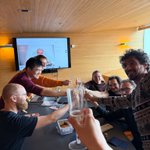
Great catch-up and celebrations for a new paper out!
At today’s HELICS meeting, we had our regular catch-up, shared recent research progress, and celebrated Federico’s new paper out with oat cookies, macarons and bubbles.
Cheers!🥂


What causes biodiversity loss? Land- and sea-use change, overexploitation, invasive species, climate change, and pollution are the direct drivers pushing species towards extinction - but what are the indirect drivers behind them? 📉(1/2)
New in @PLOSONE: Our protocol for a global systematic map of the indirect drivers of biodiversity loss. Full paper: doi.org/10.1371/journal.pone…
Congrats to Federico Grossi & the team! 👏 #ConservationScience #Biodiversity (2/2)

Destroying wild ecosystems doesn't just reduce biodiversity but has repercussions for local communities losing ecosystem services and contributes to the climate disaster by eliminating these valuable carbon sinks. At HELICS we're examining the drivers behind trends like this.

Deforestation gets all the attention, but wetlands and grasslands like Brazil’s Cerrado are being converted to agriculture at four times the rate of forests worldwide. Half of the converted land becomes pasture and 27% becomes food crops. In PNAS: ow.ly/XhkI50YmuQk

ALT Row crop field located on converted Cerrado savannah vegetation, Bahia, Brazil. CREDIT: Samuel A. Levy, ([email protected])
HELICS retweeted

Social media may provide data that can revolutionise our understanding of species distribution - and strengthen global biodiversity datasets, for example.
New paper by iDiv alumnus @shawan_c in Conservation Biology: idiv.de/social-media-images-…

ALT Tawny coster / Credit: S. Chowdhury
Happy #WorldWildlifeDay! Let's keep doing the work to bring more and more wild populations towards recovery.
One million of the world’s estimated 8 million species are threatened with extinction.
But hope is not lost. #GenerationRestoration is reviving habitats, bringing back homes for threatened species.
This #WorldWildlifeDay, discover six species making a comeback:
unep.org/news-and-stories/st…

It’s the Saimaa ringed seal! 🦭
1️⃣ Population: <200 in Finland
2️⃣ Tracks: Oversized paw prints in snow
3️⃣ Habitat: Only in Lake Saimaa
Want to know more?❄️ Take a look at: pnas.org/doi/full/10.1073/pn…
#SaimaaSeal #WildlifeConservation

Guess the endangered species 🌊
1️⃣ Fewer than 200 of us live in Finland
2️⃣ We leave oversized tracks in fresh snow
3️⃣ Our home is a freshwater lake in Saimaa
Did you guess? 🤔
#EndangeredSpecies #Conservation