

PhD @NYUTandon | Research Scientist @AdobeResearch | Visualization | Data Management
Hong Kong and California
Joined July 2010
- Tweets510
- Following497
- Followers400
- Likes2.2K







Pinned Tweet
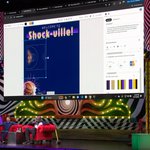
Really happy to finish watching #ProjectInfographIt at #AdobeSummit, developed by @eutopi_ and me in @AdobeResearch. We built a system to author infographics with a text paragraph that describes the key message of the graphics using Generative AI #GenAI technologies.

Gromit Chan 🇭🇰 retweeted

So being an area chair at @NeurIPSConf now means that I have to decide whether the author LLM won the arguments with the reviewers LLMs?
Gromit Chan 🇭🇰 retweeted

What's left for humans in a world where machine intelligence has so many advantages?
I recently got a Tesla, and using full self-driving has been a wake up call to just how many advantages AI has over humans. The few times I disengaged it because I thought it was going into the wrong lane, it turned out that the car was right and I was wrong. I realized that there is no hope of me driving better than a neural net that knows every road, sees in every direction at once, and never gets tired or distracted.
Given that AI has certain inherent advantages over human intelligence, what kind of moats will remain for us as humans? It's a big question.
One short-term answer is that the world we live in was created for humans, and in some domains, AI has not closed the gap yet. For instance, AI still struggles to use internet user interfaces. While any computer-literate human can navigate a web page with ease, AI is still not great at making accurate clicks and drags because image embeddings are not optimized for such precision. If the internet were designed to be fed into language models instead of rendered as visual interfaces for humans, AI would obviously far exceed humans. But for now, language models still need to be retrofitted to our legacy infrastructure.
Robotics is another area where we humans have a home-field advantage. Most tasks in the physical world are designed around fingers and opposable thumbs, which have been pretty hard to build into robots so far. While it is clear that machines can outperform humans in environments optimized for automation, like large-scale manufacturing lines, for now, most of the world is still built for humans.
However, these capability gaps are only temporary. There will surely be a day when machines click faster than us and have superhuman general dexterity. What are the real moats that humans will have?
Anything involving private knowledge that language models do not have access to feels like a solid moat to me. Romantic matchmaking and high-end real estate are two examples where inventory is often not advertised publicly and matches are made through being in the right circles. Venture capital is another example—although some research and decision making can be automated with AI, much of success hinges on understanding trends ahead of time and connecting the right people, both of which require private knowledge. While machines can and probably will have increasing access to some types of private knowledge, I think there will still be some types of private knowledge that only humans know. I do not see a path for AI to win when critical knowledge is closely guarded in human circles.
A second area where humans seem to have a real moat is in entertainment and the arts, which are inherently valued for their human aspects regardless of how well machines can do them. Watching Usain Bolt sprint one-hundred meters is beautiful as an expression of the peak of human ability, even though cars can drive much faster. Watching chess at the amateur or intermediate level is more relatable and satisfying than watching two superhuman AIs play each other. The value of art comes from the creation process, which is why replicas are not as valuable as originals. These types of work feel like they will continue to have markets even as we advance towards superintelligence.
More broadly, human presence is a feature that will be, by definition, challenging for AI to automate. For example, a teacher remembering your name or a parent supporting you is valuable even though AI can easily remember your name and probably give better life advice. Someone spending part of a finite life on you counts because their time runs out. As a personal anecdote, I remember the first time I worked with someone who I considered an amazing AI researcher. His advice was solid but what was more important was that I believed I could do great work with him as a collaborator and I raised my own standards. Over the past decades, the development of technology has divided us in some ways, but hopefully AI brings us closer to a world where human presence is reemphasized.
Intelligence has been the defining feature of humans and it will be a big change for AI to automate that over the coming decades. In the near term, certain types of intelligence will become very cheap and automate away old jobs, but the moats I described above will not be the only places where humans can hold value. In the same way that computers took away the jobs of secretaries and manual accountants but created far more jobs via the IT industry, I believe there will be much more demand for services created by productive AI-augmented humans, perhaps for services we cannot yet imagine in today’s society. Just seeing how this story plays out will be an adventure in its own right.
Gromit Chan 🇭🇰 retweeted

Animate / アニメイト, Japan’s largest anime retailer, is working on its first Bay Area location in SF Japantown, according to public records 🌁
📍New People Building / 1746 Post St

Gromit Chan 🇭🇰 retweeted

Terence TaoのICM2026の一般講演スライドが素晴らしい。『AI時代の数学』
teorth.github.io/tao-web/sli…
Gromit Chan 🇭🇰 retweeted

The problem with Anthropic's consciousness paper
My last post got more attention than I expected, and the question I keep getting is some version of "okay, so what is actually wrong with the paper?". Let me try to explain.
First, the core result is fine. Reading out intermediate-layer representations and asking which ones the model can actually use downstream is a real question, and people have been poking at it for years. The J-lens is a reasonable tool. If you strip the paper down to the linear algebra, it is a decent piece of interpretability work.
My problem starts one level up. This did not need to be a paper about consciousness. It did not need global workspace theory, it did not need the brain, and it did not need the word "conscious" anywhere near it. The same experiments, the same figures, the same tool, all survive perfectly well as plain interpretability. Someone chose to wrap it in neuroscience. That choice is the product, not the science.
At the end, this is the main thing. Almost everything Anthropic ships as blogs/papers/posts is PR. They build genuinely good models and they are even better at packaging them.
A publication used to carry a specific kind of weight. People spent years on something and wanted to tell the world what they found. It happened mostly in academia, with a few industrial labs as the exception, Bell Labs, IBM and Google (for a while), but the distance between the paper and the product was real. When you read a paper you could assume the authors were not trying to sell you something underneath the ideas. There were outliers, but they were the minority, and the researchers you trusted would not risk their name on a narrative.
We are not in that world anymore. Every startup now publishes blogs and papers to raise its visibility, and that is fine, that is marketing and everyone knows it. Anthropic does something more effective. They erase the line between legitimate research and PR. We get confused because the models are so good, so we assume the outputs are research. A lot of the time they are selling us something. Sometimes it is "our models are safer," sometimes it is "our models are more capable," sometimes it is positioning for regulation. The consciousness framing serves a narrative they already committed to, models that look more and more like the brain, from a lab that has publicly tied itself to AI welfare and moral patienthood. The direction of the push is not subtle.
If you want the sharper version of the technical objection (disclaimer: I'm not an expert) Global workspace theory is a theory of access, not experience. Ned Block's distinction between access consciousness and phenomenal consciousness exists precisely to block the inference this framing invites. Access tells you nothing about whether there is anything it is like to be the system. The paper is careful enough to say it demonstrates no subjective experience. But that disclaimer is not what propagates. What propagates is "consciousness" in the same sentence as "Claude," published by Anthropic, borrowing the vocabulary of neuroscience to lend biological weight to a subspace of activations. The paper keeps the rigor of Block's vocabulary and drops the rigor of his argument. Most people who see the headline will never read either one.
Of course a lab named Anthropic is going to anthropomorphize its models. But we should be able to separate a good interpretability tool from the story it is dressed in.
So that is my problem. Not the math. The narrative bolted onto the math, and our willingness to keep calling it research.
Gromit Chan 🇭🇰 retweeted

Every 2026 World Cup match as a 3D "data portrait" — each built from ~1,500 events.
Not to show stats. To capture the emotion.
Yesterday: Argentina 0–2 → 3–2 vs Egypt 🇦🇷
96 matches, all interactive 👇
wc26.bogachev.fr
#WorldCup2026 #dataviz #dataisbeautiful #football #threejs #generativeart #Argentina #FIFA
Gromit Chan 🇭🇰 retweeted

Ebere Eze reacts to the Man City bottle-fan 😅
He shared the picture to his Instagram story after Arsenal won the league on Tuesday 📲


Gromit Chan 🇭🇰 retweeted

Keep getting rate-limited by Claude, so I tried out DeepSeek V4 for the first time.
After 10M+ tokens, holy crap the cost is ... 🤯

Gromit Chan 🇭🇰 retweeted

Hey now, this took a ton of effort.
Design doc, cross org alignment, getting stakeholder buy in, lawyer approval, security review, leads sponsorship, and finally getting an intern to write the code, iterating until it fits the readability style guide in all 7 languages that were needed for this, fighting the 4 rollbacks it received, and finally writing the launch doc thanking everyone who ever sat in a related meeting or left any comment on the doc.
This is important groundwork to eventually making it do useful things!
Gromit Chan 🇭🇰 retweeted

Simply adding Gaussian noise to LLMs (one step—no iterations, no learning rate, no gradients) and ensembling them can achieve performance comparable to or even better than standard GRPO/PPO on math reasoning, coding, writing, and chemistry tasks. We call this algorithm RandOpt.
To verify that this is not limited to specific models, we tested it on Qwen, Llama, OLMo3, and VLMs.
What's behind this? We find that in the Gaussian search neighborhood around pretrained LLMs, diverse task experts are densely distributed — a regime we term Neural Thickets.
Paper: arxiv.org/pdf/2603.12228
Code: github.com/sunrainyg/RandOpt
Website: thickets.mit.edu


These customer facing AI products have zero stickiness nowadays. On random days I feel like using Codex or Claude Code and I just switch them effortlessly.
Gromit Chan 🇭🇰 retweeted

I'm not joking and this isn't funny. We have been trying to build distributed agent orchestrators at Google since last year. There are various options, not everyone is aligned... I gave Claude Code a description of the problem, it generated what we built last year in an hour.
Gromit Chan 🇭🇰 retweeted

Yikes. Kids, don’t lie on your college applications. Below is what happened when an admissions officer emailed me with questions about a supposed AddisCoder alum who applied to their university.

Gromit Chan 🇭🇰 retweeted

They should also do the from PhD to homeless: how I found my way into poverty and insane job market.

"I was late learning about science … For much of my scientific training I feared I was behind my peers. But I have been able to close the gap—and that is something to be proud of." #CelebrateFirstGen scim.ag/43x2o7j

ALT A conceptual illustration of a person with a smaller version of themselves inside their head walking to a bright open door. Text is: From homeless to Ph.D.: How I found my way into research.
Gromit Chan 🇭🇰 retweeted

Heading to Vienna for #IEEEVIS ✈️. Join us tomorrow (Mon, Nov 3) 9 AM in Hall M1 for the 1st VISxGenAI Workshop. Can’t wait to see the AgenticVIS Challenge awards and all the amazing works : )
visxgenai.github.io/


I'm happy to share that my last year's intern @donghoon_io's work on exploring #AI #Agents as real-time collaborators in poster design has been accepted to #UIST2025!

This work also played a small role in inspiring #ProjectGetSavvy from SUMMIT Sneaks last year (you can read the story behind it here: research.adobe.com/news/the-…).
