

Improving access to data about Greece
Joined July 2024
- Tweets732
- Following6
- Followers64
- Likes0




Income inequality in Greece
#greeceinnumbers
greeceinnumbers.com/en-gb/Li…
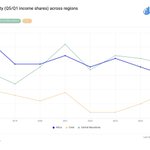
The richest 20% of the population (Q5) receives almost 40% of total disposable income, that is income after taxes and social contributions, including pensions and social benefits

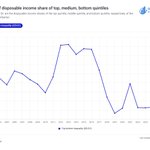
The Gini coefficient measures overall income inequality, ranging from 0 (perfect equality) to 100 (maximum inequality). In 2025, it stood at 31.6, significantly below its levels during the economic crisis.

Εισοδηματική ανισότητα στην Ελλάδα
#greeceinnumbers
greeceinnumbers.com/el/Livin…
Το πλουσιότερο 20% του πληθυσμού (Q5) λαμβάνει σχεδόν το 40% του συνολικού διαθέσιμου εισοδήματος

Ο δείκτης Gini αποτυπώνει τη συνολική εισοδηματική ανισότητα, με τιμές από 0 (απόλυτη ισότητα) έως 100 (μέγιστη ανισότητα). Το 2025 διαμορφώθηκε στο 31,6, σημαντικά χαμηλότερα από τα επίπεδα της οικονομικής κρίσης.

Although microenterprises accounted for 42% of employment, they generated only 23% of total value added. By contrast, large enterprises accounted for 18% of employment but generated 35% of value added.

These differences reflect substantial variation in productivity. In 2024, average value added per person employed in the business economy was €30,000. In microenterprises, it was approximately half that amount (€16K), while in large enterprises it was twice the average (€60K)

90% of enterprises are microenterprises, employing up to 9 people. Only 50,000 enterprises employ 10 or more people.


Enterprises in Greece: Number, Size, Employment and Productivity
#greeceinnumbers
greeceinnumbers.com/en-gb/Se…
Approximately 965,000 enterprises operate in Greece.

