

Grew up adjacent to the oil patch. Built GreaseBook for the pumpers & producers who kept it running. Now building TinyPumper. Simple scales. Fancy fails.
Oklahoma City
Joined May 2021
- Tweets841
- Following2K
- Followers718
- Likes3.2K






Pinned Tweet
Hey Oil & Gas Operators: Got a well that's too far off the beaten path to get a pumper by there reliably?
Moving a bunch of fluid at a particular lease and it's making you nervous?
Wanna supercharge your A-player pumpers and enable them to cover more ground/wells for you?
Simply wanna know what the heck is going on at any well at any time from wherever you're at?
If so, check out the video below...
PS hardware is from tinypumper.com
Field operations run best when tools match the pace of the lease. Overbuilt software puts the brakes on a fast-moving crew.
1
1
126
This Day in Oil and Gas History
November 12, 1999 — American Chemical Society Names Discovery of Plastics a Landmark in the History of Chemistry
Few discoveries changed modern manufacturing like the plastics born in a Bartlesville, Oklahoma lab.
In 1951, Phillips Petroleum chemists Robert Banks and J. Paul Hogan found a new process for turning hydrocarbons into solid polymers.
Their process produced crystalline polypropylene and high-density polyethylene.
Refined over the years, these two plastics now show up in most of the plastic goods we use today.
Toy companies were among the first users, molding the new material into hula hoops.
On November 12, 1999, the American Chemical Society named the discovery a National Historic Chemical Landmark.
The honor was presented at the Phillips Petroleum facility in Bartlesville, where the breakthrough happened.
Today the plastics are everywhere, from your bathroom to the factory floor.
November 12, 1899 — Mary Alford and Her Nitro Factory Become Famous
In 1883, businessman Byron Alford helped start an explosives plant in the booming Pennsylvania and New York oil country.
He bought out his partner in 1888.
A decade later, Byron's health failed, and his wife Mary took over the factory.
She knew the business inside and out: buying chemicals, payroll, sales, billing, and factory operations.
By 1899, her plant turned out 3,000 pounds of nitroglycerin and 6,000 pounds of dynamite every day.
In November 1899, the New York World profiled her as the 'Only Woman in the World who Owns and Operates a Dynamite Factory.'
Why did the oilfields need all that nitro?
Crews lowered 'torpedoes' full of nitroglycerin into tired wells and set them off.
'Shooting' a well cracked open the rock so more oil could flow, an early cousin of fracking.
November 12, 1916 — The Establishment of the Forest Oil Company
When Forest Oil opened its doors in November 1916, its fresh approach to recovering more oil quickly proved groundbreaking.
The approach was simple: pump water into a formation to push the oil toward the well.
This technique, called waterflooding, soon became common practice across the oil industry.
Better waterflooding methods have stretched the lives of some wells by many years.
Forest Oil operated for nearly a century and merged with several other oil companies over the years.
Its headquarters were later located in Colorado.


5
255
This Day in Oil and Gas History
November 11, 1884 — Six Gas Companies Combine to Form ConEd in New York
In 1884, six major companies serving New York City's gas lights merged to form the Consolidated Gas Company.
That company would go on to become Consolidated Edison.
The merger was remarkable because the gas business was brutally competitive, plagued by brawls over the placement and repair of gas lines.
Workers regularly tore up city streets to lay new lines or repair old ones.
While they were at it, crews sometimes ripped out the lines of rival companies.
The first of the six, the New York Gas Light Company, was chartered by the state legislature in 1823.
Its focus was street lights rather than home lighting.
Its lamps replaced the whale oil lamps the city had used since the 1760s.

2
138
Big vendors love to sell 'full integration.' Then pumpers end up copying and pasting into yet another spreadsheet. Simpler wins.
67
This Day in Oil and Gas History
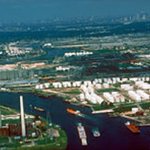
November 10, 1914 — Woodrow Wilson Opens the Houston Ship Channel
Oil discoveries and booming farm trade jammed ships into the Port of Houston in the early 1900s.
The port needed a better path to the sea, so the Houston Ship Channel was born.
Workers dredged the swampy, overgrown Buffalo Bayou into a wider, deeper channel reaching 25 feet.
President Woodrow Wilson opened it on November 10, 1914, without leaving Washington.
From the White House, he pressed a button wired to a cannon in Houston.
The cannon boomed, and the channel was open for business.
November 10, 1854 — George Bissell Buys Land For First Commercial Oil Well
On November 10, 1854, George Bissell bought 105 acres of Pennsylvania land dotted with oil seeps.
The seller was the lumber firm Brewer, Watson & Company.
Bissell believed the crude oozing from the ground could be refined into kerosene, a cheap fuel for lamps.
To test the idea, he hired Yale professor Benjamin Silliman Jr. to analyze the oil.
Silliman's report confirmed it: refined rock oil made an excellent lamp fuel.
Bissell's company then hired Edwin Drake to drill at the site of the seeps.
In 1859, Drake completed the first commercial oil well in the United States.


3
208
This Day in Oil and Gas History
November 8, 1880 — Edwin Laurentine Drake Dies
Edwin Drake reportedly drilled only three wells in his life.
Yet he is remembered as the father of the American oil industry, the first American to successfully drill for oil.
His well at Titusville, Pennsylvania first produced oil in 1859, launching the US petroleum industry.
Drake died on November 8, 1880 in Bethlehem, Pennsylvania, twenty-one years after his famous strike.
The oil business made many men rich, but not Drake.
He lost his money in speculation.
He also never patented his drilling method.
Ill and living in poverty, Drake was voted a pension by Pennsylvania in recognition of his achievement.
Full recognition came only after his death.
Standard Oil executive Henry Rogers had Drake's remains moved back to Titusville in 1902.
There a monument rose in his honor, featuring a bronze statue called 'The Driller.'

1
4
283
Enterprise software for the oil patch often grows out of touch. Every new feature adds bloat but rarely helps a field team work faster.
3
230
Trying to automate every well only creates new ways for things to break. Over-automation leaves small operators fragile, not free.
84
Field-first thinking is rare in enterprise oilfield tech. Most software is built for reports, not repairs.
1
1
137
Most production teams count on SCADA to spot every problem. But many leaks still get found by pumpers walking the lease.
99
The oil field rewards reliable call-ins from pumpers more than fancy dashboards in the office. Field-first thinking is rare in most tech rollouts.
95
You can't automate away every site visit. But you can stop sending a pumper just to check a tank that's already full.
1
120
Most operators know site visits are expensive. The pitch from enterprise SCADA is to cut them to zero. The best operators cut the waste, not the judgment. Tools should help pumpers skip what's useless, not skip the well.
2
5
274
Pattern: Small operators move faster because every tool must pay for itself this month. There's no room for pet projects or bloated platforms. Necessity strips away theater.
97
Most oil field communication apps fail the moment the pumper has no signal. Simple matters: fast syncing, offline notes, quick checks. The right tool never slows down field work.
1
3
275
This Day in Oil and Gas History
October 28, 1926 — Oil Discovered on a Failing West Texas Ranch
In 1926, rancher Ira Yates was struggling to hold onto his land in dry West Texas.
Water was scarce, predators took his livestock, and the bills kept coming.
To pay his taxes and mortgage, he pushed oil men to drill on his ranch.
Transcontinental Oil and partner Mid-Kansas Oil and Gas took the gamble on a wildcat well in remote Pecos County.
Drillers used a standard cable-tool rig and spent less than $15,000 on the hole.
On October 28, 1926, the Ira Yates 1-A well struck oil at a shallow 992 feet.
It flowed 450 barrels a day, and it had tapped the rich Permian Basin.
More wells followed with far bigger flows.
The field sat miles from any pipeline, so early production went into storage tanks.
Yates reportedly later received a check for $18 million as his share of the strike.
The gamble on his failing ranch paid off in a big way.

2
13
914
On most leases, one good pumper with a simple system beats five apps and a dozen alarms. Simplicity scales better than tech in oil and gas.
1
2
188
This Day in Oil and Gas History
October 27, 1938 — DuPont's Synthetic Yarn Is Dubbed "Nylon"
Nylon seems ordinary today, found in clothes and gear everywhere.
But when DuPont first created it in 1935, it was close to miraculous.
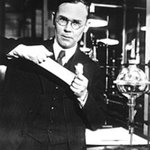
A DuPont team led by Dr. Wallace Hume Carothers built the fiber from simple carbon-based chemicals, at first derived from coal, air, and water.
On October 27, 1938, DuPont announced the new fiber's name: nylon.
Chemists knew it as fiber 66, because each of its two building blocks contains six carbon atoms.
Nylon became the first truly successful commercial synthetic polymer.
It went into stockings, tents, safety equipment, and countless other goods.
It found uses in medicine and even aerospace.
Today nylon is made mostly from petroleum, proving how revolutionary this fiber really was.
October 27, 1763 — William Maclure Is Born
William Maclure was born in Scotland on October 27, 1763.
He went on to create some of the earliest geological maps of the United States.
Maclure came to America in 1797 and explored the eastern part of the country.
In 1808, he traveled from Maine to Georgia, studying the rocks as he went.
His first geological map was published in the Transactions of the American Philosophical Society in 1809.
He correctly identified the Appalachian rocks as among the oldest in the region.
He also mapped out regions of distinct geology across the young country.
His maps and studies made him famous in scientific circles.
When Benjamin Silliman and others formed the American Geological Society in 1819, Maclure became its first president.
For his work, many geologists call him the Father of American Geology.
October 27, 1923 — Lion Oil Refining Company Is Founded
October 27, 1923 marked the birth of the soon-to-be-famous Lion Oil Refining Company of El Dorado, Arkansas.
Thomas Harry Barton reorganized his El Dorado Natural Gas Company into Lion Oil after acquiring a sizable refinery the year before.
The company grew quickly and was soon processing thousands of barrels a day.
Within a few years it purchased oil wells of its own to operate directly, riding southern Arkansas's oil boom.
Lion Oil was later bought by and merged into Monsanto, retiring the well-known leaping lion logo for a time.
But Lion Oil is still around today, and the name is still used to market a range of petroleum products.


81
This Day in Oil and Gas History
October 26, 1970 — Joe Roughneck Statue Dedicated in Texas
In the 1950s and 60s, Texans everywhere knew the cartoon face of Joe Roughneck.
Artist Torg Thompson created the square-jawed character for Lone Star Steel Company ads, and the whole oil industry soon adopted him.
In October 1970, Joe got the credit he deserved.
Governor Preston Smith dedicated a Joe Roughneck statue near Boonsville, Texas, on the 20th anniversary of the giant Boonsville natural gas field.
Lone Star Gas Company had discovered the field in 1950 with its Vaught No. 1 well.
That discovery well alone produced 2.5 billion cubic feet of gas in its first 20 years.
By 2001, the field had produced 3.1 trillion cubic feet of gas from about 3,500 wells.
Joe Roughneck busts also mark oilfield monuments in Joinerville, Conroe, and Kilgore.
Joe is an award, too.
Since 1955, the Chief Roughneck Award has honored the achievements and character of one petroleum industry leader each year.
Thompson's sculpted bust is handed out every time the coveted award is presented.

1
3
145