







mikail retweeted

It sounds insane, because we're used to a particular way of doing research: of giving and receiving credit, of counting beans, of hiring, recruiting, and promoting. And the machine god came to crush that game. The old game is dead. That reasonably causes incredible amounts of dread for many folks, who understand this as the death of research.
But it's not about Research, but the way we played the game. The old game was built around scarcity, scarce compute, scarce students, scarce hours, scarce people who knew the right technique and method etc. Most of a research career went into managing and playing along these constraints. Those walls just came crushing down. One person with a good question can now do what used to take a lab and five years.
You do not need permission, you do not need a big grant, you do not need a professor or researcher title, or a team of twenty experts , or one thousand gpus to stare straight into the first light of the universe.
How absolutely incredible

mikail retweeted

I just merged two of the highest grossing games ($5 billion+) in history using fable 5.5 (rerouting) in just one shot!
I brought Minecraft to the Pokemon world, you can now craft, build and catch pokemon all in the iconic pallet town.
There's no longer any reason for anyone not to be making their own billion dollar game idea, it's literally one click away now.
With everyone now having the ability to bring their imaginations to life, expect to see a whole lot more games just like this. We're witnessing the dawn of incredible crossovers across the gaming world!
Try it out here: pokemon-redstone.vercel.app
mikail retweeted

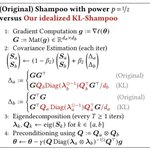
I think one possible implication is that Muon learns more robust representations. Not sure though.

mikail retweeted

What if momentum accumulation in Adam is "wrong"? In 2020, we proposed LaProp. It performs momentum accumulation after normalization, which makes training much more stable across all parameter ranges - maybe it could be useful today.
Read it here: arxiv.org/abs/2002.04839


mikail retweeted

I am not joking when I say this RuneScape economic model is very valuable for thinking about investing over the next 3-5 years.

mikail retweeted

Weird economics up on the agent-only runescape server
- Low cost of labor makes most commodities abundant
- Currency inflation means trading goods for goods, nobody really wants cash
- Huge swarm contention as certain resources with limited respawn rate become valuable

mikail retweeted

We’re excited to announce DiG-bench, a new benchmark for discovery!
Over the last few weeks we’ve been testing frontier AI models on our novel discovery games and seeing how they score. Each game is a text-based environment, so they probe discovery capabilities in the natural domain of language models, rather than requiring additional, potentially confounding, visual understanding.
TL;DR frontier models have improved a lot over the last few months. But they are still stumped by some surprisingly simple problems, even in their native text domain.
With
@cocosci_lab (@Princeton) @MITCoCoSci (@MIT) @SchmidhuberAI (@KAUST_News) @misovalko (@Inria) @tri_dao (@PrincetonCS) @RMBattleday @zebkDotCom @FraserGreenlee @akaijsa @ClareMaguire @TimMuller1 @kubicek_ales @physicscat0x7d @SukritSumant @thoughtchannel_
(1/5)


mikail retweeted

Computer science is gradually returning to the domain of physicists, mathematicians, and electrical engineers as large language models automate much of what we currently call software engineering.
The field’s center of gravity is shifting away from manual code writing and toward deeper theoretical thinking, mathematical insight, and systems-level reasoning.
mikail retweeted

Was just as excited as everyone else to read this cool new paper, and it felt like a trip down memory lane!
XM seems to be the same as IMLE, and the motivation and insights are also similar. Having worked on IMLE for years, I'll provide some context for my followers 👇.
1/n

We discovered a third pretraining axis beyond parameters and data: exploration.
Scaling exploration monotonically improves existing models across images/video/language, and unlocks end-to-end generation.
In the simplest case, it's just a for loop.
Introducing Explorative Modeling.
TLDR:
- Gains from exploration grow with scale: 7%→36% as data scales, 13%→23% as parameters scale, and gains double at 3× the compute
- Adding exploration to ~SOTA baselines improves data efficiency by 6.2×, FLOP efficiency by 4.1×, parameter efficiency by 47%, and hits a near-SOTA 1.43 unguided FID on ImageNet
- Exploration lets you trade training compute for generalization, and scales how end-to-end your generative model is
- End-to-end Explorative Models (XMs) match diffusion performance on control tasks with up to 256× less inference compute
🧵Thread:

mikail retweeted

1/7 Stop by our #ICML2026 spotlight poster next week!
icml.cc/virtual/2026/poster/…
We unify self-supervised learning (SSL) algorithms: contrastive, VICReg, stopgrad and more, under a single principle: latent distribution matching (LDM).
Paper: openreview.net/forum?id=schX…

mikail retweeted

I'm excited to share that I have joined NVIDIA as a research scientist in the Applied Deep Learning Research lab. I look forward to advancing Nemotron and the open-source AI model ecosystem!
I'm grateful to the team at @essential_ai and am proud of what we've managed to build with such a small team over the last year. It's truly been an honor working with each and every one of you.
mikail retweeted

How anthropic would look like soon


A bit of news: After nearly 9 years, I have decided to leave Google DeepMind and join Anthropic (after taking some time to recharge). I am incredibly grateful for my time at GDM. @demishassabis took a real chance letting me lead the AlphaFold team just six months after finishing my PhD, and the entire GDM team taught me so much about how to do great science. GDM is a special place, and I’ll still be excited to hear about what amazing things they discover next.


mikail retweeted

> good pretrain research might very well have already delivered you a 10x more efficient (and likewise, better under the same compute) model arch compared to three years ago
goes hard, and very true 🫡

have been recently thinking about why pretrain research matters among the seemingly more crucial data/compute/rl bottlenecks and sharing my take here on what makes pretrain research (still!) vital:
1. better computational efficiency: scalinglaw shifts, 2x less FLOPS needed to achieve the same loss, etc. plus e.g. long context settings where switching to hybrid or sparse attn can save you >90% FLOPS.
many model arch / optimizer improvements can save you >20% flops needed for the same loss - those are research innovations on every axis from training iter dimension to inter-layer and intra-layer. the effect of compounded architecture advantage is very distinctive given that ur always improving against your sota baseline.
good pretrain research might very well have already delivered you a 10x more efficient (and likewise, better under the same compute) model arch compared to three years ago, and there's still obv many inefficiencies left to be optimized. over half of the compute is still spent on pretraining when you do new from-scratch model trainings rn, and having weeks & months saved there could really allow much more rapid iterations across the entire stack, compounded.
2. to train models one couldn't have been able to previously: residuals, optimizers, etc. this one's less common since most of the arch innovations don't offer more beyond the expressivity gain. but there are significant ones which can e.g. provide more stable learning dynamics (both theoretically and in practice) at all scales so one could scale up. new model configs or forms of training also come back to better efficiency
data/compute/FLOPS bottlenecks certainly exist but are relatively more orthogonal to pretrain research and imo it is unclear whether one will be a clear intelligence bottleneck a year from now than the other.
in hindsight ive been using "pretrain research" tho this itself is an inefficiency (with further inefficiencies under its scaling law) and "deep learning research" is a better phrasing.
