

The best kept secret in eCommerce. The 3PL for your favorite brand. Millions of shipments, 2-3 day delivery, dedicated teams, one perfectly placed location.
Joined March 2026
- Tweets232
- Following40
- Followers133
- Likes134





Before the first truck leaves, map SKUs, barcodes, Shopify and Amazon flows, open orders, and the go-live plan.
Every fuzzy handoff adds cost and risk to a 3PL transition.
Compare 3PLs by the total cost per order:
pick and pack, shipping, storage, materials, receiving, kitting, and inbound freight. The first number on a rate card rarely tells the whole story.
Two nodes can lower parcel costs while raising total fulfillment costs. Run the full math:
inventory split, extra freight, storage at both locations, and the parcel savings.
Add a second warehouse only when the net works (which isn't often).
Sometimes the best 3PL update is: “You caught this before we did.”
One client said our team found a pick-and-pack overcharge, explained the fix, and issued a refund before their team ever noticed.
The unboxing starts before the customer opens the box.
For a kit, the correct items, careful presentation, and a clean insert are part of the experience.
Your 3PL is handling a physical piece of your brand.
A founder told us their previous 3PL kept mixing up products with two other similar brands.
When the wrong product shows up, the customer doesn’t know whose warehouse made the mistake. They just remember your brand.
Switching 3PLs in October sounds like terrible timing.
We had a client make the move as Q4 orders and inbound inventory were rising, then added an FBM curveball during onboarding.
They called it one of the smoothest transitions they’d experienced. 😏
More warehouses ≠ lower fulfillment costs.
For a lot of e-commerce brands, multi-node fulfillment means more inventory, more stockouts, more split shipments, more complexity, and savings that disappear fast.
Before you add a second warehouse, watch this.
youtu.be/ZpZkgyNcxA8

your 3PL should feel like part of your team.
you should be able to ask hard questions and get honest answers, even when the conversation isn’t easy.
that’s partnership in practice.
“From a marketing point of view, that’s never been our bottleneck. It’s been everything else.”
- A founder doing 2,000 orders a day.
More ad spend just gets you to the operational bottleneck faster without the right partner.
Your 3PL can look fine until you try to grow.
A brand once told us they were stuck for 2–3 months on an ERP implementation because its provider couldn’t support it.
That’s not just an integration headache. It’s a growth ceiling.
Before switching to Good Company, one brand had most of its Q4 inventory sitting at its previous 3PL.
Then that provider told them it might not have anyone to box and ship it.
They had planned for Q4.
Their 3PL put it at risk.
This isn't normal. Make the switch.
Since May, we’ve shipped 992,000 components for a client.
100 miss-picks.
A 0.01% error rate.
The number is wild.
The team on the floor getting it right, day after day, deserves the credit.
The goal of warehouse automation shouldn’t be fewer people.
It should be less work that wears people out.
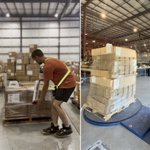
Let machines wrap the pallets.
Let humans handle the details your customers actually notice.
That’s how you scale without making fulfillment feel generic.

If we were hired to lead operations for an e-commerce company, we wouldn’t try to justify our salaries by immediately finding the cheapest 3PL.
We’d first figure out what fulfillment is actually costing the business.
Here’s how we’d approach our first 90 days:
We’d ask every 3PL:
What percentage of orders ship within SLA?
What is your same-day cutoff?
How do you handle peak volume?
Who answers when something goes wrong?
How often will we receive performance updates?
Because their operation will eventually become a reflection of ours.
The right 3PL doesn’t just move boxes.
It protects your inventory, customer experience and reputation inside the company.
That’s what we’ve built at Good Company: one centralized Midwest operation, 24/7 fulfillment, direct access to an on-site account team and same-day shipping before 11:00 am CST.
If your current 3PL is making your job harder, let’s talk.