

GMF is a nonpartisan organization that advances the transatlantic partnership to meet the challenges and opportunities of the 21st century.
Washington, DC
Joined April 2009
- Tweets44.7K
- Following3.2K
- Followers60.1K
- Likes10.1K





🇺🇸🇪🇺 Upcoming event: The 2026 Midterms: What's at Stake for the United States and Europe?
📆 Online | October 27 | 9 AM ET / 2 PM CET
The implications of the 2026 midterm elections will be felt far beyond Washington, DC. Join GMF for a conversation on the electoral landscape, the key races that could determine control of Congress, and the political dynamics shaping the campaign, featuring GMF’s @PBednarczyk, J.C. Lintzenich, @KStotesbery, and @SudhaDavidWilp.
🔗 RSVP: bit.ly/4sigQfs

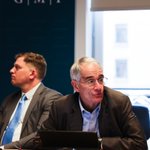
Last week’s exclusive roundtable in Brussels, moderated by GMF's @pennynaas, brought together senior policymakers, industry leaders, and security experts to discuss how Europe can navigate strategic uncertainty and strengthen the transatlantic foundations of its sovereignty.
Joined by @DepSecGenNATO, and President of Global Affairs at @Google & Alphabet @Kent_Walker, participants explored:
🔹 The importance of deeper transatlantic cooperation to address emerging security challenges.
🔹 How Europe can position itself to meet the demands of a new strategic era.
🔹 The value of sustained dialogue between governments, industry, and the policy community on the future of European and transatlantic defense.
Key takeaways from the conversation:
🔑 Old procurement rules need to change; they belong to an old era that doesn't apply anymore. The rules used for the time of peace can't be the same now;
🔑 It's important to overcome the idea that transatlantic relations are only important for European Sovereignty, it matters as much for US and Canada's sovereignty.


🇺🇦 "Ukraine is arguably entering the most difficult winter since [Russia's] full scale invasion," said GMF’s @O_Prokopenko_IR to @dwnews.
She discusses the waning reliability of Starlink and the growing financial cost of the war in a new interview: bit.ly/4yyKEGa

🇪🇺🇺🇦 Unbreakable Europe Task Force: Strengthening Europe’s Security Through Ukraine’s Experience
Europe’s security and resilience are inseparable from Ukraine’s. As Europe faces an increasingly complex security environment, Ukraine’s experience in sustaining governance, critical infrastructure, and essential services under wartime conditions offers vital lessons for strengthening European preparedness.
GMF, together with @NLatEU and in cooperation with the European Coalition for Civil Preparedness and Resilience, convened the first meeting of the Unbreakable Europe Task Force — a European-Ukrainian initiative dedicated to turning Ukraine’s hard-earned experience into practical solutions for Europe's security and resilience.
The meeting brought together @irenefellin, NATO Secretary General’s Special Representative for Women, Peace and Security; Boriša Falatar, Member of Cabinet of European Commissioner @hadjalahbib; Andrius Purvaneckas, Lithuania’s Resilience Attaché to NATO and the EU; and H.P. Schreinemachers, representing the Permanent Representation of the Netherlands to the EU.
GMF Senior Advisor Valeriia Ivanova introduced the Task Force and its network of more than 20 organizations from 12 European countries, united by a shared commitment to strengthening Europe's ability to prepare for, withstand, and respond to crises.
The first meeting also launched practical work on adapting Ukraine’s wartime lessons to European preparedness systems, with an initial focus on the critical first hour of a major crisis.
Ukraine is not only defending its own security — it is helping shape a safer, more resilient Europe.


Learn more about the Unbreakable Europe Task Force: gmfus.org/unbreakable-europe

🇺🇦 Ukraine will have to walk a fine line to maintain European funding for its defense as the war stretches into a fifth year, experts predict.
Still, there is cautious optimism that some form of support will endure. In part, that’s because Ukrainian security is increasingly viewed as key to European security, GMF’s @O_Prokopenko_IR told @ForeignPolicy.
“Europe cannot afford leaving Ukraine without sufficient capacity to defend itself and by extension defend Europe,” she said.
🔗 Read: bit.ly/4yqCTSm

German Marshall Fund retweeted

#Taiwan is at the center of conversations on #geopolitics, #technology, resilience, and #democracy.
The Taiwan-US-Europe Policy Program helps rising leaders better understand its growing global importance. 🌏
Apply by Friday, October 30:
gmfus.org/taiwan-us-europe-p…

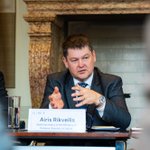
🇺🇸🇱🇻 GMF was honored to welcome State Secretary Airis Rikveilis of the Latvian Ministry of Defense for a roundtable discussion on current transatlantic security issues and how European allies are addressing persistent security threats from Russia, leveraging partnerships within the EU and NATO to strengthen national, regional, and allied defense.
Key takeaways from the discussion include:
🔹Collective support for Ukraine remains essential: Restoring deterrence is critical in countering Putin’s aggression and safeguarding transatlantic security.
🔹 Latvia continues to reinforce NATO deterrence through targeted investments in military capabilities, critical infrastructure protection, and border defense.
🔹 As the rate of change in modern war rapidly accelerates, transatlantic cooperation on critical emerging technologies, drone and autonomous systems, and data centers remains essential.


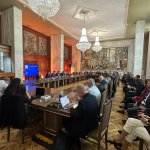
🇺🇦 At a decisive moment for Ukraine's EU integration, GMF hosted a closed-door briefing with Dr. @IgorZhovkva, Deputy Head of the Office of the President of Ukraine. GMF's @pennynaas and @O_Prokopenko_IR opened and moderated the discussion. The briefing took place just hours after the opening of negotiating clusters 2 and 3 in Luxembourg and ahead of the @EUCouncil meeting in Brussels.
Covering the single market and economic competitiveness, these clusters shape how Ukrainian businesses trade, invest and compete in Europe, and bring Ukraine to four of six clusters opened. The discussion focused on turning this momentum into irreversible progress for Ukraine's European future.
The exchange highlighted recent legislative momentum in the Verkhovna Rada, including key laws on the educational rights of national minorities, which unlocked the latest step, and legislation critical to Ukraine's international macro-financial support. These milestones pave the way for opening the remaining two clusters, on the green agenda and on agriculture, resources, and cohesion, by the end of 2026, putting every area of EU law on the negotiating table and allowing Ukraine to move into the decisive phase of closing chapters in 2027.
Participants also examined how Ukraine can leverage the European Commission's upcoming Enlargement Package and pre-enlargement policy reviews, while operationalizing Commissioner Kos's vision of gradual integration, an approach long argued for by the GMF Ukraine experts, to deliver tangible benefits ahead of full membership.
The briefing brought together key leaders from across the European policy landscape, including senior officials of the European External Action Service, the @EU_Commission's DG ENEST and DG ECFIN, the @Europarl_EN, the Mission of Ukraine to the EU, EU Member States' permanent representations, as well as senior representatives of the European People's Party headquarters, leading Brussels-based foreign policy organizations, think tanks, and international media outlets.


GMF’s @WiegandEU sat down with @thewirechina to discuss Europe’s readiness to protect its industries, Germany’s tougher line on Beijing, and European unity on China.
🔗 Read: bit.ly/3Uy1ua1

🇨🇳 From the Senkaku Islands to Taiwan and the South China Sea, China has intensified pressure across the first island chain.
GMF’s @BonnieGlaser examines whether Beijing is continuing its long-term trajectory of incremental coercion or testing the opportunities created by a shifting strategic environment.
🔗 Read: bit.ly/4hZRONj

GMF's @kristinakausch joined Global Reporter BILD, WELT, Politico, and host of Ronzheimer Podcast @ronzheimer to discuss how the US midterms influence Trump's foreign policy, and the state of US strategy in Iran, the Persian Gulf, and the Red Sea after the latest regional escalation: bit.ly/3TFYbxj

🇺🇸🇪🇺 What could the US midterm elections mean for Europe?
GMF’s Bruce Stokes visited Brussels this week to host a high-level roundtable, moderated by GMF's @pennynaas, to discuss the implications of the US midterm elections for Europe and transatlantic relations. He outlined Washington’s growing political polarization and examined what different electoral outcomes could mean for Europe’s strategic, economic, and security interests.
Among his key takeaways:
🔹 A majority of Americans oppose the Iran war.
🔹 Tariffs are top of mind for voters this November, though only 1 in 4 Americans support removing all EU tariffs, and among Democrats only one-third want the next president to remove all tariffs.
🔹 The AI-driven market bubble could pose a major risk to the global economy, and current geopolitical tensions could make a coordinated response to stabilize the economy more difficult.


GMF's @ClaudMajor joined this year's @WarsawForum to discuss European nuclear and conventional deterrence alongside @MBDAGroup CEO Éric Béranger, Advisor for Strategic Affairs and Disarmament to the President of France @Xavier_Chatel_, Destinus President @Danylyuk_O, and former UK Secretary of State for Defence (2019–2023) Sir @BenWallace70. The discussion was moderated by @FundPulaskiego Board Member @TomaszSmura.
Major argued that deterrence is not only about capabilities but also about perceptions. "Do we believe our American allies will come? Does Russia believe our American allies will come?" she asked.
She stressed that, in her opinion, allies must invest both in military capabilities and in cohesion to effectively deter adversaries. One possible way to strengthen deterrence, she added, would be to add an additional layer through the French "forward deterrence initiative."
🔗 Watch the panel: bit.ly/4ygGe6r

🇪🇺🇨🇳 Last week, Brussels and Beijing struck a deal that eased fears of an escalating trade war. EU Trade Chief Maroš Šefčovič is now set to continue discussions with Beijing into next year.
GMF’s @peterhchase told @euronews, “Last week’s deal shows that the Chinese are now beginning to take Europe seriously and realising that there’s a serious political issue, not just an economic issue.”
🔗 Read: bit.ly/4s5f4OB

🇪🇺🇺🇸 As European countries weigh whether they can continue to rely on US security guarantees or should instead focus their defense spending within Europe, GMF’s @ClaudMajor told @Reuters:
“Deterrence is not only capabilities; deterrence is also perceptions. Do we believe our American allies will come? Does Russia believe our American allies will come?”
🔗: reut.rs/4s5ddt2

How can civil society and local authorities counter hybrid threats together?
On October 1–2, GMF’s European Resilience Program brought together civil society and community leaders in Warsaw, Poland, for the first transnational learning event of the BULWARK Project, “Bolstering Societal Preparedness and Civil Defenses in Response to Hybrid Threats.”
Organized by GMF in partnership with @ResPublicaNowa and @VisegradInsight, the two-day event centered on an interactive simulation exploring how societies can respond to complex hybrid threats, including subversion, sabotage, and disinformation by hostile state actors.
Participants from civil society organizations and local authorities across Central and Eastern Europe, the South Caucasus, and the Western Balkans also shared experiences from their own countries and exchanged ideas on strengthening preparedness and cooperation.
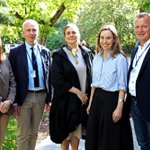
Participants had the opportunity to meet Emmanuelle Lamoureux, Ambassador-designate of Canada to Poland, and discuss the importance of societal resilience in an increasingly challenging security environment.
The event took place within BULWARK, GMF’s flagship initiative to strengthen the capacity of civil society to build societal and democratic resilience against Russian hybrid threats in Europe’s East and Southeast. Alongside financial support for civil society, BULWARK promotes cross-border learning, practical knowledge exchange, and cooperation among actors working to make their communities and institutions more resilient.
Two further transnational learning events will follow in the coming months, focusing on social cohesion and countering polarization, as well as democratic and institutional resilience.
BULWARK is generously supported by the Government of Canada through @GAC_Corporate’s Peace and Stabilization Operations Program (PSOPs).


❄️ As the Arctic changes, so do the geopolitical stakes.
Dr. Elizabeth Wishnick joins GMF's @BonnieGlaser on this week's China Global Podcast to discuss Beijing’s ambitions in the Arctic, growing Sino-Russian cooperation, and what these shifts mean for the US and its allies: bit.ly/3TPimZD

🇺🇸 GMF’s Bruce Stokes joined @FRANCE24 to explore how the war in Iran and broader economic factors could shape the outcome of the US midterm elections.
🔗 Watch: bit.ly/3TVksHd
