

Principal electronics and systems engineer at Powerhouse engineering. Living in Shenzhen China. Founder of Custodia animal tracking.
Joined October 2025
- Tweets840
- Following309
- Followers90
- Likes1.4K




Pinned Tweet
This guy has been super busy wandering in the desert.
Check the dashboard!
Building a reliable tracker for livestock and wildlife in Custodia.
custodia.world/


Gilberto Castro Sustaita retweeted

How to rent an industrial factory space in Shenzhen to build hardware at superspeed:
1. Scope out desired area, preferably by electric scooter.
2. Add all the WeChats you can find pasted on the walls (image 1).
3. Go see all available options, same day. Culture of NOW principles apply.
4. Obtain chinese wife and have her negotiate the price for you. Sign contract.
5. Renovate if desired. Budget 2-5 weeks depending on taste.
Unless you like to work inside a sauna (always tempting me @bryan_johnson), adding AC is a minimum
6. Move in
7. Profit
Attached are some images from the powerhouse renovation project.
We have co-working, prototyping and lab space, so if you’re a hardware founder doing something cool in robotics or physical AI, come build with us! 🦾


Have you guys used one of this variable resistor sets? This one has an amazing range.
I am using it to simulate the internal resistance of a battery to see the behavior of an electronic device across different stages of the battery life.

Gilberto Castro Sustaita retweeted

Go into debt if you have to, but move to Shenzhen 🇨🇳
You’ll see the best factories in the world.
You’ll find the best services in the world.
You’ll find a society that’s way better than what we have in the West.
You’ll ship your hardware product 100 times faster.
Just book a ticket!


Crazy how so many things that reach a shelf are yet reduced in the beginning tests to a protoboard 😂😂😂.

Gilberto Castro Sustaita retweeted
At 23yo, I moved into a Chinese factory and became 杜无敌. Eleven years later, someone’s giving me a microphone to explain myself.
This post is now happening IRL.
Factory stories, expensive mistakes and a few things that actually worked. Hosted by Josh Woodard at Tech in the Tropics.
📍 Brass House, Shuiwei, Shenzhen
🗓 Saturday 24 October, 6pm
Free entry. Come learn from my mistakes. Much cheaper than making your own.


At 23yo, I moved into a Chinese factory to build hardware for my first startup.
That’s where I got my Chinese name: 杜无敌 (Duwudi). “Du the Invincible.”
Eleven years later, I’m still in Shenzhen. Apparently I haven’t suffered enough.
Along the way: $40M raised, 500K+ custom products shipped and a Guinness World Record for the world’s first 3D-printed laptop.
Now I run Powerhouse out of an old factory, helping other founders get from idea to mass production at Shenzhen speed. Ideally with fewer expensive lessons than I had.
We’re also launching a hardware accelerator, and I’m writing my first angel cheque. The plan: build and back the next generation of hardware companies.
I share what building hardware here actually looks like: prototypes, production problems, factory life and robots behaving badly.
Who should I be following in hardware, physical AI and robotics? If that’s you, say hello 👋

Most accurate quote.
Finding apartment, improving visa situation, increasing number of suppliers in WeChat, spotting the best places to eat.
Yes, life is very similar to an RPG.
I would love to have more of my stats tracked though.

sometimes i like turning travel into a video game. my first time in china was like playing an MMORPG. i only brought my laptop and pajamas and had to buy everything else there.
finding clothes, makeup, skincare, and everything else felt like completing side quests to gear up my character and level up. you learn so much about a culture just by figuring out everyday life.
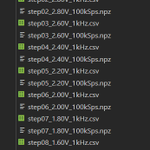
Automated run with my test bench. Testing the performance and power consumption. Gives you couple of minutes to go and smoke a cigarette and drink coffee.
Optimizations, measurements and automation is a big part in the life of an engineer.


Running today some tests for battery selection in a small device.
Setup: I have a battery simulator that is connected to the input of a PPKII and the output to a temperature logger(subject of test) that is connected to a input controllable USB hub.


The USB hub can be turn on and off with CLI, I made a script using Claude to run all the experiments I need.

These are the people I work with at Powerhouse.
Nice to be part of the team, with @Ryan__Dunwoody in the lead.
And majority of this is from our friends in @seeedstudio , go an check their work, is amazing.
I am a big fan of open source technology and their documentation is always on top.


Gilberto Castro Sustaita retweeted

Pager Converted to Meshtastic Node ift.tt/Wb7op4g

Gilberto Castro Sustaita retweeted
“You merely adopted the factory. I was born in it. Moulded by it.”
— Chinese Bane
This is me on our shitty makeshift assembly line in 2015, desperately trying to ship my first product before we ran out of money.
Engineers who can’t DFM (design for manufacture) should be sentenced to assembling their own products. All 1,000 of them.
This is how great engineers are born.

Picture taken at the techgames Shenzhen edition.
Was a very nice event, meet couple of new people and enjoyed a lot the good games and the poker.
Glad to spend time with my peers and colleagues from Powerhouse (We hosted the thing haha).

Literally I have done this couple of times, in other places this would have taken couple of weeks at least
Shenzhen speed in one photo.
This scooter man handing me ICs through my factory window, 30 mins after I realised I’d picked the wrong chip.
Wrong motor encoder IC. Found the right one on Taobao, added the seller on WeChat, booked this guy.
Back to writing firmware. Investor demo prototype saved. This is how the hardware game is won.

Even though he looks like a dagestani UFC fighter 😂😂 in reality is a brilliant engineer and entrepreneur hahaha
I work over here guys, if you want to turn an idea into a reality, Powerhouse is the one you must contact.
At 23yo, I moved into a Chinese factory to build hardware for my first startup.
That’s where I got my Chinese name: 杜无敌 (Duwudi). “Du the Invincible.”
Eleven years later, I’m still in Shenzhen. Apparently I haven’t suffered enough.
Along the way: $40M raised, 500K+ custom products shipped and a Guinness World Record for the world’s first 3D-printed laptop.
Now I run Powerhouse out of an old factory, helping other founders get from idea to mass production at Shenzhen speed. Ideally with fewer expensive lessons than I had.
We’re also launching a hardware accelerator, and I’m writing my first angel cheque. The plan: build and back the next generation of hardware companies.
I share what building hardware here actually looks like: prototypes, production problems, factory life and robots behaving badly.
Who should I be following in hardware, physical AI and robotics? If that’s you, say hello 👋