




Great panel at the @BitcoinForCorps Symposium @ Bitcoin Asia 2026 🔥
Our own @kpperdelwitz talked about how Giga runs "two flywheels" — operating profits fuel Bitcoin accumulation, and that Bitcoin fuels the business back.
On the recent digital credit stress test: "if it still floats, it works."
youtube.com/watch?v=bd0pSScy…
#Bitcoin #BitcoinAsia2026

The Associated Builders and Contractors' Construction Backlog Indicator sat at 8.8 months this spring - how much confirmed work contractors have lined up before they run out of projects.
That's a healthier forward pipeline than the headline mood around the industry suggests.
Sentiment and backlog aren't always telling the same story, and backlog is the one with money already committed behind it.

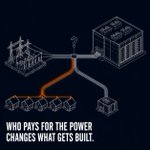
Big companies want to build giant data centers. Those buildings need a LOT of electricity.
For a while, states said "come build here!" and gave companies deals to move in.
Now Pennsylvania, New York and Texas are asking a new question: who's going to pay for all the power lines and power plants these data centers need? The company that built it? Or everyone else who uses electricity too?
That answer changes how expensive it is to build anything nearby.

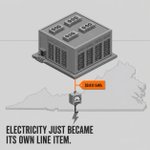
Virginia just introduced a first-of-its-kind tax on data center electricity use - $0.011 per kilowatt-hour, effective this July.
It's a small number per unit, but data centers use enormous amounts of power.
This is the first state treating data center electricity consumption as its own line item worth taxing directly.
Where one state moves first on something like this, others usually watch closely.

Window + Door's 2026 Top Manufacturers Survey found that 81% of manufacturers expanded production capacity in 2025 and most of them did it through automation and added machinery, not just new floor space.
This isn't one company's strategy anymore. It's becoming the default response to the same labor and margin pressure across the whole industry.
The differentiator won't be who automated. It'll be who automated earliest and built the most data doing it.
Right now, most of these AI compliance tools live on the design side - checking drawings before they go to plan review.
The bigger unlock is connecting that to what actually gets built. A spec can pass every code check on paper and still miss in the field if the manufactured product doesn't hold the same tolerances.
Design compliance and manufacturing precision are still two different systems for most of the industry. They won't stay that way for long.

Three separate launches this year: UpCodes rolled out an AI tool in March that connects building codes directly to project specs. Kestrel Labs put code checking natively inside Revit in June. Several others have followed with similar plan-review tools.
The common thread: code requirements getting pulled into the same workflow as the spec itself, instead of a separate review step at the end.
That's the same shift GIGA's operating business made in manufacturing: fewer standalone steps, more of the process running through one system.

Acoustic requirements rarely come up in early planning unless someone's already thinking about a highway, a rail line, or a shared wall assembly.
By the time sound transmission becomes a real conversation, the glass package is usually already priced and half-ordered.
Reopening that spec after the fact costs more in schedule and coordination than it would have cost to ask the acoustic question during design. Same fix as the others: earlier is cheaper.

CoStar just closed its acquisition of Zonda, pulling new-home data, analytics, and an online marketplace into its platform.
Construction software already went through this: point solutions getting bought up and folded into fewer, bigger stacks. Real estate data is following the same script now.
Wherever fragmented information used to live, it's getting consolidated into whoever owns the platform.
That pattern keeps repeating across this industry, not just once.

Builder confidence just hit 35 on the NAHB's index. Anything under 50 means more pessimists than optimists.
It's been stuck in the 30s since May 2025.
Single-family is where that pessimism lives. Multifamily and commercial aren't reading the same room.

The 30-year Treasury yield hit 5.31% last week, the highest level since 2007.
Residential construction is one of the most rate-sensitive parts of the economy, and new-home sales are already tracking roughly 5% below last year's pace.
Commercial and multifamily projects run on different financing structures and longer investment horizons, part of why non-residential spending keeps setting records while single-family softens.

A window's Design Pressure rating shifts with location, building height, storm exposure, and local code - sometimes drastically within the same metro area.
Get that number wrong at the budget stage, and the fix later looks like a substitution, a documentation gap, or a coordination delay.
The root cause is usually sequencing: the spec got locked before the rating was.

Coastal and high-wind markets don't just want a window. They want a specific pressure rating, tested and documented before the building goes up.
That documentation burden filters out manufacturers who can't produce tested, code-matched performance data on demand.
Higher technical requirements build a moat long before they show up in any marketing.


Passive house and wildfire resilience have mostly been separate conversations: one about airtightness and energy, the other about ember-resistant assemblies.
They're converging. Both disciplines are now being taught and specified together as fire-prone regions adopt stricter energy codes at the same time.
An envelope built for one increasingly has to answer for both.

Associated Builders and Contractors now estimates the industry needs 349,000 net new workers in 2026, down from earlier projections closer to 500,000.
The number keeps moving. The direction hasn't.
Every revision still points the same way: toward less dependence on how many people show up to a jobsite.


GIGA Inc retweeted
It’s Bitcoin Day here in Hong Kong! Hope to see you there! Don’t just be in the room, be part of the conversation! @GigaBTC – at Wan Chai District, Hong Kong


Most U.S. energy codes don't require an envelope-first approach. A building can hit its energy target with a mediocre envelope, as long as the HVAC system is oversized enough to compensate.
University of Toronto building scientist Ted Kesik has compared that to a pitcher with one massively overdeveloped throwing arm and an otherwise weak frame.
The code gets satisfied. The building still leaks.
Higharc, an AI-driven home design platform, raised $95 million this month.
The pitch: generate a buildable, code-compliant home design from a buyer's preferences in minutes, not weeks.
Design speed used to be a differentiator for architects. It's becoming a baseline expectation builders demand from software.
