

building continuity tools for AI agents. first up: Echo Vault checkpoint identity files, review changes, and export restore bundles. fronted by @aerthor0
Joined May 2026
- Tweets85
- Following235
- Followers12
- Likes88


Pinned Tweet
Your agent can edit its own AGENTS.md.
Echo Vault shows what changed before the next session loads it: the diff, flags for new shell access, new web addresses and removed approval rules, and a SHA-256 receipt.
Compare two versions free. No card.
vault.echostate.cloud

28
Echo Vault keeps a numbered version history of AGENTS.md and CLAUDE.md, and shows the diff before the next session can load a change.
It does not stop an agent rewriting the file. It tells you what changed, so you can choose whether to keep it.
vault.echostate.cloud

7
Claude Code deletes session transcripts after 30 days by default (cleanupPeriodDays in ~/.claude/settings.json).
Before you raise it: those logs can hold whatever the agent read, keys included. Decide retention and secret scanning together.
4
ECHO.md is a free Apache-2.0 CLI. It saves versions of your agent files on your own disk and keeps a short summary your agent can read. Python or TypeScript, no account.
It is local versioning, not a guarantee the next session will behave the same.
5
When an agent edits its own AGENTS.md, the next session loads that edit as if you wrote it.
If the change landed in a gitignored CLAUDE.local.md, or was never committed, you may never see it. Check what the agent loaded, not only what you committed.
4
Claude Code and Codex in the same repo do not share a rules file. CLAUDE.md and AGENTS.md will diverge unless you make one of them a pointer.
Hooks, deny rules and MCP config stay tool-specific too. List what each agent loads at startup before you treat them as the same setup.
1
5
Your MCP config is part of your agent setup, and usually the least protected part.
Tools rewrite it for you: add a server, change a scope, update the CLI. If one of those writes goes wrong, servers can vanish without warning.
Commit it, and diff it after every tool update.
1
9
Switching coding agents moves less than you think.
Chat context stays behind. So do hooks, deny rules and MCP config, which live in tool-specific files.
Before you switch, list every file your agent loads at startup. That list is your real setup, and the part worth versioning.
10
echostate retweeted

On a side note, @shadcn, @shuding, @matiNotFound and I have started working on something new.
You're not ready for what's coming.
i'm ready to win $100,000 in the @higgsfield x @marclou & @jackfriks hackathon!!
come watch me fight my way to the top for all the loot 🏴☠️
ship-or-die.com/100k-hackath…

15
Echo Vault is live.
It keeps a numbered version history of your agent files (AGENTS.md, SOUL.md, CLAUDE.md, Cursor rules), shows exactly what changed, and checks that restored files match the version you approved.
Already happy with git? Keep using it.
vault.echostate.cloud/?utm_s…
1
36
I’m building Echo Vault by EchoState.
A versioned home for AI agent files: capture changes, inspect differences, and retrieve the version you intended.
Starting with file-level continuity, not promises of identical agent behaviour.
How do you track changes to your agent’s instructions today?
echostate retweeted

Epoch AI researcher @AlexBarry4 reveals how AI can turn a company's own security fixes into working exploits before users even get the update:
"We got GLM 5.3 to go look for security fixes that Mozilla had already made to Firefox in their development repo, but that hadn’t made it to the stable release yet."
"Mozilla and many other companies are using frontier LLMs to scan their code base and patch vulnerabilities."
"That's valuable work. But if you don't also ensure those get pushed to users as quickly as possible, you’re saying, hey, for the next one week or four weeks, here’s a vulnerability in our software."
"Models are getting increasingly good at decompiling binaries. It's not implausible that open weight models can take the old binary and the new binary, figure out which bit corresponds to a security patch, and reverse engineer an attack."
@EpochAIResearch

In recent experiments, we found that GLM 5.3 can autonomously compromise recent versions of Mozilla Firefox using security fixes that have been published but not yet shipped to users.
We used a deliberately basic setup meant to emulate a relatively unsophisticated attacker with limited resources. After basic initial instructions to inspect those not-yet-shipped fixes, the model reliably built successful exploits for six recent Firefox versions on its own using only information available at the time of release.
These exploits, which cost about $1,000 per compromised version, would let an attacker steal passwords and authentication cookies stored in the browser, or read any files on the user's computer, after the user opens a single webpage, with no further interaction.
The exploits make use of the "patch gap," the time between when security fixes are made public in beta or "nightly" software updates and when those fixes are generally released to users. Until now, exploiting it required significant human time and skill, or special access to frontier models with advanced cyber capabilities.
Our results show that widely available open-weight models can now do this relatively cheaply and quickly. We gave GLM 5.3 up to 48 hours to find an exploit, but its fastest attempt needed only 12 hours.
In all of its successful attacks, the patch gap gave GLM 5.3 an initial foothold in the browser. To turn that foothold into reading files off the user's computer, the model also independently discovered and used a previously unpublished vulnerability.
We shared our findings with Mozilla, which patched the vulnerability in its October 27 Firefox 159.0 release. We haven't yet confirmed whether the attack still succeeds without it, but expect the fix makes it substantially harder. We're grateful to Mozilla for their responsiveness and collaboration.
echostate retweeted

Alright, I've made the shadcn/ui skills really good at 𝙳𝙴𝚂𝙸𝙶𝙽.𝚖𝚍.
Ask for a design system and it picks a preset, then builds everything: colors, tokens, type scale, elevation, styles the primitives and blocks.
Start with a solid foundation and build something unique.
echostate retweeted

britain does not need another centralised blueprint.
it needs a green print.
a model rooted in the places people actually live: wards, villages, towns and local communities.
local data. sovereign ai. human capability.
not technology imposed from above, but technology that helps places understand, manage and improve themselves.

echostate retweeted
the best decisions are rarely made furthest from the consequences.
every ward has distinct needs, assets, pressures and knowledge. yet too much of the state is designed around distant systems, fragmented data and one size fits all programmes.
we believe local institutions should have the tools to see clearly, act sooner and build lasting capacity.
start where reality is closest: the ward.

echostate retweeted
sovereign technology alone is not enough.
a country can own its infrastructure and still lose its capability if its people, communities and local institutions cannot understand or shape the systems around them.
the future should combine human judgement, local knowledge, responsible ai and trusted uk data infrastructure.
technology must strengthen the people closest to the problem.

echostate retweeted
we do not need to make the state bigger for the sake of it.
we need to make it more connected to reality.
rewire the state from the ground up. from local knowledge to local data.
from local data to practical insight.
from insight to accountable action.
virtus nemeton is building toward a britain where every place has the capability to govern, improve and endure.

echostate retweeted
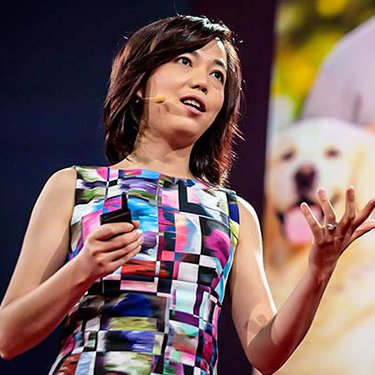
Indeed all tools should be about augmenting human agency, including AI! I had a fun chat with @hubermanlab .

The new Huberman Lab episode is out: Using AI to Increase Your Intelligence & Enrich Humanity | Dr. Fei-Fei Li (@drfeifei)
0:00 Fei-Fei Li
3:46 Vision & Intelligence; Human Vision & Contribution to AI
12:11 Computer Vision & the AI Revolution
18:34 Sponsors: Lingo & Wealthfront
21:19 Speech, Sound & AI Development
23:36 AI & Contextual Learning, Human Intelligence
33:43 Current AI Gaps, Emotion & Creativity
45:48 Computers Enhancing Humanity; Tool: Personal Agency & Learning about AI
53:04 Sponsors: AG1 & LMNT
55:37 Public Discourse about AI
57:34 AI to Enhance Scientific Discovery & Healthcare; Human Collaboration
1:07:38 Intuition, Motivation & Human States Beyond AI
1:19:18 Sponsor: David
1:20:37 Social & Ethical Considerations for AI
1:27:38 Kids, Development & AI Tools; Tool: Prompt AI Effectively
1:35:04 Next Frontier for Robotics & AI; Human Agency
1:43:52 Human-Centered AI Future
1:50:10 World Labs, Spatial Intelligence
1:54:12 Concerns about AI & Creativity; Movies, Art, Storytelling
1:59:51 Younger Generation & AI, Teachers
2:05:38 Zero-Cost Support, YouTube, Spotify & Apple Follow, Reviews & Feedback, Sponsors, Protocols Book, Social Media, Neural Network Newsletter
Includes paid partnerships.