

Geoscientists explaining the amazing geology of Arabia in the backdrop of the Dakar Rally 2024. by @HalaAlwagdani et al #DakarInSaudi
Dhahran, Saudi Arabia
Joined December 2022
- Tweets148
- Following268
- Followers522
- Likes42




Pinned Tweet
Welcome to Geo-dakar! From 5th to 19th January, we will daily share fascinating insights into the geology and landscapes of Arabia that you will encounter during the Dakar Rally 2024. Are you excited? We already are!

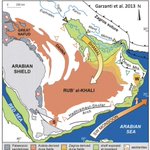
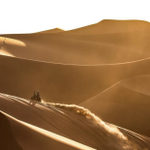
How did the sand end up in the empty quarter? The first inclination is that the sand comes from the rock exposures surrounding the empty quarter. In this case, it’s coming specifically from the older rocks that were encountered earlier in the race around AlUla! ♻️

1
4
782
For more about the empty quarter.. don't miss last year's tweets ! xitter.cf/Geo_Dakar/status/16138…

Geo-#Dakar23 - Day 13. Driving through the Empty Quarter, the riders may at times think they are on a different planet. And with good reason: the dunes on the picture below may look like they are from Arabia, but they were photographed by @NASA's Curiosity Rover...on Mars

ALT Sand dunes on Mars, photographed by NASA's Curiosity rover. Source: https://time.com/4391522/curiosity-rover-reveals-special-mars-sand-dunes-not-seen-on-earth/
933
In order for sand to form, rain, wind, and an exposed rock are needed. Climate change in the past 2.5 million years has also played a role with wet periods (lots of rain) and dry periods (strong wind action), that further helped the weathering and erosion of sand..

1
498
Stage 6 was a loop in Shubaytah, an area on the eastern border of the empty quarter, one of the world’s largest sand deserts. These sands are believed to be Quaternary in age (2.5 million years old).

1
4
715
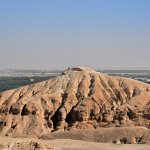
The drivers have officially cut across Arabia, from west to east. After all the mountains and hills, they should be happy to transition into flat terrains, with only a few notable elevations such as Jabal Al-Qara and Jabal Al-Shuaba.

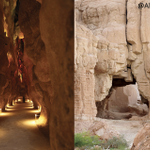
“Water does to the rock, what every sculpture dreams of”🌊
These caves formed because of water flowing in the subsurface when the formation was buried. Wait, but it’s a desert!! 🏜️Where did the water come from? #القافلة جبل قارة qafilah.com/ar/?p=31947

1
4
552
The answer to our last question is in last year’s tweets! xitter.cf/Geo_Dakar/status/16142… #Dakar2024 #Dakar #DakarRally #DakarInSaudi
Day 14
Geo-#Dakar23
It is only natural after a loop in a large desert to stop by the world’s largest oasis! Al-Ahsa oasis is a 12,000 hectares green gem in a sandbox. The secret to this oasis lies in its name..

2
722
Geology of the Dakar Rally • جيولوجيا رالي داكار retweeted

And off we go with the 2024 geo-road cycling season 🥳🚴♀️🤠! The Tour Down Under brings the peloton to the Adalaide region in south-central Australia.
Adelaide lies smack in the middle of the Australian plate. If you were afraid of Earthquakes, you'd think this would be the safest place to go, because almost all earthquakes occur at plate boundaries. But unfortunately, you'd be wrong: the Adelaide region forms a rare exception: it's shaking!
Australia consists mostly of rocks of hundreds of millions to billions of years old, which formed when ancient continents collided and long-forgotten mountain belts formed. Also the rocks around Adelaide are part of that, up to 900 million years old, when life was only microbial.
But the ancient faults that cut these rocks became reactivated. This is because the Australian plate is being stressed, being squeezed between the Eurasia and the Pacific, and also interacting with India and Australia.
The squeezing and pushing popped up the Flinders ranges, and the epic Mount Lofty, and this process continues today. This causes earthquakes - mostly small ones, but in 1954 with a magnitude 5.4.
The faults that push up Mt Lofty slip on average half a mm per year. And with this ongoing uplift, the Tour Down Under gets a little harder every year 😃!

ALT Source: https://aees.org.au/wp-content/uploads/2013/11/11-CLARK-Dan.pdf, see also https://sites.google.com/site/geoearthquakesadelaide/adelaide-region


ALT https://www.abc.net.au/news/2022-03-30/seismology-behind-second-adelaide-earthquake-this-month/100950164

ALT https://www.sciencephoto.com/media/513616/view/global-tectonics-australian-plate
At the beautiful al-Salmiya, we start to see 190 to 150-million-year-old Jurassic rocks. Have you noticed, as the rally progresses, we keep getting into younger rocks? 🧐

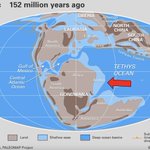
In the first picture, don’t the rocks appear as a part of the deserts that surround them? Trick question! they are not. In fact, the rocks at the surface record a past time when Arabia was covered with shallow seas by the Tethys ocean (disappeared since 🫥)🌊

1
3
365

The rocks exposed at the surface of Alduadimi are some of the oldest rocks in the region. They formed roughly a billion year ago (give or take 500 million)! Great. But where are they 🧐
All the pictures from this stage show massive dunes!

The Arabian plate (where saudi is) moved across the globe throughout geologic history. From being at the southern pole covered in ice 🥶 to being in the desert latitude belt where it is today 🥵. In simple words, trust us, the old rocks are there under the dunes! 🤓

1
326
Saudi Arabia is 95% desert 🏜️ with three major sand bodies that the contestants will drive through in the next stages. Besides being aesthetically gorgeous, they can be a resource to be mined and exploited! #AreYouFamiliarWithSandMining?

2
298
In stage 1, the contestants drove across some of the hardest terrains, a lava field! Don’t worry, it is not an active volcanic area as the last eruption is believed to have been around 600 AD (so around 1423 years and 7 days)🧮

Introducing the two famous volcanoes 🌋 meet Jabal Abyad (white) and Jabal Qidr (black). They have different colors because they have different chemical compositions. The white is more felsic (Iron and Silica) while the black is more mafic (Iron and Magnesium) 🧪

If lava fields are not enticing you, then gold deposits might ! The area beneath the route hosts precious metals. Exploitation of “the craddle of gold” mine resources began over 3000 BC and discoveries are still being made (most recent in Dec. 2023) 🤯 #Mashallah #ToManyMore

1
301
Don’t the rocks in AlUla look like honeycomb?
The AlUla region's spectacular rocks of Cambrian age (roughly 500 million years old) took millions of years of erosion to shape the Quwera sandstones to look this unique and earned it the title of hills of mars. #Dakar2024 #Dakar

The drivers left AlUla city which hosts the first declared UNESCO site in Saudi,“Hegra”. Carved more than 2,000 years into the sandstone rocks which preserve the Nebatean & Dedanite civilizations and stone inscriptions that illustrate the earliest forms of Arabic script✍️🏽

1
1
393
