

Leading clinical-grade genomic risk assessments for common diseases allowing patients and providers to proactively manage genetic predispositions
Chicago
Joined October 2022
- Tweets274
- Following248
- Followers39
- Likes87

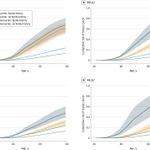



Fred Hutch spotlight: CRC polygenic risk score plus EHR PheWAS shows CRC risk shares signals with breast and prostate cancer and lifestyle factors like smoking, alcohol, and overweight.
bit.ly/4dFvrfm
@fredhutch @American_Heart
#ColorectalCancer #PolygenicRisk

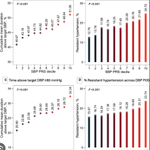
PRISM-BP is a randomized trial (NCT06962488) testing SBP polygenic risk disclosure + Health Belief Model counseling in 300 adults (18–55) with HTN and poor CVH. Proposed outcome: 12-mo change in 24h mean SBP. bit.ly/3NCaUhq
@American_Heart
#PolygenicRisk #Hypertension
City of Hope INSPIRE supports germline BRCA1/2 testing for unselected breast cancer pts and shows ancestry differences (Hispanic women 2.58× more likely BRCA1 vs non-Hispanic). Testing can reduce missed carriers
@CityofHope #BreastCancer #BRCATesting bit.ly/4c13NZ8
FH care is shifting. Lancet Diabetes & Endocrinology review: PCSK9/ANGPTL3 mAb + RNA therapies help many reach LDL-C goals and may normalize LDL-C in severe HoFH. Biggest gap now is finding patients and scaling care.
@TheLancet @FHFoundation bit.ly/4bLtkEq
#Lipidology

African-ancestry men: integrating pathogenic variants (PVs) + PRS + family history stratified lifetime prostate cancer risk; PVs in ATM/BRCA2/CHEK2/HOXB13/PALB2 appeared in ~4% of aggressive/metastatic cases. @UroTodaycom #ProstateCancer #PolygenicRisk bit.ly/3PozByp
Multi-omic risk stratification: in UK Biobank, adding NMR metabolomic profiles + CAD polygenic in addition to ESC SCORE2 improved CVD prediction & boosted modeled screening prevention yield. @ESCardioNews @UKBiobank bit.ly/40RaE0V
#PreventiveCardiology #PolygenicRisk

Big step for PRS: the 2026 ACC/AHA dyslipidemia guideline lists “high polygenic risk (if measured)” as a risk enhancer, bringing PRS into lipid-lowering therapy discussions after PREVENT-ASCVD risk bit.ly/4sR6RNa
@ACCinTouch @AHAJournals #PolygenicRisk #Lipidology #ASCVD

Polygenic testing can reveal hidden CVD risk. In ~35K Japanese adults, even with BP not elevated (≤140/90, meds allowed), high BP PRS linked to higher CVD death (HR 2.28 SBP PRS; 3.08 DBP PRS vs low). @NaturePortfolio @AHA #Hypertension #PolygenicRisk go.nature.com/3OYLivt

Breast cancer PRS awareness low in 828 women: 18.5% heard; 13.2% discussed w/ clinician. Interest high: >90% want PRS offered/routine; 94% say it would change risk plans.
@NSGC, @americancancer, @GIMJournal
#BreastCancer #HealthEquity #PolygenicRisk
bit.ly/4s1f4OQ
Hypertension genetics is multi-pathway—Ca²⁺ handling, renal salt/bicarb transport, RAAS steroidogenesis, immune tone. A Cureus review shows how GWAS + sequencing can inform ancestry-aware risk tools.
@CureusJournal @ACCinTouch #Hypertension #PolygenicRisk bit.ly/4baQHXx

BARCODE1 Study: saliva-based prostate cancer PRS flagged high-risk men where standard pathways fall short (40% diagnosed in the top-PRS group, and 71.8% would’ve been missed by PSA+MRI) @NEJM @OncLive @AmerUrological #ProstateCancer #PolygenicRisk #Urology bit.ly/4bjiiGg

LDL-specific polygenic risk was associated with plaque rupture and thrombotic CAD, but showed no association with plaque erosion. Supports a distinct biological basis for coronary thrombosis. @ATVBAHAJournals @AHA @ACCinTouch bit.ly/3MDVgSf
#Atherosclerosis

FH screening RCT: LDL-C improvements were modest, but the bigger impact was family prevention: 61.2% shared results w/ relatives, enabling cascade screening. Disclosure timing also mattered (20.0% vs 8.8% intensified tx). @JAMANetworkOpen @FHFoundation #FH bit.ly/3MTjqZ2

81% of adoptees pursue genomic testing because missing family history is very important vs 32% of non-adoptees (2.5×). Without family history, cancer-risk assessment has blind spots. Genomics helps fill the gap.
@NSGC @ACMGgenetics #Genomics #HealthEquity #CancerPrevention
ProGRESS study confirms what #PrecisionMedicine has promised: Genomic risk models dramatically outperform traditional prostate cancer screening. 585k+ veterans prove the P-CARE model improves early detection.
go.nature.com/4kSBWxa
@PCFnews @AmerUrological
#CancerPrevention
CAD polygenic risk disclosure can shape behavior. In an RCT of overweight adults, higher genetic risk was associated with lipid-lowering therapy initiation, suggesting that genomic risk can motivate prevention.
go.nature.com/3OyrcYD
@AHAScience @Nature #PolygenicRisk
Australian landmark: 2% of 18–40-year-olds (202/10,263) carried variants for hereditary cancer/Lynch. Population-wide genomic screening finds hidden risk early and enables intervention before disease.
go.nature.com/4rSaouF @NatureGenet #CancerPrevention #PrecisionMedicine

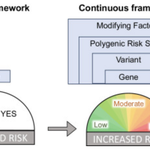
PRS is coming to genetic diagnostics with four ways to integrate it: screen-first, PRS+rare testing in parallel, clinical triage, or PRS after rare-variant–negative results. Choice depends on context/resources.
bit.ly/3MW9JJc
@SpringerNature #ClinGen #PolygenicRisk

GenomicMD retweeted
Can the polygenic risk of coronary artery disease identify who should start statins at lower LDL cutoffs? Absolutely. High-risk PRS scores + moderate LDL have CAD event rates similar to those with severe LDL.
bit.ly/46JUnhC @pnatarajanmd @ASPCardio #PreventiveCardiology

Can the polygenic risk of coronary artery disease identify who should start statins at lower LDL cutoffs? Absolutely. High-risk PRS scores + moderate LDL have CAD event rates similar to those with severe LDL.
bit.ly/46JUnhC @pnatarajanmd @ASPCardio #PreventiveCardiology