

Pool-ID: e7cc5cce7c9a06bc7310f8c222c702cd12d6fd05d5dee748f10e9218 Stake in GenkiPool to help Goku beat the banking system.
Joined July 2020
- Tweets979
- Following451
- Followers731
- Likes2.7K





Pinned Tweet
GENKIPOOL wishes you a happy year and a lot of wealth for all.
Thank you very much for supporting and trusting GENKIPOOL🙌
GENKIPOOL (GENKI) retweeted

On Radix, a token moves between smart contracts in a bucket, a container that exists only for the length of the transaction. The engine fails the whole transaction if any bucket still holds tokens when the transaction ends, so a token cannot be lost, duplicated or stranded in a contract that never wrote a withdrawal. Your account keeps one vault per token.
On Solana, a wallet needs a separate token account for every token it holds. Anchor's documented transfer example lists seven accounts, creates the recipient's token account first if they have never held that token, and the sender pays the refundable deposit that keeps the new account on chain.
radix.wiki/contents/tech/com…


GENKIPOOL (GENKI) retweeted
No es sobre el precio. Es sobre 100.000 granjas de India que ya están registradas en ADA .
Cada transacción en la cadena es una familia que, por primera vez, tiene un registro verificable para acceder a crédito, seguro o un mejor precio. Sin los papeles que nunca tuvo.
Satélite + identidad descentralizada + un hash en la cadena. La data queda en manos del agricultor; Cardano ancla la prueba de que existe y no fue alterada.
Lo verificamos por nuestra cuenta: 100.075 transacciones entre febrero y octubre. Sin hype, con los datos.
chilestakepo.cl/2026/10/21/1…
#Cardano #Adopción

GENKIPOOL (GENKI) retweeted
A validator running hyperscale-rs, the community-built Rust implementation of a sharded Radix network, now checks the signatures on a certificate before it syncs toward the block that certificate names.
A certificate is a block's proof that a quorum of its shard's validators signed it. Validators pass them to each other, and one that sees a certificate for a height it does not hold syncs up to that height. Until this change it started the sync first and verified later. A forged certificate naming a height far above the chain could hold a validator in sync mode, proposing only empty blocks, until it restarted, because a sync has no exit for a height the network cannot serve.
Now a cited certificate is only a claim until its signatures check out. Each validator gets its own slots for claims, so one that floods forgeries fills only its own, and each refuted claim costs the checker a bounded number of signature checks before that sender waits a round to try again.
flightofthefox merged it on 19 Oct, with a test that sends that forgery: github.com/hyperscalers/hype…

GENKIPOOL (GENKI) retweeted
En agosto escribí sobre Ouroboros Leios y por qué es la apuesta de Cardano para escalar. Hoy hay una buena noticia: ya tiene camino a mainnet.
Llega con el próximo hard fork, Dijkstra, y la promesa es concreta: multiplicar el rendimiento sin tocar la seguridad. De 4,5 TxkB/s hoy, a 13,5–22,5 primero y hasta 45–67,5 después.
No es un interruptor, es un camino por etapas con votos de gobernanza. Pero la dirección está clara: más transacciones por bloque, confirmaciones más rápidas y comisiones que no se disparan.
Sin hype, con los datos. Lo cuento todo en el blog:
chilestakepo.cl/2026/10/21/l…
#Cardano #Leios


Cardanoの取引処理能力を高める「Leios」。導入から段階的な処理能力の引き上げまで、5つのステップを解説した記事の日本語版を公開しました!
次期ハードフォーク「Dijkstra」で導入予定。処理能力はまず現行の約3〜5倍、その後メインネットでの検証結果とガバナンス承認を踏まえて約10〜15倍を目指します。
詳細はこちら→ iog.io/news/leios-is-coming-…

GENKIPOOL (GENKI) retweeted
Radix's entry for the CAIP namespaces registry had its first review on the spec yesterday, from Chain Agnostic, which runs the registry. CAIP is the naming scheme wallets and cross-chain tools share for a network, an account or a token.
The reviewer suggested shorter identifiers: drop the address prefix from accounts and tokens, since radix:mainnet in front of them already names the network.
x402, the HTTP standard that lets an AI agent pay for an API call inside the request, names networks the same way. @a_vaunt's x402 spec for Radix, filed in August, lets an agent pay without holding any radix:native: the agent signs only the payment, as a subintent, and the facilitator wraps the subintent in a transaction and pays the fee.
Both submissions: radix.wiki/developers/ai-age…

GENKIPOOL (GENKI) retweeted
The Radix Foundation has recovered 419k of the roughly 443k $USDC caught in an unfinished bridge transfer during the 31 August exploit, it said in the main Radix Telegram chat this morning. The bridge is Hyperlane, which links Radix to other chains.
The other 24.7k is stuck on Hyperlane's route to Solana. The Foundation spent three days on it with Hyperlane last week and is still working on it. Hyperlane advised against paying out the 419k while that recovery continues, so the Foundation is holding it.
The money is due back as hUSDC, Radix's bridged USDC, to the accounts that held hUSDC at the time of the exploit, in proportion to what each held. Governance proposal #3 settled that on 4 October with 95% of the vote.
radix.wiki/contents/history/…

GENKIPOOL (GENKI) retweeted
La libertad es la suma de muchas cosas.
El testimonio de Leopoldo López nos recuerda que, cuando el poder persigue a quienes piensan distinto, la privacidad deja de ser un lujo y se convierte en una necesidad.
Poder comunicarnos, organizarnos y proteger nuestra información también es parte de la libertad.
@MidnightNtwrk

Freedom is the sum of many things.
But what happens when the freedom to speak, organize, and live on your own terms is under threat?
We're exploring what it takes to fight for freedom, and why the future of freedom depends on the digital infrastructure built to protect it.
Freedom Fighters with @leopoldolopez. Coming October 22.
midnight.network/freedom-fig…
GENKIPOOL (GENKI) retweeted
A Scrypto developer can attach a fee to any function or method they publish. The Radix Engine, which runs every transaction, charges it on each call, so calling code cannot skip it, and the royalty owner receives all of it.
Other transaction costs are split: execution, finalisation and storage each go 25% to the validator proposing the round, 25% to the validator set and 50% to a burn. Royalties bypass that split.
There are two kinds. A package publisher sets developer royalties inside the blueprint, and calls to every component built from it pay them. A component owner sets owner royalties per method and can lock one for good, which gives anyone composing with that component a fixed cost.
Royalties are paid in radix:native, but an owner can set one as a USD amount, converted to XRD at a rate fixed for each protocol version.
radix.wiki/contents/tech/cor…

GENKIPOOL (GENKI) retweeted
@GenkipoolC added account deposit-rule tools to its browser console for Radix developers on 16 October, alongside new tools for pools and lockers.
Deposit rules decide what other people can deposit into your Radix account. The default rule has three settings: accept everything; reject everything; or accept only radix:native and tokens the account has held before. A per-token list overrides the default, so an account can refuse one airdropped token, or accept one while rejecting everything else. A depositor holding a badge the owner has authorised bypasses the rules.
Anyone but the owner has to deposit through a method that checks the rules and, on a refusal, either aborts the transaction or returns the tokens. The deposit method that skips the checks is open to the owner alone.
radix.wiki/ecosystem/genkipo…

GENKIPOOL (GENKI) retweeted

What happens to blockchain history when validators move between shards and old data gets pruned?
Fox explains a proposed Hyperscale-rs approach: optional archive nodes, distributed storage, and independent indexing.
#Hyperscale #Radix #Blockchain #Sharding #Web3

GENKIPOOL (GENKI) retweeted
Midnight es el blockchain de privacidad del equipo detrás de Cardano: con contratos de conocimiento cero (ZK), tú decides qué datos compartes, con quién y para qué.
La información oficial circula en inglés. Por eso abrí este canal para traducir las noticias al español: t.me/MidnightEspanol
La idea es reunir a la comunidad hispanohablante en un espacio tranquilo, sin presiones, para seguir lo que va pasando.
Si la privacidad en blockchain te importa, estás invitado a pasar. ¿Qué tema de Midnight te gustaría entender primero?
#Midnight #Cardano midnight-3:native

GENKIPOOL (GENKI) retweeted
bigdev, the developer behind the Radix Guild task marketplace, has open-sourced DeFi Farmer, a yield advisor for Radix, under Apache-2.0.
It reads Ociswap, CaviarNine, DefiPlaza, Weft lending and native radix:native staking through the public Radix Gateway, and scores each option on risk-adjusted yield after impermanent loss, which is what a liquidity provider loses when the two tokens in a pool move apart in price.
When you pick one, it writes the transaction manifest, the plain-text list of steps a Radix transaction performs, and runs it through the Gateway's preview, which executes it against current ledger state without submitting it. If the dry run fails, the app never hands the manifest to your wallet. If it passes, you see what leaves your account and what arrives before you sign. The server holds no key and cannot move funds.
Feature work is paused until stablecoin liquidity returns to the venues it scans, and the code is maintained in the meantime.
github.com/radixguild/defi-f…

GENKIPOOL (GENKI) retweeted
On Radix the repay-or-revert rule rides on a token: the lender hands the borrower a receipt that can never be deposited anywhere, so it must be burnt before the transaction ends or the transaction fails, and the lender's component burns it only when the loan and fee come back.
GENKIPOOL (GENKI) retweeted
Radix keeps this arithmetic out of the dApp: its native pool blueprints, which ship in the engine, pay a redeemer the share of each reserve their burned pool units represent, rounded down in favour of the holders who stay. A dApp built on them writes no withdraw code.
GENKIPOOL (GENKI) retweeted

You can now walk into 137 SPAR supermarkets in Switzerland and pay with Cardano.
Real-time ADA payments.
Real stores.
Real groceries.
Imagine telling someone during the 2021 bull run that one of the most practical crypto use cases would eventually be buying bread at SPAR.
$ADA holders finally have somewhere to spend the bags.


GENKIPOOL (GENKI) retweeted
El Asset Recovery Tool de SecondFi está live desde el 7 de octubre: quien perdió fondos en el incidente de septiembre y todavía no los recuperó puede presentar la solicitud por su cuenta, en el navegador y sin ticket previo. Si no sabes si te toca, se comprueba en checker.secondfi.io: es el único verificador oficial y nunca te va a pedir firmar una transacción.
Lo primero es saber qué te devuelve, porque cambia según el caso. Si barrieron tus fondos para protegerlos del atacante, vuelve todo: ADA, tokens y NFT. Si los tomó un atacante, vuelve solo ADA y los tokens populares. Ese camino no lo eliges tú: depende de por dónde salió tu dinero.
midnight-3:native también es recuperable, y no está en el anuncio de lanzamiento: la cláusula 3.1(a) de los Recovery Terms enumera 20 tokens y NIGHT es uno de ellos.
El orden también está escrito. La cláusula 5.6 atiende por orden de llegada: entre varias solicitudes sobre la misma dirección, el lugar se lo queda quien demuestra primero que es el dueño. No gana el más rápido, gana quien ya revisó todo antes.
Sobre tu frase semilla: la herramienta la usa en tu navegador para armar esa prueba, y el diseño la borra al salir de la página. Lo que no puedo comprobar desde afuera es que no se envíe en ningún momento; eso depende del código que esté corriendo ahí.
Antes de mover un dedo, dos cosas que pide el propio SecondFi. No muevas ni borres tus wallets afectadas por tu cuenta: si no tienes confianza técnica, ellos recomiendan esperar la vía de exportación segura. Y entra escribiendo secondfi.io a mano, sin llegar por ningún enlace que te manden; para recuperar no hace falta instalar ninguna extensión.
La letra chica, sin adornos. SecondFi no cobra por presentar la solicitud y los fees de red van por tu cuenta. El tope de responsabilidad es de USD 10.000, con una excepción que está citada en el artículo, así que tu caso puede estar cubierto y aun así la recuperación no ser total. Rige la ley de Singapur, con arbitraje en Tokio, y NIGHT se libera hasta el 4 de diciembre de 2026.
El paso a paso, las fuentes y los términos completos:
chilestakepo.cl/2026/10/08/s…
Y la regla que más protege, en palabras de ellos mismos: SecondFi nunca te escribe primero por DM ni te va a pedir tu frase semilla. Si alguien lo hace, no es SecondFi.
#Cardano

The Asset Recovery Tool Is Now Live
The official asset recovery tool is now available for users whose wallets were affected by the June 2026 security incident. It allows you to verify control of an affected wallet, review any assets eligible for recovery, and submit a recovery request to a new Cardano wallet that you control.
The recovery tool is available only at secondfi.io in a web browser. It is not completed through the SecondFi app. You do not need to have submitted a claims ticket before you start. Submitting a recovery request through the official tool begins the claims process for the affected wallet.
Recovery is separate from wallet migration. Migration moves supported assets that remain in a wallet to a new wallet. Recovery concerns eligible assets affected by the security incident.
How long recovery takes
There are two separate stages, each with its own timeframe:
-Proof generation, while you use the tool: up to approximately 15 minutes. This takes place on your own device, in your browser, and the browser window must stay open until it is complete.
-Claim processing, after you submit: up to five working days. To maintain security measures, submitted claims are processed in batches. No action is needed from you during this stage.
Before you start
Have the following ready:
The recovery phrase for the affected wallet. The tool supports 12, 15, and 24-word recovery phrases.
A newly created Cardano wallet that you control, and its receiving address. A hardware wallet can provide an additional layer of security because it keeps private keys offline.
A private, trusted computer with a current web browser. Do not use a public or shared computer.
A device and internet connection that meet our recommended specifications: at least 2 GB of available memory, a processor no more than five years old, and an internet connection of at least 50 Mbps. Recovery runs entirely in your browser, is demanding on both processing power and memory, and requires you to download a file of about 2 GB.
Do not use the affected wallet, an exchange deposit address, or any address you do not control as your destination.
How recovery works
Recovery is one continuous process. Begin by reading and accepting the Recovery Terms. The tool then takes you through four steps, set out below.
If you have more than one affected wallet, repeat the process for each wallet.
Step 1: Verify your affected wallet
Enter the recovery phrase for one affected wallet. Before you type it, confirm that you are on your own private, trusted computer, that nobody can see your screen, that no screen sharing or recording is running, and that the address bar shows secondfi.io.
Step 2: Review what is eligible
The tool checks the wallet's addresses against the incident records and shows an estimated breakdown of any assets eligible for recovery. Each affected address is treated as its own request, and only addresses with recoverable assets are submitted.
Step 3: Enter your destination address
Provide the receiving address of your new Cardano wallet and complete the required confirmations.
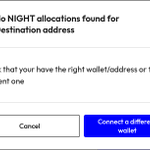
The destination address is bound into the proof and cannot be changed after you submit. Check every character carefully before you continue.
Step 4: Generate the proof and submit
The tool generates a zero-knowledge proof on your device for each eligible affected address, binding it to your destination address, and then submits your recovery request.
Proof generation can take up to approximately 15 minutes. How long it takes depends on your device's processing power and your internet connection, which is why we recommend the device specifications listed above. It may take longer on older or less powerful computers and for wallets with more affected addresses.
Keep the browser window open and do not leave or refresh the page until proof generation is complete. If it is interrupted, the tool will show a retry option.
After you submit
Once your request has been validated and submitted, it enters claim processing. Claims are processed in batches, so allow up to five working days for your request to be processed and for recovered assets to arrive in your destination wallet. No further action is required unless the tool or our official channels tell you otherwise.
Please remember: This is not instant, it will take up to five working days for your request to be processed.
You can check your status at any time using the status checker at secondfi.io by entering your new destination address, not the affected wallet address.
Why the tool asks for your recovery phrase
Your recovery phrase is used locally in your browser to generate the zero-knowledge proof. It is not stored or transmitted. Only the proof is submitted with your recovery request.
Browser and security tool warnings
Because the recovery tool uses your existing recovery phrase to prove ownership of your wallet, some anti-phishing tools, anti-scam tools and browser extensions may show a warning, or display a blank screen, when you open the tool or enter your recovery phrase. This alone does not mean the official tool is malicious.
Before you continue, always check that you are on the exact official domain, secondfi.io, with HTTPS and no extra words, characters or lookalike spellings. Always type the address yourself rather than following a link sent by direct message, email, advertisement or any other third party.
What can be recovered
Amounts are assessed against the incident snapshot and shown as an estimate. The final amount may differ.
For each eligible NFT that cannot be returned directly, a fixed amount of 30 ADA will be included in the ADA shown for the relevant affected address.
Rules that protect you
Type secondfi.io directly into your browser or from the official X account mentioned below. Never follow a link from an email, advertisement, direct message, or search result.
Enter your recovery phrase only yourself, and only in the official recovery flow after confirming that the address bar shows exactly secondfi.io. Make sure nobody can see your screen and that no screen sharing or recording is running.
Do not install any browser extension or application claiming to be required for recovery.
No fee is required. Anyone who asks you to pay a fee, send ADA or another asset, sign a transaction, or transfer assets to an address they provide is attempting to defraud you.
We will never contact you first to ask you to begin recovery.
Do not use the affected wallet again. Recovery does not make it safe to use.
Our official channels
X accounts: @secondfiapp and @secondfi_jp
Support portal: support.secondfi.io
GENKIPOOL (GENKI) retweeted

2/ Ya no hay sesión.
Si guardabas estado entre llamadas, ahora tiene que viajar en la petición o tener un identificador explícito. El servidor no «recuerda» quién es quién.

