

Official page of Gas Safe Register. Gas Safe Register exists to protect you, your family & your property from unsafe gas work.
UK Isle of Man Jersey Guernsey
Joined June 2009
- Tweets8K
- Following904
- Followers26.5K
- Likes2.7K

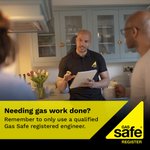
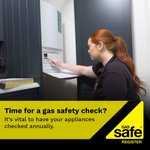


Before any gas work begins, check the engineer’s Gas Safe ID card.
Make sure their details match and that they’re qualified for the job—qualifications are listed on the back of the physical card or by scrolling down the digital ID card.

Gas Safe Register is the official list of engineers legally qualified to work safely on gas appliances across the UK, Isle of Man, Guernsey and Jersey.
Find or check a Gas Safe registered engineer in your area at GasSafeRegister.co.uk.

Carbon monoxide (CO) is a silent killer as you cannot see it, smell it, or taste it. An audible CO alarm could save your life.
Make sure your alarm is Kitemarked to BS EN 50291 and test it regularly.
Learn more about protecting your household: buff.ly/0XnBPmX

An annual safety check and regular servicing can help protect your household and keep your gas appliances working safely and efficiently.
Only use a legally registered Gas Safe engineer. Find or check an engineer today at GasSafeRegister.co.uk.

Every Gas Safe registered engineer carries a physical or digital ID card. Ask to see it, check that it is valid, and make sure the person and business details match. Then check their qualifications are right for the job.
Find out more at bit.ly/GasSafeIDCard
#GSW26

For Gas Safety Week, Denise’s Van Outen is reminding the nation of the importance of checking your gas engineer is Gas Safe registered and qualified for the work – remember to ask to see their Gas Safe ID card when the engineer arrives at your door #GSW26 #TakeNoChances
Not every registered engineer is qualified for every appliance or type of gas. Before work begins, check their qualifications on the back of the physical card or scroll to view on the digital card.
You can also check this at GasSafeRegister.co.uk or by calling 0800 408 5500

Gas Safe registered engineers carry an ID card. This could be a physical card or a digital card. If an engineer does not show you their Gas Safe ID card when they arrive at your property, don’t be afraid to ask to see it.
Find out more at bit.ly/GasSafeIDCard #GSW26

Mae peirianwyr cofrestredig Diogewlch Nwy yn cario cerdyn adnabod. Gallai hwn fod yn gerdyn corfforol neu’n gerdyn digidol. Os nad yw peiriannydd yn dangos ei gerdyn adnabod Diogelwch Nwy i chi pan fyddant yn cyrraed eich eiddo, peidiwch ag ofni gofyn am ei weld.

Home improvements can affect gas safety, even if it's not directly gas work. Ask your tradesperson to check that vents, chimneys, flues and appliances won’t be blocked, damaged or moved. If gas work is needed, always use a Gas Safe registered engineer. bit.ly/DoNotDIYGas

Think fixing a gas appliance yourself will save money? Think again. DIY gas work can be costly to put right and, more importantly, it could put lives at risk. Take no chances—always use a suitably qualified Gas Safe registered engineer.
Find out more: bit.ly/DoNotDIYGas

Planning some DIY? Check for gas pipes beneath floors or behind walls before you hammer or drill. Accidentally damaging a pipe could create a gas leak and risks a fire or explosion.
#GSW26 #TakeNoChances #GasSafetyWeek

Yn y dwylo anghywir, gall gwaith nwy achosi gollyngiadau nwy, tanau, ffrwydradau neu wenwyno carbon monocsid. Os oes problem gyda’ch offer nwy, peidiwch â cheisio ei drwsio eich hun. Defnyddiwch beiriannydd cymwys sydd wedi’i gofrestru gyda Diogelwch Nwy bob amser.

In the wrong hands gas work can cause gas leaks, fires, explosions or carbon monoxide poisoning. If there’s a problem with your gas appliance, don’t try to fix it yourself. Always use a qualified Gas Safe registered engineer.
Find out more at bit.ly/DoNotDIYGas
#GSW26

A gas emergency can happen without warning—would you know what to do?
Badly fitted or poorly serviced gas appliances can cause gas leaks, fires, explosions and carbon monoxide poisoning. Acting quickly could save lives. Know the steps to take: bit.ly/EmergencyGas
#GSW26

If a warning sticker has been applied to your gas appliances, it’s important you do not use it until it has been made safe by a qualified Gas Safe registered engineer.

Do you know where your gas Emergency Control Valve (ECV) is?
It’s often near the gas meter, but every property is different. Make sure everyone at home knows how to turn the gas supply off safely in case of an emergency.
For more advice visit bit.ly/EmergencyGas
#GSW26

Natural gas is odourless; a rotten-egg smell is added to help you detect a leak. If you smell gas:
✅ Turn off the gas
✅ Open doors & windows and go outside
✅ Call the Gas Emergency number for your area
❌ Don’t operate electrical switches
❌ Don’t smoke or ignite anything

Mewn argyfwng nwy, mae’n bwysig gweithredu’n gyflym. Stopiwch ddefnyddio offer nwy, diffoddwch y nwy wrth y mesurydd, agorwch ffenestri, ewch allan, a ffoniwch y Gwasanaeth Argyfwng Nwy Cenedlaethol ar 0800 111 999. Ceisiwch gymorth meddygol os ydych chi’n teimlo’n sâl.

In a gas emergency, it’s important to act quickly. Stop using gas appliances, turn off the gas at the meter, open windows, go outside, and call the National Gas Emergency Service on 0800 111 999. Get medical help if you feel unwell.
Find out more at bit.ly/EmergencyGas #GSW26
