

The voice of the world in numbers
Washington, D.C.
Joined July 2007
- Tweets17.8K
- Following1
- Followers98.5K
- Likes322




Since 2006, daily experiences of enjoyment have declined globally but feeling well-rested and smiling or laughing are essentially unchanged. Feeling treated with respect is slightly higher, while the percentage who say they learned or did something interesting has risen 10 percentage points.
on.gallup.com/4rTiNyt

Just 21% of U.S. adults attend religious services weekly, down from 30% about 15 years ago.
While frequent religious service attendance has historically been associated with lower alcohol consumption, Americans are drinking less overall, including those who attend services less frequently.
Full story: on.gallup.com/4hPjOo3

85% of K-12 educators say helping a student through something difficult makes them feel they matter a great deal as an educator.
Explore the latest findings from Gallup and @WaltonFamilyFdn: on.gallup.com/4yjdavc


Significantly fewer Americans than last year believe the Departments of Defense (down eight percentage points to 40%), State (down seven points to 27%) and Homeland Security (down six points to 36%) are doing an excellent or good job. Slightly fewer, 27%, compared with 31% in 2025, rate the Justice Department’s performance favorably.

Negative emotions remain elevated globally. In 2025, 38% experienced worry, 36% stress, 33% physical pain, 26% sadness and 23% anger during much of the previous day.
Full insights in Gallup’s 2026 State of the World’s Emotional Health report: on.gallup.com/3VxoPsJ

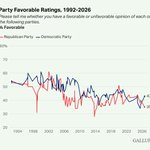
Americans are more likely to view the Democratic Party than the Republican Party favorably (43% vs. 35%, respectively). The Democratic Party's rating has increased six percentage points since last year, while the Republican Party's has declined by five points.
Full story: on.gallup.com/3U0odex


Across 97 countries, a median of 81% of people report using social media in the past week. While use is widespread, it is not ubiquitous, ranging from 98% in Bahrain and Lebanon to 12% in Chad.
Full insights in Gallup’s 2026 State of the World’s Emotional Health report: on.gallup.com/4rUGg2x

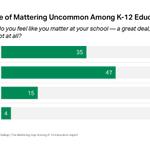
Roughly one in three K-12 educators (35%) say they matter a great deal at their school.
Those who feel they matter are more likely to see a future for themselves in K-12 education and less likely to experience burnout.
New data from Gallup and @WaltonFamilyFdn: on.gallup.com/4yq9aJn

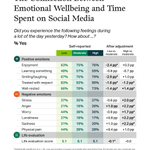
Compared with moderate social media use, high use is associated with more anger, loneliness, sadness, stress and worry while low use is associated with lower life evaluation and fewer positive emotions than moderate use.
Full insights in Gallup's 2026 State of the World's Emotional Health report, released in partnership with @WorldHealthSmt: on.gallup.com/4hWmjU6

Thriving rates among Black, Hispanic, White and Asian American adults have converged at around 50%, a historically rare occurrence, as all four groups have declined from their 2021 levels.
Explore the full findings from Gallup and @RippelHealth: on.gallup.com/3U5hWhN

Nearly one in five social media users aged 15 to 29 (19%) spend five or more hours a day on social media, compared with 11% of 30- to 49-year-olds and 6% of those aged 50 and older.
New data: on.gallup.com/47QZ2yh

Eight in 10 Americans believe businesses have raised prices more than necessary because they wanted to increase profits, including 47% who say businesses have done so “a great deal.”
New research from Gallup and @bentleyu: on.gallup.com/4hBUNfS


Over half of California college students say they use AI for their schoolwork on at least a weekly basis.
New data from @CollegeFutures and Gallup: on.gallup.com/46SW4Ji
