

Research group at @UniJena, with a focus on quantum information theory and machine learning for CV-systems.
Jena, Germany
Joined February 2021
- Tweets83
- Following72
- Followers417
- Likes26



Fresh on PRX Quantum: doi.org/10.1103/8z9p-tygz
Quantum field simulators are powerful, but usually inflexible: changing the theory often means rebuilding the experiment. We introduce the Optical Time Algorithm (OTA), a reconfigurable optical framework that separates time...
In our new work, arxiv.org/abs/2603.06319, we introduce a variational model that learns to distinguish nonclassical quantum states directly from measurement samples of multimode systems.

A key feature: the model remains interpretable. After training, the learned decision rule can be extracted and turned into a compact observable nonclassicality criterion.
How much can local features of phase-space distributions reveal about entanglement? Surprisingly: a lot.
In our work, arxiv.org/abs/2602.21688, we derive separability criteria from phase-space distributions and their partial derivatives evaluated at a single point in phase space.

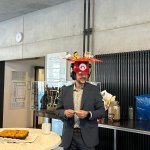
🎓👏congratulations to @AasenAadrian for successfully defending his PhD thesis! all that work mitigating noise clearly paid off, and no safety helmet was needed during the defence!

we have an open postdoc position in algorithm design for Rydberg quantum computers. feel free to share with potential applicants!
application open until 27th dec 2025
qiqs-jena.de/hire/

🚀we present a method to certify high-dimensional time-bin entanglement in fiber-loop systems, crucial for advancing QKD, that is:
✅noise-resilient
✅adaptable entanglement dimension
✅requires only two measurement bases & works with limited data
journals.aps.org/pra/abstrac…
💡new paper on PRA:
we show how entanglement can be verified using only a separable coherent state as a reference state! 🔎our separability criteria can be accessed by using an interferometric setup and photon-number detection
journals.aps.org/pra/abstrac…
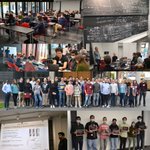
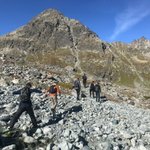
back from our annual group retreat in the mountains in Ehrwald, Austria 🌄 with no shortage of hiking, stunning views, as well as discussions on physics and ways to improve as a research group, it was an all-round success


📢Introducing a scalable & experiment-friendly readout error mitigation scheme.
We combine overlapping detector tomography with hierarchical clustering, avoiding randomized measurement & entangling gates, & apply this to systems of up to 100 qubits.
journals.aps.org/pra/abstrac…
Yesterday @AdrianBraemer successfully defended his PhD thesis, having worked on quantum thermalization and disordered spin systems. Congratulations! 🎉

And we are back from the group’s annual retreat, this time held in Rathen🌲We hiked, discussed physics and explored synergies💡Now it’s time to materialise our generated ideas back in Jena!

Quantum Information & Quantum Simulations @Jena retweeted

Want to know how to correct the readout errors of your quantum device? See our protocol and experimental realization in Commun. Phys. nature.com/articles/s42005-0…
The Husimi Q distribution is a phase space representation of quantum states, just like the Wigner function, but it doesn't get negative. Still, it can be used to detect entanglement, with advantages for experiments with sparse data... journals.aps.org/prl/abstrac…
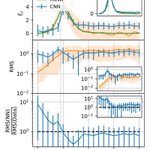
We have used supervised learning to estimate entanglement entropy and quantum mutual information in spin chains using very few experimental samples. On top, the method also estimates the statistical error. Comments welcome! arxiv.org/abs/2309.07556
The 2023 edition of the EFEQT Quantum Ideas Factory, a quantum hackathon for Master and PhD students, is happening in Paris on October 21-23. Participation is highly recommend! Apply here before 10.9. efeqt.eu/index.php/quantum-i…
Apply now to the 2023 Quantum Ideas Factory, a quantum science and technology hackathon! This time in Paris. For more info, see efeqt.eu/index.php/quantum-i…