

Web3 marketing distribution & advisory. Clients: @Mantle_Official, @SuiNetwork, @WalletConnect & more. Our research: https://xitter.cf/t.co/NjFv6DCBrn
Muur Fam
Joined December 2021
- Tweets1K
- Following235
- Followers2.2K
- Likes6.5K








Green Dots retweeted
Over the last couple of days, I've shared two insights on B2B marketing in my Telegram community:
– One saying the B2B lead journey (1st touch → purchase) is 272 days.
– Second saying LinkedIn is the #1 venue by ROI for B2B businesses.
Both come from the same B2B report from Dreamdata.
And of course, I couldn’t miss the chance to dive deeper and compare its findings to other academic and vendor reports – because truth always lives somewhere in between.
If you're into B2B, this is a must-read imo ↓
newsletter.stacysbrain.com/p…

Green Dots retweeted
There are many talented people in Web3, and I know that many of them are now looking for a job.
So we at @GREEND0TS decided to connect people who are available for hiring and startups that are actively searching for talent.
Three rules:
• Free
• Data will be shared with potential employees by request
• No guarantees of employment
So if you're searching for a job, this might be a nice shortcut for you ↓
forms.gle/EfgBL14S6ptmGw7J6
PS: The form will close on Thu, Oct 1.
PPS: Spread the word if you have some talent in your network; let's help each other!
Green Dots retweeted
New chapter begins.
Founders, marketers, community builders, and creators are welcome ↓
newsletter.stacysbrain.com/

Green Dots retweeted
How to grow on X if you're stuck at 500–1K followers ↓
1. Networking is your meat.
You need to build coalitions and engagement groups.
Yeah, it sucks. No one loves to DM random people. But without this, you’ll grow at a very low speed.
See it like this:
Each person you cross-support is a new audience.
It’s a win-win: you get the audience of your new friend – and he gets yours.
Two rules:
a. It has to be fair (no 10K account will be interested in cross-support with a 1K account), so don’t waste time DMing big accounts asking for help.
b. It has to be ever-evolving. People tend to support 3–4 posts and then disappear. It’s normal. You have to run a continuous cycle of networking and onboard 2–3 new engagement friends per week.
2. Networking gives you visibility, but your content still has to do the conversion work.
1–2 great posts per week is enough.
But they need to be great. Not written by ChatGPT with zero original input. Otherwise, you’ll lose the attention of people from your friend’s community while he efficiently vampires yours (he’s a smart guy; he knows what people love reading).
Those 1–2 great posts are your anchor pieces. Build around them (summaries / self QTs / sharing with your engagement circle / posting on Reddit and LinkedIn).
Anchor → Distribution.
Same as in all GTM strategies.


Green Dots retweeted
No matter what you build in Web3, the playbook has 5 rules ↓
1. Revenue > Narrative
Web3 neobanks have reached the point where the card itself is no longer the moat.
Most teams either already have a card or have access to the infrastructure needed to launch one quickly. The harder part is turning that card into something people trust, fund, and use more than once.
That is where most products start to separate.
A partner logo, a referral campaign, or a cashback headline might look strong from the outside, but they do not always translate into real usage. Many users sign up, test the product once, claim the reward, and then never build a habit around it.
For a Web3 neobank to become part of someone’s daily money flow, the value needs to be clear from day one:
→ good cashback
→ yield on balances
→ easy stablecoin spending
→ fewer onboarding steps
→ visible proof that real people use it daily
That last point matters a lot.
In crypto, launch campaigns often make products look more active than they really are. Real UGC changes that because it gives people proof outside of a landing page or paid post. Screenshots of spending, receipts, cashback rewards, and daily card usage make the product feel more believable.
Payment rails like @Visa or @Mastercard also help close that trust gap.
For crypto-native users, stablecoins, wallets, off-ramps, and yield already make sense. For users outside the crypto bubble, familiar payment names make the product feel closer to something they already understand.
That is the real GTM challenge for Web3 neobanks.
The winners will not be the teams that only launch a card. They will be the ones that make the full user journey feel easy to trust, easy to start, and useful enough to become part of daily money habits.
Full story ↓
research.greendots.agency/we…


Full article ↓
research.greendots.agency/fi…

We did a deep GTM analysis of Web3 neobanks.
The strongest teams are not winning through better cards alone.
They are winning through payment trust, referral mechanics, creator-led distribution, public proof, and activation design.
If you are building a Web3 consumer product, this is worth reading ↓
research.greendots.agency/we…
Green Dots retweeted
If you're building in crypto / fintech, this jpeg will save you a lot of money.
Save it + read the full research ↓
research.greendots.agency/fi…


Since inception, @stacy_muur has always insisted that @GREEND0TS should rely on data and research.
Data → Knowledge.
And our knowledge is public.
Sign up for Green Dots Research ↓
research.greendots.agency/#/…
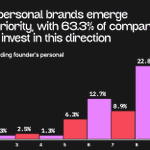
In 2026, founder growth is becoming one of the clearest marketing advantages for companies that sell complex products, create new categories, or operate in low-trust markets.
Not because every founder needs to become an influencer.
Most should not.
The real reason is simpler: people need a source of trust that feels harder to copy than a feature set.
This is what founder persona gives.

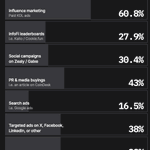
Influencer marketing is here to stay.
Here are 5 reasons why ↓
1. It is now part of a broader marketing mix.
2. Strong KOLs still bring trust, attention, and mindshare that ads alone often do not.
3. A good KOL can deliver multiple times across a campaign, not only once.
4. Teams are pairing influencer campaigns with SEO, targeted ads, and PR.
5. Influencer marketing is shifting from short-term visibility to a repeatable growth layer.
Influencer marketing still matters, but the strongest teams are no longer using it alone.

Some DeFi products are difficult to understand.
Many teams still market them to broad retail audiences, which creates a product-audience mismatch from the start.
That makes KOL campaigns underperform, not because creators are ineffective, but because the strategy is often too broad, too short-term, and poorly measured.
The pattern usually looks like this:
→ 55% targeted broader retail
→ 60% only ran paid marketing around major events
→ 40% did not track acquisition costs
That is why low KOL efficiency often says more about campaign design than creator marketing itself.


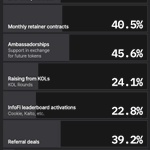
Marketers are leaning toward long-term KOL relationships over short-term ones.
Monthly retainers and ambassadorships are now among the most common ways teams work with creators.
There’s so much information moving across X every day that single posts get forgotten fast.
If you want to build attention, repeated exposure matters.
Longer-term structures give projects:
→ consistent visibility
→ room to build familiarity
→ more repeat exposure
