Cardiologist and Clinician-Scientist; Director, Heart Function Clinic, Mazankowski Alberta Heart Institute; Canada Research Chair in Heart Failure

Edmonton, Alberta
Joined October 2018
Excited to share our new publication in @Nature demonstrating that a newly identified inhibitor of pericyte contraction can improve myocardial microvascular perfusion in animal models of ischemia and reperfusion. Pericytes are contractile cells that wrap around capillaries and regulate their diameter. Following ischemia and reperfusion, sustained pericyte contraction can constrict capillaries, impair microvascular blood flow, and contribute to the no-reflow phenomenon, even after the blocked coronary artery has been reopened. By inhibiting pericyte contraction, we may be able to restore capillary blood flow and improve myocardial tissue perfusion following heart attack. nature.com/articles/s41586-0…
11
26
131
10,939
This award bears my name, but the journey belongs to my family. ❤️ Receiving the Established Investigator Award for Clinical Hypertension at #Hypertension26 was deeply meaningful. Having my husband and children beside me made it unforgettable. @CouncilonHTN @AHAScience
16
12
101
4,072
Dr. Gavin Oudit retweeted
At your local rink or in the Stanley Cup Final, you’ve seen Inglasco’s pucks on the ice. They’re the NHL’s exclusive puck supplier, and they’ve been based in Sherbrooke, Québec, for more than 50 years. So remember: behind every puck drop and every goal, is a little bit of Canada.
360
451
27
3,382
81,286
Dr. Gavin Oudit retweeted
Bravo, Anne Carson! Congratulations on receiving the 2026 #NobelPrize in Literature. This extraordinary achievement is a proud moment for Canada and a celebration of the power of Canadian creativity, storytelling and culture. 🇨🇦👏
BREAKING NEWS The 2026 #NobelPrize in Literature is awarded to the Canadian author Anne Carson, “for her bold and inventive oeuvre that, in playful dialogue with the classical tradition, has created new forms for contemporary literature.”
38
261
20
1,438
38,473
Dr. Gavin Oudit retweeted
The values I learned from my teachers at St. Francis Xavier High School in Edmonton — hard work, community, and kindness — are with me today. To all the teachers who bring out the best in us, thank you. #WorldTeachersDay
316
408
16
3,631
78,567
Dr. Gavin Oudit retweeted
Canadian actor, Michael J. Fox was invested as a companion of the Order of Canada by Governor General Louise Arbour during a ceremony at Rideau Hall in Ottawa today. 🇨🇦
83
673
48
4,839
48,603
Dr. Gavin Oudit retweeted
The Government of Canada announced that Terry Fox will be featured on the new $5 note. Do you agree? 🇨🇦
938
667
161
10,029
232,221
Dr. Gavin Oudit retweeted
🫀 New in @CircAHA. We systematically developed a "HFpEF" cocktail to model impaired cardiac relaxation across human heart cells, organoids, and engineered tissues. Congratulations to all authors! @StanfordCVI @StanfordMed @GreenstoneBio @Stanford_ChEMH ahajournals.org/doi/10.1161/…
1
24
1
100
7,479
Dr. Gavin Oudit retweeted
Always good to be home. #LetsGoOilers
1,267
332
138
5,005
229,374
Pick any medical specialty other than your own. Who’s the most famous physician in it? You probably can’t name one. Almost none of us will be known outside our field, and even those who achieve real professional fame are mostly forgotten within a few decades. Fame is a poor reason to devote your life to medicine. The work itself matters more: caring for patients, discovering new knowledge, and teaching the next generation.
58
281
46
1,138
126,561
Dr. Gavin Oudit retweeted
Inside the Journal: Rounding out our Deputy Editor introductions this week — @medtmaddox, leading our approach to AI in cardiovascular science and publishing, in @CircAHA . Here's why it matters: his perspective lays out TRUE-AIM and a risk-based framework for evaluating AI research — giving authors a clear bar and readers a way to judge the work for themselves. Full piece: ahajournals.org/doi/10.1161/… @American_Heart | #Circulation #ArtificialIntelligence
1
2
4
347
Dr. Gavin Oudit retweeted
“Women tend to delay presenting. They are likely to say, ‘I’ll fix the kids’ breakfast and then go to the hospital.’” – Dr. Padma Kaul’s research examines ways to improve diagnosis and treatment of heart disease to save more women. Learn more: bit.ly/4qSsPQc. #BeatHeartDisease
2
5
1
11
730
Dr. Gavin Oudit retweeted
The real reason children no longer enjoy reading.” Mary Wakefield has a theory in the latest Spectator.  Instead of screen addiction, she blames school curricula which teach “to the test” rather than reading for enjoyment. Children are so busy analysing brief extracts, they can’t enjoy the book as a whole. I read incessantly as a child, including illicitly when I was supposed to be sleeping. Not “great literature”, it was Dr Dolittle, Biggles, Bulldog Drummond, Just William, Arthur Ransome, Percy F Westerman. It would certainly have included Harry Potter if he’d been around then. I don’t believe I ever had my “comprehension” tested. I just loved reading. Is Mary Wakefield right?
622
558
145
5,418
356,742
On this day in 1951, Guy Lafleur was born. In his Hall of Fame career, he won five Stanley Cups, three Art Ross, two Harts, three Lester B. Pearsons and the Conn Smythe. In 1,126 games, he recorded 560 goals and 1,353 points. 📸 NHL
22
61
4
491
5,972
Dr. Gavin Oudit retweeted
Reader's Pick: Our most-accessed article in the past 30 days💫 : Apelin analog treatment reverses severe pulmonary arterial hypertension and right ventricular heart failure: doi.org/10.1172/jci.insight.… Gavin Y. Oudit @GOuditResearch & team @UAlberta showed pulmonary arterial hypertension and right ventricular failure were successfully treated in a rat model using a novel apelin analog that has an extended half-life. #PAH
2
7
1,344
Dr. Gavin Oudit retweeted
Inside the Journal: Cardiovascular disease doesn't respect borders. We're honored to have Dr. Ana Mocumbi join @CircAHA as our new Deputy Editor for Global Cardiovascular Health — her Perspective this week argues that tools like portable battery-powered ultrasound will drive key solutions. Here's why it matters: LMIC countries carry a growing share of global CV deaths but produce under 4% of the research. Ana also joined this week's #CircOnTheRun podcast — walked through her vision in a fantastic conversation, and yes, she speaks seven languages... Podcast 🎧: ahajournals.org/do/10.1161/p… Full piece: ahajournals.org/doi/full/10.… @American_Heart | #Circulation #GlobalHealth
4
13
460
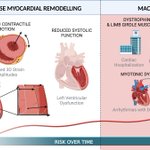
Glad to share our next chapter in unravelling Cardiomyopathies - HCM versus DCM The molecular landscape of hypertrophic cardiomyopathy across disease stages and genotypes | Science Translational Medicine science.org/doi/10.1126/scit…
1
4
14
708
Does a life-or-death ER tool work equally well for everyone? A new study led by Dr. Doug Lee tested EHMRG, a tool used to guide #heartfailure care decisions in the ED, for fairness across income, background, and location. 🔗bit.ly/4Ac3hlf #HealthEquity #Research #TRCHR
3
6
213
Dr. Gavin Oudit retweeted
🧬 A biobank with 1.9 million deeply phenotyped participants changes what is statistically possible in human disease research. A major new Nature Medicine Resource paper provides the first large-scale characterization of Our Future Health (OFH)—a prospective UK cohort ultimately aiming to recruit 5 million adults, or roughly 10% of the UK adult population. Already: >2.5 million recruited >1.9 million with baseline phenotypes >1.4 million with clinic measurements >1.6 million with linked health records >775,000 with genotype-array data And future releases are expected to add longitudinal questionnaires, primary-care linkage and additional omics including proteomics and whole-genome sequencing. This is not simply “another UK Biobank.” Its sheer scale creates a different research opportunity. 🔬 What does OFH actually contain? Participants complete questionnaires covering up to 288 questions across: demographics socioeconomic status lifestyle personal health family history. These are complemented by clinical measurements, geolocation and linked: inpatient records + outpatient records + cancer registry + mortality records. Figure 1 on page 3 gives perhaps the best overview: questionnaire phenotypes, clinic measurements, linked EHRs and genetics are brought together within one trusted research environment. For epidemiology, genetics and precision medicine, the important feature is therefore not just N = 1.9 million. It is: N × phenotypic depth × longitudinal linkage × future multi-omics. 🧬 Does such a huge volunteer cohort reproduce known disease biology? Encouragingly, yes. Across 109 shared self-reported conditions, disease prevalence patterns in OFH correlated strongly with UK Biobank: r = 0.784 P = 6.35 × 10⁻²⁴. Restricting OFH to the same 40–69-year age range produced a similar result: r = 0.793. The disease-category plots on page 22 are particularly informative: cardiovascular, endocrine/metabolic, GI/liver, respiratory and cancer phenotypes show strong cross-biobank concordance. Even more importantly, known clinical associations replicated. Across 18 disease–correlate relationships: OFH vs UKB effect sizes: r = 0.783. Classic relationships were recovered: CVD ↔ hypertension respiratory disease ↔ smoking metabolic disease ↔ adiposity psychiatric disease ↔ family history cancer ↔ smoking/family history. That gives confidence that OFH can support large-scale association studies. 📈 But scale is where OFH becomes extraordinary. For many common diseases, OFH already contains substantially more cases than UKB, FinnGen or All of Us. The comparison on page 7 illustrates the point beautifully: even when prevalence is lower, the enormous denominator generates very large absolute numbers of cases for diseases such as: asthma T2D atrial fibrillation breast cancer prostate cancer IBD myocardial infarction. And the advantage becomes even more striking for uncommon disease. For example: Myasthenia gravis: 668 OFH vs 266 UKB Primary biliary cholangitis: 464 vs 312 Cystic fibrosis: 172 vs 25 Neuromyelitis optica: 83 vs 20. This matters enormously. For rare phenotypes, disease subtypes, gene–environment interactions and multi-morbidity analyses, statistical power often becomes the fundamental bottleneck. OFH begins to change that equation. 🧓 And this could be particularly powerful for aging research. The cohort contains large numbers across adulthood, including substantial populations aged 60–79+ years, while simultaneously retaining far more younger adults than traditional aging-focused cohorts. This allows something especially interesting: young → middle-aged → older adult phenomic trajectories rather than studying aging only after disease has already emerged. As longitudinal EHR, genetics and future omics accumulate, OFH could potentially support: healthy-aging trajectories multimorbidity clusters frailty-related phenotypes polypharmacy cardiometabolic aging cancer risk musculoskeletal disease rare age-related complications. The medication data already illustrate this life-course structure. With increasing age, use of: cardiovascular bone-health cancer-related medications rises markedly, while polypharmacy and multisystem medication use become increasingly informative phenotypes. 💪 For sarcopenia research, the opportunity is especially interesting—but there is an important caveat. This paper does not present a validated sarcopenia phenotype, nor does it report DXA-derived appendicular lean mass or grip-strength-based AWGS/EWGSOP2 diagnoses. So we should not call OFH a sarcopenia cohort yet. However, it already contains many variables that could support development of proxy or risk phenotypes: age + sex + height + weight + BMI + physical activity + disease history + medication burden + linked clinical outcomes with future longitudinal and omics data potentially enabling much richer phenotyping. Clinic data already include body-size measurements for >1.4 million participants. This creates an intriguing strategy: UK Biobank → deep sarcopenia phenotype discovery Our Future Health → population-scale external validation For example: UKB DXA/grip strength/omics ↓ derive sarcopenia or muscle-aging signature ↓ validate proxy phenotype ↓ deploy in OFH N≈2M ↓ test disease trajectories and complications ↓ genetic/phenomic replication ↓ future proteomic validation That could be exceptionally powerful for studying sarcopenia-associated multimorbidity. 🧬 Genetics will make the resource substantially more powerful. Approximately 775,000 participants already have genotype-array data, with hundreds of thousands having imputed genotype data. Future samples are intended to enable additional assays including proteomics, WGS and methylation. That opens possibilities for: GWAS PheWAS polygenic risk scores Mendelian randomization gene × environment interaction rare disease genetics multimorbidity genetics cross-biobank replication. And OFH contains many related individuals. The authors specifically highlight future opportunities for family-based and within-household analyses, which could help distinguish genetic, environmental and household contributions to disease. 🧪 Another major advantage: OFH is designed for translation. Participants consent to re-contact. The infrastructure supports targeted recruitment into prevention and early-detection studies, including recall-by-genotype and recall-by-phenotype approaches. That potentially creates a research cycle: Population discovery → genetic/phenotypic risk signature → identify high-risk participants → recall participants → deep phenotyping → intervention trial. This is much closer to a learning health system than a conventional static biobank. ⚠️ But 1.9 million participants do not eliminate bias. This may be the most important methodological lesson from the paper. OFH is a non-probability volunteer cohort. Women represent approximately 57%, younger adults and several minority ethnic groups remain underrepresented, and the most deprived socioeconomic quintile is also underrepresented. Current smoking is substantially less common than national estimates: Men: 7.4% vs 13.2% Women: 6.6% vs 10.6%. And lung cancer is consistently underrepresented compared with national data. The authors therefore explicitly caution that OFH should not currently be treated as a nationally representative source for absolute disease prevalence or incidence. This distinction is crucial: Huge N ≠ unbiased N. For causal inference, investigators must still address: selection bias collider bias healthy-volunteer effects survivorship ascertainment differences missingness. 🎯 Perhaps the most exciting opportunity is trans-biobank science. Rather than asking whether OFH will “replace” UK Biobank, the more productive framework may be: UKB + OFH. UKB provides mature longitudinal follow-up and extensive imaging/omics. OFH provides enormous scale, broader age coverage, growing ethnic diversity and future longitudinal/omics expansion. The paper itself emphasizes benchmarking and replication across cohorts as one strategy for evaluating participation bias. For complex aging phenotypes, that could become: DISCOVERY → UKB REPLICATION → OFH MECHANISTIC STRATIFICATION → genetics/proteomics CLINICAL TRANSLATION → OFH recall-by-phenotype/genotype This is particularly attractive for phenotypes such as sarcopenia, frailty and multimorbidity, where individual disease associations are modest but the number of interacting exposures and outcomes is enormous. And importantly, researchers worldwide can apply. OFH data access is restricted, but researchers working for—or supervised within—universities, charities, health services or health-research organizations internationally can apply to become registered researchers and submit a study application to the OFH Access Board. So this is not merely an interesting cohort description. It is potentially a research platform we can actually use. For aging and sarcopenia research, I think the most interesting question is no longer: “Can we identify another association with sarcopenia?” It is: Can we use UKB + OFH to construct a population-scale muscle-aging phenotype, identify its genetic and systemic determinants, and map which age-related diseases emerge before and after muscle decline? At N ≈ 2 million, even relatively subtle trajectories may become detectable. 📄 Straub VJ, Benonisdottir S, Scotti Bentivoglio G, et al. Phenomic profiles and disease patterns of 1.9 million participants from Our Future Health. Nature Medicine. 2026. DOI: 10.1038/s41591-026-04602-4 #OurFutureHealth #UKBiobank #Sarcopenia #Aging #Geroscience #Biobank #PrecisionMedicine #Epidemiology #Genomics #MultiOmics #Frailty #PopulationHealth #NatureMedicine
6
29
2
100
8,860