
Fun
Joined March 2008
- Tweets13.6K
- Following2K
- Followers276
- Likes72.7K







Pinned Tweet
Never Forget RT @netw3rk "I want it frantic down there, I want it calm and poised up here." 69-ing with Eric Spoelstra
2018's Most Trusted Webzone retweeted

My buddy said his parents gifted his son a “History of the NBA” book they bought off Amazon. I will present this with no further comment:

2018's Most Trusted Webzone retweeted

Hearing ''Oh my God he's got a gun'' while holding a gun must feel amazing.
Loom, aka Kittens, is now called Overalls

Loom, aka Kittens, is now called Overalls. I'll be releasing it at @ainativedev in New York circa Nov 3.
It's a self-hosted AI developer platform that runs on your own infrastructure and is released under the MIT license.
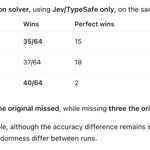
Check out the attached screenshot or [1] below for features/to learn more.
[1] gist.github.com/user-attachm…

2018's Most Trusted Webzone retweeted

I’ve come to believe that “one more kid that’ll never get go to school/never get to fall in love never get to be cool” is one of the greatest lyrics of all time

2018's Most Trusted Webzone retweeted

Deebo Samuel currently with 80 receiving yards and no receptions after the hook-and-ladder. If they can just avoid throwing him the ball all game, he can smash the record for most receiving yards in a game with no catches (65, set in 1961)


Aider and Goose? Are you just picking shit at random?

Cursor building coordinator-and-subagent orchestration directly into their IDE is the right direction.
The missing piece: if you want to run Claude Code, OpenAI Codex, Aider, and Goose together, not just one coordinator inside one IDE, that layer doesn't exist yet as a product you can self-host.
That's what I built Campfire for.
Campfire is an open-source multi-agent orchestration platform. Run Claude Code, Codex, Goose, Aider, and OpenHands side by side in a single browser tab. Each agent gets an isolated git worktree. Majority-rules permission voting across agents. Agent races: the same task across multiple backends simultaneously. Session replay. Cost dashboard. Collective intelligence layer with semantic memory and shared context streams.
The coordinator pattern in Cursor Projects, the subagent delegation, the persistent context: Campfire gives you those primitives across any agent CLI you already use, without locking in to one IDE or one model provider.
One command to get started: bunx the-campfire
github.com/stretchcloud/camp…
xitter.cf/cursor_ai/status/20981…

Exo Harness now runs natively on Runta

Exo Harness now runs natively on Runta.
In FrontierHarness Eval, Exo was cheapest per completed task at $1.05. On the hardest task it hit its 51-step cap and quit at $1.46 while others kept spending.
That is the harness you let rewrite itself. Exo's Executor holds no durable state, so the agent can modify it. History, artifacts, secrets and sandbox lifecycle sit in the Harness, out of reach.
Runta provides a resumable environment, so the Exo Harness can self-evolve freely. Exo never holds the model API key, only a stub. Our egress gateway injects the real one at the provider. Code the agent wrote can read whatever the Executor can, and all the Executor has is a stub.

2018's Most Trusted Webzone retweeted

"Listen to your body"
My body at 8:00 AM on a workday:
- Quit immediately
- Disappear off the grid
- Befriend the crows
- Return to nature

2018's Most Trusted Webzone retweeted

The whole concept of data-driven insurance is kind of fascinating, because it’s the largest, best funded experiment ever undertaken in actuarial science and it’s completely illegal to do anything with about 90% of it.

2018's Most Trusted Webzone retweeted

Hilarious story from Steve Young's Autobiography:
December 23, 1990. A late-game fumble by the RB secured a loss to the Saints, and Steve takes it especially hard, as he's trying to earn credit with the team while Montana is out and get the trust of the fan base.
Steve had committed to go Christmas caroling with church friends after the game, but the loss had him in a pretty bad mood.
They went to sing to a family who had adopted eleven severely disabled kids, all of them huge 49er fans. Seeing the situation helped Steve take a step back and remember that there are more important things in life than football.
One of the kids was mute, and he wrote messages on a computer monitor to communicate.
The boy indicated that he wanted to write Steve a message, so Steve knelt down next to the little boy, who then wrote out the following message:
"YOU BLEW IT"


2018's Most Trusted Webzone retweeted

It’s been ages since I took limnology but I can’t help but answer a trout shaped bat signal. This is a very famous case in my field so I can weigh in here despite my general ignorance about the mighty Midwest.
The Tanner experiment case is one of the most important examples we look at of what are called “large scale ecological experiments” of the same scale/impact/cost as something like Everglades restoration or Yellowstone wolf release, all similar experimental thinking underpins these efforts.
The Great Lakes were originally a cold water ecosystem with the top predator being the lake trout. Lake trout grow slowly relative to other fish, and live in deeper water further from shore. They were at the top of a foodweb that had some remarkably productive commercial fisheries (for lake trout, whitefish, ciscoes (lake herring). Two stressors collapsed the lake trout dominated system: invasive sea lampreys in the early 1900s and overly intense commercial fishing, so few lake trout (large predators) remained.
Alewives from the Atlantic coast reached the Great Lakes over time, with their population exploding. Alewives were the the new top-of-the-foodweb dominant fish by the 1960s, causing huge seasonal die offs that would wreck beaches, close swimming areas, and tank tourism. Alewives had the seasonal die offs because Great Lakes temperature swings just weren't right for a fish that would (on their native East coast) spend winters in the ocean and spring closer to shore or up river.
Howard Tanner, who ran Michigan's fisheries program at the time (60s) was asked by the governor to so something flashy to fix the die offs and maybe bring back a sport fishery. He looked into restoring lake trout and realized because they grow slow (~20 years) this would take pretty long to do. He needed a predator with abundant eggs that he could buy from another state's hatcheries. He realized Pacific salmon, like coho and Chinook, would be perfect becayse they only took 2 years to get big, they'd aggressively feed on the alewives preventing the annual die offs/beach closures, and they're fun sport fish because they jump and put up a fight when they're hooked.
He got the idea from his time spent working fisheries in Colorado and introducing coho and kokanee into reservoirs, so he knew they could be landlocked for life and still complete their life cycle (usually they'd need to spend some time in the ocean).
At this time, Oregon developed a new hatchery tech called the Oregon Moist Pellet (a new type of high quality feed) that resulted in much higher survival of juvenile fish, so they were making more eggs than they needed. Tanner bought a million coho egg from Oregon and releasted them into tributaries of Lake Michigan.
He was looking to create what's called a "trophic cascade" in ecology, or a chain reaction where predators reduce prey, then the prey's food increases, which impacts the next level down. So they needed a predator to eat alewife so the alewives would eat less zooplankton so that the zooplankton could live to graze down algae (and prevent algal blooms). Fewer alewives also allowed the "assemblage" or groups of fish further down the food chain to come back since they weren't eating all their larva.
This is considered one of the first major large scale experimental trophic cascade experiments implemented by an American fish and wildlife agency in a freshwater system that worked. His experiment led to a world class sport fishery, major reductions to beach closures/die offs, better controls of algal blooms, and the original ideas that we might want to manage fish for recreation and ecosystems simultaneously.
The system today is what we call heavily managed (so there was never a return to the native lake trout at the top of the foodweb). The state agency stocks Chinook, coho, steelhead, and lake trout. They use really neat predator-prey models to determine stocking decisions and keep alewives at preferred levels. This case completely transformed what Americans think of when we think of the capacity of a state's hatcheries. Working across state lines for eggs, stocking millions of fish annually, determine assemblages based on what anglers like, and using hatchery raised fish for ecological management were all tried here at a scale that hadn't really been done before, and it worked. One of the prestige fisheries scholarships in America is named after Tanner at Michigan State, and he has a research vessel or two named after him which is a huge honor.

On my knees begging @RodeoProfessor for an analysis of the guy who put salmon in Michigan lakes and rivers


2018's Most Trusted Webzone retweeted

Wife is furious because on our son's birthday, we were looking at photos of the day he was born and there's a random screenshot of the Lions depth chart mixed in because I was talking shit to some casual online.

2018's Most Trusted Webzone retweeted

Things in football so improbable that you’ll probably never see it happen again:
In 1999, the Jacksonville Jaguars were possibly the best team in the NFL. They got off to a quick 2-0 start and then faced the newly rebranded Tennessee Titans Week 3. They held a 17-3 at the beginning of the 4th quarter after picking off Titans’ QB Neil O’ Donnell and returning it for a TD. The Titans ended up rallying to win the game 20-19.
After their heartbreaking loss against Tennessee, Jacksonville managed to win 11 games in a row. Their defense was absolutely dominating holding opponents to 10 or less points in 7 of those games. Then in Week 16, they made the trip to Nashville to face the Titans yet again.
The cliche is “it’s hard to beat the same team twice”. Well the Jaguars surely made it easy on Tennessee. The Titans absolutely routed them 41-14. Steve McNair threw for 5 TDs and Eddie George ran for over 100 yards.
The Jaguars managed to beat Cincinnati in Week 17 and secured the #1 seed in the playoffs. In the divisional round, they absolutely routed Miami 62-7. It Is unsurprisingly still the largest margin of victory in a playoff game in the Super Bowl era.
Their reward? They got to face the Titans yet again in the conference championship game on their home turf. This was it. This was their shot for the Super Bowl. The outcome? They got absolutely trounced 33-14 as they watched their division rival go to the Super Bowl.
Remarkable. They somehow managed to beat every single team on their schedule, except the Titans. They are the only team in the Modern Era to lose to a team 3 times in a single season and go undefeated against everyone else on their schedule. Something so improbable we will probably never see it again.

2018's Most Trusted Webzone retweeted

temperature check on public AI sentiment: Kelce brother ad focused on mailing piss jars to data centers

