

Change the Conversation. Reshape the Future. Sickle Cell Centers of Excellence around the State of Florida.
Hollywood, FL
Joined April 2013
- Tweets2.3K
- Following218
- Followers2.7K
- Likes72


Have a story, perspective, or experience with sickle cell disease you would like to share?
FSCDR is opening a limited number of guest opportunities for the Warriors Within Podcast.
We are looking to hear from:
Sickle Cell Warriors, Caregivers, and Healthcare professionals working in sickle cell disease.
Community members from across the country are welcome to express interest.
This is an opportunity to share your experiences, lessons, perspectives on care, and hopes for the sickle cell community.
Interested in joining the conversation?
Complete the Podcast Guest Interest Form:
forms.gle/LdxNJazcENz2z1TW6
#SickleCellDisease #SickleCellWarrior #SickleCellCommunity #WarriorsWithinPodcast #FSCDR


📚 SCD Weekly Practice Update
Community leads the way: the essential role of CBO-anchored community health worker partnerships in strengthening hydroxyurea uptake and sickle cell disease care
A mixed-methods evaluation published in the Journal of Sickle Cell Disease examined a citywide initiative designed to increase hydroxyurea use among children with sickle cell disease, with a focus on community-based organization (CBO) and community health worker (CHW) partnerships.
🔍 Study Highlights
The initiative was implemented across NYC Health + Hospitals from 2022–2023 and impacted approximately 400 pediatric patients annually. A matched cohort of 730 Medicaid-enrolled patients ages 9 months–21 years was included in the formal evaluation.
💡 Key findings included:
Hydroxyurea fills increased from 57.1% at baseline to 79.1% during the intervention.
Adherence, defined as more than 80% of days covered, increased from 32.5% to 40.0%.
Patients seen by participating providers had 14% higher hydroxyurea-fill rates and were 10% more likely to meet the adherence threshold.
These patients also had an 8% lower likelihood of an emergency department visit after adjustment.
Qualitative findings identified CBO–CHW partnerships as important for education, navigation, trust-building, and practical support.
💡 Why It Matters
Hydroxyurea is an evidence-based disease-modifying therapy for sickle cell disease, but uptake and adherence remain suboptimal.
This evaluation suggests that CBOs and CHWs may complement provider education and system-level tools by helping families understand hydroxyurea, address concerns, navigate pharmacies and insurance, coordinate transportation, and remain engaged with care.
However, provider education, electronic health-record tools, financial incentives, and CBO–CHW support were implemented together. The study therefore cannot determine the independent effect of the CBO–CHW partnership.
Current guidance supports hydroxyurea use for eligible patients and shared decision-making but does not establish a specific CBO–CHW model for improving uptake or adherence.
💭 Discussion
Which components of CBO–CHW partnerships are most important for improving hydroxyurea uptake and adherence?
How can pediatric sickle cell programs determine whether improvements are sustained over time and across different healthcare settings?
Share your perspective — your insights can help strengthen approaches to hydroxyurea education, access, and long-term engagement in sickle cell care.
Source: Journal of Sickle Cell Disease, Volume 3, Issue 1, 2026 — Candice Deler, MSW; Salma Muhyedeen, CHW; Toni Denicola, NP; Candace Alphonso, MPH; Urvi Patel, MPH; Bruce Bernstein; Marcy Stein-Albert, MD; Jean-Bernard Poulard, MD, MBA; Kenneth Rivlin, MD, PhD
#SickleCellDisease #SCDResearch #PatientCare #SickleCellCare #JournalOfSickleCellDisease #Hydroxyurea #CommunityHealthWorkers

Cold weather can mean something very different for a Sickle Cell Warrior.
Winter could mean staying inside more often, missing time outdoors, and weighing everyday activities against the possibility of severe pain and other complications.
So when someone living with sickle cell disease needs to change plans, stay home, or adjust their schedule during colder months, lead with patience and understanding. What may feel like a simple cold day to one person can carry a much heavier impact for someone else.
As a reminder give Warriors grace. Some of the hardest parts of sickle cell disease are the ones you may never see.
#SickleCellDisease #SickleCellWarrior #SickleCellAwareness #SickleCellCare #ChronicIllness #FSCDR
For Denise Rainford, one message stands out for Sickle Cell Warriors: find a community.
Living with sickle cell disease can involve mental, emotional, and financial challenges in addition to physical health. Denise highlights the importance of having people and organizations to turn to for support.
She points to community organizations like Shak’s Hope as an example of how connection, understanding, and shared experience can give Warriors added strength.
Watch more Sickle Cell Warrior stories by visiting our YouTube @FSCDR.
#SickleCellDisease #SickleCellWarrior #SickleCellCommunity #PatientSupport #SickleCellAwareness #FSCDR
Looking to better understand your Medicare options for 2027?
Join us for a Medicare 2027 Plan Review Event with licensed independent insurance agent Latoya Ward.
Attendees can review provider networks, plan benefits, prescription coverage, and available plan options based on their individual needs.
Monday, October 12, 2026
1:00 PM–3:00 PM
FSCDR
1685 S State Road 7, Unit 4
Hollywood, FL 33023

📚 SCD Weekly Practice Update
Pulmonary function among children and young adults with sickle cell disease: the potential role of air pollution
A retrospective study published in the Journal of Sickle Cell Disease examined whether higher ambient air-pollution concentrations were associated with abnormal pulmonary function in children and young adults with sickle cell disease.
🔍 Study Highlights
Researchers analyzed 10 years of data from 65 participants ages 5–19 in Jefferson County, Alabama. Most had HbSS, 84.6% had asthma, and 81.5% were receiving SCD-modifying therapy.
💡 Key findings included:
Higher monthly average nitrogen dioxide (NO₂) concentrations were associated with abnormal forced expiratory volume in 1 second (FEV₁).
In unadjusted analyses, each 1 ppb increase in monthly average NO₂ was associated with 53% higher odds of abnormal FEV₁.
The adjusted association was not statistically significant.
FEV₁ and forced vital capacity were frequently reduced, while obstruction indices were normal in all participants.
💡 Why It Matters
Pulmonary complications are an important source of morbidity in SCD. This study provides preliminary evidence that higher monthly average NO₂ concentrations may be associated with abnormal FEV₁ in children and young adults with SCD.
The study was small, observational, and limited to a single county. Researchers could not adjust for several potential confounders, including smoking or vaping, secondhand smoke, home conditions, socioeconomic factors, and meteorological conditions. The findings show an association, not causation.
No SCD-specific guideline establishes an ambient NO₂ exposure threshold or recommends routine air-pollution monitoring as part of SCD management. These findings support further research rather than a change in clinical practice.
💭 Discussion
What additional evidence is needed to clarify the relationship between air pollution and pulmonary function in sickle cell disease?
How should future studies evaluate whether reducing air-pollution exposure improves pulmonary outcomes?
Share your perspective — your insights can help advance research into environmental factors that may affect pulmonary health in sickle cell disease.
Source: Journal of Sickle Cell Disease, Volume 3, Issue 1, 2026 — Kelsey M Maclin, PhD, MS; Charity J Morgan, PhD; Ruzmyn Vilcassim, PhD, MS; Azar Abadi, PhD; Ammar Alishlash, MD; Brandi M Pernell, DNP, MSPH
#SickleCellDisease #SCDResearch #PatientCare #SickleCellCare #JournalOfSickleCellDisease #PulmonaryHealth

For Denise Rainford, growing up with sickle cell disease in Jamaica came with more than physical challenges. It also meant growing up in an environment where the condition was often misunderstood.
Many people around Denise had limited knowledge of what sickle cell disease was or how it should be managed. At times, those misunderstandings led people to believe sickle cell disease was something foreign or even a generational curse.
Her story reflects how deeply a lack of education can shape a Warrior’s experience and why continued awareness and understanding remain so important.
Share this post to help bring greater awareness to sickle cell disease.
#SickleCellDisease #SickleCellWarrior #SickleCellAwareness #SickleCellEducation #SickleCellCommunity #FSCDR
"There is strength in vulnerability." — Viola Davis
At the 20th Annual Sickle Cell Disease Research and Educational Symposium & 49th National Sickle Cell Disease Scientific Meeting, Foundation Keynote Speaker Viola Davis presented The Hero's Journey — a powerful reflection on resilience, purpose, and hope.
Through her own story, Davis reminded us that our experiences don't define our limits — they reveal our strength.
She also paid a heartfelt tribute to caregivers, recognizing their compassion and unwavering dedication to supporting individuals living with sickle cell disease.
Her message inspired Sickle Cell Warriors, caregivers, healthcare professionals, researchers, and community partners alike.
Watch the clip from her Foundation Keynote.
#FSCDR #ViolaDavis #SickleCellDisease #Hope #Resilience #Caregivers #Warriors #Healthcare #Inspiration
At FSCDR, we believe strong partnerships help bring awareness, education, and support directly into the communities where Sickle Cell Warriors and families live.
We are grateful to partner with Corenthia Willis Campbell and the Shakevia's Sickle Cell Anemia Foundation as they continue supporting Warriors across Miami-Dade, Broward, and throughout Florida through school outreach, community programs, and events.
Together, we are helping create stronger connections, expand awareness, and build a greater sense of community around those affected by sickle cell disease.
We are proud to support organizations that share our commitment to making Warriors and families feel seen, supported, and connected.
#SickleCellDisease #SickleCellWarrior #SickleCellCommunity #CommunitySupport #SickleCellAwareness #FSCDR
The fall season is upon us 🍂
As temperatures begin to drop, a little preparation can help Sickle Cell Warriors feel more ready for the season ahead.
For some Warriors, cooler temperatures can be a factor in pain crises. Simple steps like dressing in layers, keeping hands, feet, and ears covered, staying hydrated, and avoiding sudden shifts from warm to cold spaces when possible can help support your body through the change in weather.
Every Warrior’s needs are different, so talk with your care team about what works best for you this season.
Save this for the cooler days ahead, and share it with a fellow Warrior or caregiver.
#FSCDR #SickleCellDisease #SickleCellWarriors #SickleCellCare #FallHealth


The sickle cell disease community is mourning the loss of Abdullah Kutlar, M.D., a distinguished physician, researcher, educator, and longtime leader in the field.
For more than 20 years, Dr. Kutlar was a valued member of the FSCDR family. Across more than four decades of work, he helped advance clinical care, research, newborn screening, and hemoglobinopathy initiatives.
His legacy lives on through the patients he cared for, the professionals he mentored, the programs he helped build, and the many lives he touched.
We extend our deepest condolences to his family, colleagues, patients, trainees, and friends.
His contributions to sickle cell disease will endure, and his legacy will continue through the generations he helped shape.
Rest in peace, Dr. Kutlar.

📚 SCD Weekly Practice Update
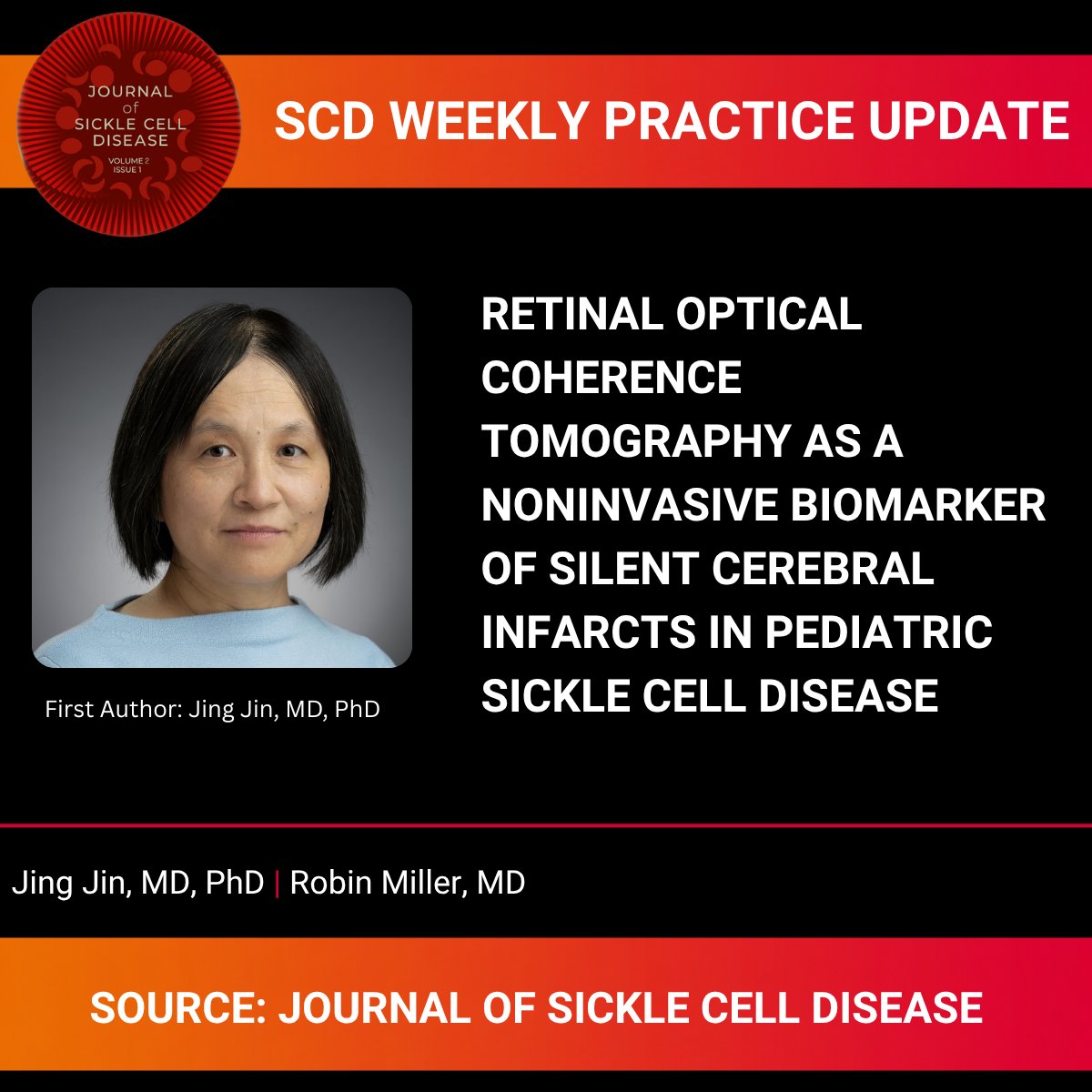
Retinal Optical Coherence Tomography as a Noninvasive Biomarker of Silent Cerebral Infarcts in Pediatric Sickle Cell Disease
A prospective case series published in the Journal of Sickle Cell Disease examined the association between silent cerebral infarcts and retinal ischemic injury detected by optical coherence tomography (OCT) in children and young adults with sickle cell disease.
🔍 Study Highlights
Researchers evaluated 269 children and young adults with SCD, ages 4.4–21.9 years. Among 158 participants with HbSS or HbSβ⁰-thalassemia, 111 also underwent brain MRI and MRA.
💡 Key findings included:
Conventional funduscopy identified retinopathy in 14 of 158 participants (8.9%), while retinal OCT detected ischemic thinning in 106 (67.1%).
Among 111 participants who underwent brain MRI, 40 (36.0%) had abnormalities consistent with silent cerebral infarcts.
Of those 40 participants, 37 (92.5%) also had abnormal OCT findings.
OCT showed 93% sensitivity, 47% specificity, and a diagnostic odds ratio of 10.7 for MRI abnormalities consistent with SCI.
Participants with MRI abnormalities showed more extensive retinal involvement, including greater bilateral involvement and thinning toward the foveal region.
💡 Why It Matters
Brain MRI remains the established imaging method for detecting silent cerebral infarcts.
The strong association between abnormal OCT and MRI findings suggests that OCT may have potential as a noninvasive prescreening tool for identifying children and young adults at higher likelihood of MRI abnormalities consistent with SCI.
However, this study did not validate OCT-guided MRI referral, and OCT should not be used to exclude MRI. The study was single-center, observational, and included MRI/MRA data for only 111 participants. Larger, multicenter prospective studies are needed to determine whether OCT has clinical utility for prescreening or monitoring.
Current ASH guidance recommends at least one brain MRI in early-school-age children with HbSS or HbSβ⁰-thalassemia and annual TCD screening for children ages 2–16 with these genotypes. Retinal OCT is not established as a replacement for brain MRI or TCD.
💭 Discussion
What additional evidence is needed to determine whether retinal OCT can serve as a reliable prescreening tool for silent cerebral infarcts?
How should future studies evaluate whether OCT findings can improve MRI referral strategies or long-term monitoring?
Share your perspective — your insights can help advance research into noninvasive screening approaches for cerebrovascular complications in sickle cell disease.
Source: Journal of Sickle Cell Disease, Volume 3, Issue Supplement 1, 2026 — Jing Jin, MD, PhD; Robin Miller, MD
#SickleCellDisease #SCDResearch #PatientCare #SickleCellCare #JournalOfSickleCellDisease #OpticalCoherenceTomography #PediatricSickleCell #CerebrovascularHealth
This National Sickle Cell Awareness Month, Orange County Mayor Jerry L. Demings is helping raise awareness about sickle cell disease and the importance of research, treatment, education, and support for individuals and families affected by the condition.
With more than 100,000 Americans living with sickle cell disease, continued awareness and understanding remain important for the Sickle Cell Warriors and families impacted every day.
We are grateful to Mayor Demings for recognizing the collective efforts of individuals, families, care teams, and organizations committed to improving life for those affected by sickle cell disease.
Together, we can help build a more informed, compassionate, and healthier community while continuing to move the future of sickle cell care forward.
Learn more about FSCDR, our Sickle Cell Centers of Excellence, and available resources through the link in our bio.
#NationalSickleCellAwarenessMonth #SickleCellDisease #SickleCellWarrior #SickleCellAwareness #FSCDR
Dr. Oyedeji will serve as the 2027 Scientific Chair at the 21st Annual Sickle Cell Disease Research and Educational Symposium & 50th National Sickle Cell Disease Scientific Meeting.
Her work explores an important and growing area of sickle cell disease care: aging.
Supported by grants and awards from the National Institutes of Health, the American Society of Hematology, and leading aging research organizations, Dr. Oyedeji is helping advance a new frontier focused on long-term function, quality of life, and healthy aging for adults living with sickle cell disease.
This work helps expand the conversation beyond crisis care and toward lifelong care that supports Sickle Cell Warriors across every stage of life.
#SickleCellDisease #SickleCellResearch #SickleCellCare #Hematology #FSCDR

📚 SCD Weekly Practice Update
Biomarker profiles in distinct clinical subphenotypes of SCD: An Explorative Study
An exploratory study published in the Journal of Sickle Cell Disease evaluated glomerular, tubular, and endothelial biomarkers in patients with sickle cell disease, with a focus on hemolysis-dominant (HD) and vaso-occlusion–dominant (VOD) subphenotypes.
🔍 Study Highlights
Researchers included 25 patients with SCD, with primary analyses focused on 12 adults with HbSS: 8 classified as HD and 4 as VOD.
💡 Key findings included:
Moderately increased albuminuria was identified in 5 adults, including 4 of 8 in the HD subgroup and 1 of 4 in the VOD subgroup.
Urinary NGAL and KIM-1 were within reference intervals and did not distinguish between HD and VOD subphenotypes.
Descriptive analyses suggested lower serum cystatin C, albuminuria, and urinary α1-microglobulin/creatinine ratios among hydroxyurea-treated participants, but differences were not statistically significant.
Serum soluble fms-like tyrosine kinase-1 (sFLT-1) correlated with LDH, reticulocyte count, and direct bilirubin, supporting a preliminary hemolysis-associated endothelial activation signature.
💡 Why It Matters
Sickle cell nephropathy can develop early and progress to chronic kidney disease, but clinically useful biomarkers for early renal injury and disease subphenotyping remain under investigation.
The relationship between sFLT-1 and hemolysis markers suggests that hemolysis-associated endothelial activation may be detectable even when overt renal abnormalities are limited.
This was a small, monocenter exploratory study. The findings do not establish causality or show that sFLT-1 predicts future kidney disease, vaso-occlusive events, or other clinical outcomes. Larger, multicenter longitudinal studies are needed before clinical implementation can be considered.
Current guidance recommends annual proteinuria screening beginning at age 10 and ACE inhibitor or ARB therapy for patients with SCD and albuminuria, with appropriate monitoring.
💭 Discussion
What additional evidence is needed to determine whether endothelial biomarkers such as sFLT-1 have diagnostic or prognostic value in sickle cell disease?
How could future studies better define biomarker differences between hemolysis-dominant and vaso-occlusion–dominant subphenotypes?
Share your perspective — your insights can help advance research into earlier detection and monitoring of sickle cell–related kidney complications.
Source: Journal of Sickle Cell Disease, Volume 3, Issue 1, 2026 — Vera Hoving, MD; Miranda Van Berkel, PhD; Albertine E Donker, MD, PhD; Dorine W Swinkels, MD, PhD; Saskia E M Schols, MD, PhD
#SickleCellDisease #SCDResearch #PatientCare #SickleCellCare #JournalOfSickleCellDisease #Biomarkers #KidneyHealth #Hematology

The impact of sickle cell disease reaches far beyond healthcare. Its story can also be found in music, culture, and the lives of people whose work continues to influence generations.
Tionne “T-Boz” Watkins, Albert “Prodigy” Johnson, and Miles Davis each built lasting musical legacies while also having personal connections to sickle cell disease.
Their stories reflect perseverance, visibility, and the many different lives represented throughout the sickle cell community.
To support Sickle Cell Warriors and help advance a pain-free future, click the link in our bio and select “Donate Today.”
#SickleCellDisease #SickleCellWarrior #NationalSickleCellAwarenessMonth #FSCDR
📚SCD Weekly Practice Update
Lapses in clinic appointment attendance in young children with sickle cell disease.
A study published in the Journal of Sickle Cell Disease examined how often young children with sickle cell disease experienced prolonged gaps in clinic attendance and what factors were associated with those lapses.
🔍 Study Highlights
Researchers reviewed clinic attendance through age 6 for 396 children with sickle cell disease who had been seen at Children’s Healthcare of Atlanta before age 1.
💡Key findings included:
160 of 396 children (40.4%) experienced at least one lapse in attendance, defined as more than 365 days between SCD clinic visits.
Among those with a lapse, 34% had their last clinic visit before age 1, and 57% before age 2.
Lapsed attendance was associated with non-SCA genotype, later initial clinic attendance, prior no-show appointments, and, in relevant subgroups, not receiving hydroxyurea by age 2 or TCD screening by age 3.
These were observational associations and do not establish causation.
💡 Why It Matters
Regular SCD follow-up can provide opportunities for disease education, preventive care, screening, treatment monitoring, and supportive services.
This single-site retrospective study cannot determine the clinical consequences of each lapse or which interventions are most effective in preventing prolonged gaps in care.
Current guidance recommends early specialty care, annual TCD screening for eligible children ages 2–16, and offering hydroxyurea beginning at 9 months for children with HbSS or HbSβ⁰-thalassemia.
💭 Discussion
What strategies can healthcare teams use to prevent prolonged gaps in SCD clinic attendance?
How can care teams identify children and families who may need additional support staying connected to specialty care?
Share your perspective — your insights can help strengthen continuity of care for children living with sickle cell disease.
Source: Journal of Sickle Cell Disease, Volume 3, Issue 1, 2026 — Grace Kalmus, MPH; Amy Tang, MD; Peter Lane, MD; Beatrice Gee, MD
#SickleCellDisease #SCDResearch #PatientCare #SickleCellCare #JournalOfSickleCellDisease #PediatricCare #Hydroxyurea

Did you know Sickle Cell Disease can affect your eyes, too?
Changes in the retina can develop without pain or obvious warning signs. That is why yearly eye exams can be an important part of ongoing sickle cell care.
FSCDR’s Monthly Eye Care Clinic gives Sickle Cell Warriors access to eye care at the FSCDR Sickle Cell Center of Excellence in Hollywood, Florida.
This month’s clinic:
September 16, 2026
9AM–3 PM
Held every third Wednesday.
Save this date, and share it with a fellow Warrior or caregiver who may need the reminder.
#FSCDR #SickleCellDisease #SickleCellWarriors #SickleCellCare #EyeCare


📚SCD Weekly Practice Update
Could nutrition barriers and food access challenges affect adults living with sickle cell disease?
A qualitative study published in the Journal of Sickle Cell Disease examined factors influencing dietary intake among adults living with sickle cell disease and how nutrition relates to symptom management.
🔍 Study Highlights
Researchers studied 47 adults with SCD. Participants had a mean age of 41.9 years; 63.8% had HbSS, 76.6% lived in low-income, low-food-access areas, and 32.7% screened positive for food insecurity.
💡 Key findings included:
Participants described a bidirectional relationship between nutrition and SCD symptoms.
Barriers included economic constraints, limited access to nutritious foods, food insecurity, work-related dietary restrictions, food sensitivities, and symptom-related dietary interruptions.
Facilitators included family and social support, cultural food preferences, cooking at home, and reliable nutrition information.
Many participants wanted greater clinician- and dietitian-guided nutrition education.
💡Why It Matters
Nutrition is an important but often under addressed component of comprehensive SCD care.
Dietary behaviors were shaped by disease symptoms, economic circumstances, food access, cultural traditions, and support systems.
Individualized nutrition counseling may strengthen self-management, but this study does not establish causal relationships between dietary changes and clinical outcomes.
The study was small, single-site, and may be subject to selection bias. Major clinical guidelines do not yet offer detailed, disease-specific dietary recommendations beyond general healthy eating principles.
💭Discussion
How should nutrition assessment and dietary counseling be incorporated into routine care for adults living with sickle cell disease?
What strategies can healthcare teams use to address food access barriers and food insecurity?
What evidence is needed to determine whether individualized nutrition interventions improve clinical outcomes and quality of life?
Share your perspective — your insights can help advance patient-centered approaches to nutrition and comprehensive sickle cell disease care.
Source: Journal of Sickle Cell Disease, Volume 3, Issue 1, 2026 — Rebecca Metellus, BS; Tiffany Jackson, BS; Ashley J Buscetta, MSN; Siobhan M Lawler, PhD; Stephanie Wildridge, BSN, RN; Ralph Thadeus S Tuason, MSHS; Alyssa Baginski, BS; Faeben Wossenseged, BS; Chantal Gerrard, MS, RN; Vence L Bonham, JD; Gwenyth R Wallen, PhD; Nicole Farmer, MD
#SickleCellDisease #SCDResearch #PatientCare #SickleCellCare #JournalOfSickleCellDisease

Happy Labor Day from FSCDR.
Today is a time to recognize the hard work, dedication, and contributions of workers across the country.
We are grateful for the people whose daily efforts help care for families, support communities, and move important work forward.
Wishing you a safe, restful, and meaningful Labor Day.
#LaborDay #FSCDR
