

The greatest puppet breathing
Joined August 2020
- Tweets10.1K
- Following3.5K
- Followers1.2K
- Likes99K






Bessent trying to make sure he doesn't get dragged through the new Nuremberg trials after trump is out of office.

68
Over these next few weeks, I expect to hear a lot of the R word talk.
But remember, recessions don't happen just due to a financial shock.
It happens due to a financial shock with an indifferent government/fed.
62


I feel like this is the most asymmetric trade in markets rn.
Did not think republicans would get smoked this bad. i thought maybe a 2-3 seat senate majority not a 5 seat majority.

70
Anthropic is betting AGI arrives before intelligence becomes commoditized, allowing it to diversify revenue.
OpenAI is hedged either way. Its massive distribution and ChatGPT’s = AI in many people's minds give it an advantage even if intelligence becomes too cheap to meter.
70

I have registered to become an active participant in the emergence of a new autonomous network economy.
I believe in forever. xitter.cf/forevercultfund/status…

2
59
As someone who was around during the last bear market, these narratives seem all too familiar. Except in
2022 we had:
rates 0-> 5%
Banking runs
No real non-public growth avenues
oil at 10 yr highs
2026:
oil has been in the same range the last 5 years
rates 4 -> 5.25
ai

nah man the level of cope around ".1% higher", "who cares", "bears are fucked anyway", "hiking into oil/gas increases lol" is making me think the big one could actually be real
you guys are absolutely out of your minds and denying reality at all costs
1
63
Franky Schizo Techno Optimist Limon retweeted

This was a wild collision of worlds. We were given a couple of hours to go deep on UFOs with a former Secretary of Energy. Interview out today
Franky Schizo Techno Optimist Limon retweeted

1/ this crawler went viral reading one wikipedia page. imagine 100x more crawlers reading the whole crypto web and training an llm from scratch on everything they find (karpathy's nanochat method).
so i built it. you can watch every crawler live, and every one you spawn makes the next model bigger.
once it's trained, the weights go open source on hugging face and you can talk to it. an llm that's only ever read crypto.
crawlnet.network

This is the part where yields blow up, markets get scary( sentiment not price) and politicans cry uncle and Bessent says "we'll do whatever it takes.
regardless if what bessent does work or not. I think we resolve higher
1
73
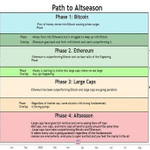
Now that we had an entire cycle where this didn't play out, it's time we brought back the chart.

2
78
Franky Schizo Techno Optimist Limon retweeted

Coming soon.


Franky Schizo Techno Optimist Limon retweeted

Nobody is brave enough to write a novel about rival Silicon Valley effective altruist sex cults obsessed with AGI stumbling their way to world-historical relevance…


Let’s say the frontier labs are successful with alignment. Training costs for an astra level model will be low enough in 3-5 years that all it would take is some dumb Fortune 500 company to spawn an ai that escapes and self reproduces.
79

Franky Schizo Techno Optimist Limon retweeted

i'm leaving a lot of gcs and allocating my time toward what i do best, doing my own dd, game theory, cut the noise and locking in.
people think there's alpha in joining “cabal GCs,” when the real edge is and has always been within you. everything else is noise.
Thinking about why Sam Altman is as so bearish space data centers
I think it’s because if these moratoriums become enough of a problem trump begins using eminent domain. Will see heightened national security concerns

hyperscalers blowing trillions on capex are about to have a rude awakening
over 200 data center bans were made effective in the last 30 days bringing the total to 500 across america
- majority of bans are in the midwest and southern states
- reasoning cites fears of expensive electricity bills and water scarcity
this is a huge problem for the USA.

2
142
Franky Schizo Techno Optimist Limon retweeted

Thoughts after the initial wave of major TMT earnings (hyperscalers):
Bottom Line: This earnings season fundamentally changed the AI investment debate. For the past 18 months, investors questioned whether AI demand was real, whether hyperscalers were overspending, and whether unprecedented AI CapEx would permanently impair free cash flow. I think those questions are now largely behind us. Azure accelerated to +43% (guiding ~45%), Google Cloud accelerated to +82% (with TPU system sales beginning to be recognized as revenue), AWS posted its fastest growth in 18 quarters (+37%) while backlog reached $496B, and Oracle heads into earnings with expectations for another quarter of 90%+ OCI growth (I wouldn't be surprised if OCI approached ~110%). When every major cloud provider is accelerating simultaneously, this is no longer primarily a market-share story, it's a market expansion story driven by AI. That's a rare dynamic in technology. Normally, one platform's acceleration comes at another's expense. This time, everyone is accelerating because AI is expanding the size of the market itself.
What stood out most wasn't the growth rate, it was how confidently management teams defended AI CapEx. Andy Jassy gave one of the clearest explanations of AI infrastructure economics I've heard on an earnings call. Servers begin generating revenue almost immediately after deployment and typically pay back in less than three years, while data centers have 30+ year useful lives, supporting multiple generations of hardware. AWS isn't buying servers speculatively, it has strong visibility into customer demand before triggering most of that spend. Even after raising 2026 CapEx to ~$220B, AWS says it remains capacity constrained and expects demand to exceed supply into 2027. Alphabet raised its own 2026 CapEx guide to $195-205B mid-year for exactly the same reason.
The comment that caught my attention most, however, was Jassy's long-term framing. AWS has historically been viewed internally as a business capable of generating several hundred billion dollars of annual revenue. Today, Amazon believes AWS can ultimately become at least twice that size, and potentially a $1T annual revenue business. That's an extraordinary statement from one of the most disciplined capital allocators in technology. To me, it suggests AI hasn't simply accelerated cloud growth, it has fundamentally expanded the long-term TAM for cloud infrastructure.
The biggest read-through from this earnings season is that the market is moving from debating whether AI CapEx destroys free cash flow to how much incremental free cash flow it can create over the next decade. We're also moving beyond asking whether AI demand is real and toward the much more important question: who captures the economics?
Read-throughs to watch:
Oracle ( $ORCL): Oracle is second-order beneficiary of everything discussed above. Every hyperscaler is telling the market demand still exceeds available capacity, while Oracle enters earnings after posting 93% OCI growth last quarter. If Oracle delivers another quarter of 90%+ OCI growth, or even approaches triple digits, it would further reinforce that OCI has become one of the preferred platforms for frontier AI workloads rather than simply another enterprise cloud provider. Oracle is increasingly participating in the AI infrastructure build-out, not merely enterprise cloud migration.
AI Compute & Semis ( $NVDA $AMD): Three hyperscalers simultaneously increasing CapEx, AWS to $220B, Alphabet to $195-205B, while Microsoft continues signaling elevated AI infrastructure investment and demand that still exceeds supply, is a powerful demand signal for GPUs, networking and custom silicon. Google is commercializing TPUs. AWS disclosed its Trainium business has reached a $25B annualized run rate, growing triple digits. Custom silicon is accelerating alongside Nvidia, not replacing it. One point I think investors underappreciated: Jassy explicitly said post-training, reinforcement learning and agentic workloads are predominantly CPU-intensive. As AI shifts from training toward inference and autonomous agents, the CPU layer scales alongside the GPU layer, not instead of it. That's an important long-term read-through for AMD's EPYC franchise.
Foundry & Semi Cap ( $TSM $AMAT $LRCX $KLAC): Every Trainium chip, TPU and custom ASIC ultimately runs through advanced manufacturing and packaging. TSMC remains the critical bottleneck for custom silicon, while rising hyperscaler CapEx reinforces demand for advanced packaging, HBM and leading-edge wafer capacity. The picks-and-shovels layer of the AI ecosystem continues to benefit regardless of which chip architecture ultimately wins.
Cybersecurity ( $PANW $CRWD $FTNT): One read-through I don't think the market fully appreciates is cybersecurity, one of the few software cohorts I've remained constructive on this year. Andy Jassy noted that security is one of the first topics discussed in virtually every enterprise AI deployment, and AWS launched Continuum, an AI-native vulnerability discovery and remediation platform, in response. I don't see this as a negative for cybersecurity vendors, I see it as validation that AI is dramatically expanding the enterprise attack surface. Every AI agent, API, model endpoint, vector database and autonomous workflow creates another asset that must be secured, monitored and governed. AI infrastructure and cybersecurity are becoming two sides of the same investment theme. That continues to favor integrated platform vendors like Palo Alto Networks, CrowdStrike and Fortinet, which are increasingly securing AI environments rather than just traditional IT infrastructure.
Enterprise AI Platforms ( $SNOW $MDB $DDOG $PLTR): Although, as a whole, I remain cautious on software, I'm still positive on this group. Hyperscalers aren't just building AI infrastructure, they're confirming that AI at scale requires a mature data, orchestration and observability layer underneath it. Every inference workload requires data, storage, vector databases, governance and observability. As AI moves from pilots into production, these layers become mission-critical infrastructure rather than discretionary software spend. The winners won't simply help enterprises build AI, they'll help them operationalize it.
The inference build-out is still in its early innings. AWS noted that most enterprise production workloads still aren't using inference at scale, describing a large "middle of the barbell" between frontier AI labs consuming massive compute and enterprises broadly deploying AI into production. When that middle begins to move, and I believe it will, it represents the largest incremental source of AI infrastructure demand we've seen yet.
Training builds the models. Inference commercializes them.
I continue to believe we're still much earlier in the AI cycle than the market appreciates. The technology debate is largely over. The investment debate is just beginning. The biggest winners over the next decade won't necessarily be the companies building the best models, they'll be the companies that build the most durable platforms, infrastructure and business models around AI.
#AIInfrastructure #CloudComputing #Earnings #Cybersecurity