

2x Founder | Chief Builder @TheBuildersC | Lifelong Learner
Joined February 2021
- Tweets2.1K
- Following1.4K
- Followers2.4K
- Likes2.4K




What VC (money) gets you. 😊

we are @LightspeedIndia. We move mountains for our portfolio companies!
and then sometimes also just find a way of telling them how thankful we are of being a part of their journey.
congratulations @acharyaamrit and @srinathramki and @zetwerk team!

How a small town in Gujarat is beating European pump giants at their own game! 🤯🔥
Western pumps are built for clean European water. But Indian groundwater? It has high salinity, heavy rust-causing minerals, and fine sand that destroys imported pumps in months.
Instead of copy-pasting expensive foreign technology, local artisans in Rajkot built a hyper-specialized cluster supply chain:
1️⃣ Local factories casting custom rust-resistant stainless steel alloys.
2️⃣ Re-engineered pump diffusers that flush out sand instead of trapping it.
3️⃣ Distributed micro-manufacturing where every shop masters one specific component.
The result? 40% cheaper, ultra-durable pumps built for Indian conditions—now exporting to 40+ countries! 🇮🇳💪
What other Indian manufacturing hidden gems should we cover next? Let us know in the comments! 👇
#MadeInIndia #VocalForLocal #BusinessGrowth #StartupIndia #IndianEngineering #Manufacturing #BusinessInsights #EntrepreneursOfIndia
How a tiny sweet shop in Bikaner completely outmaneuvered McDonald’s and Domino's to build India's largest food network.
When global fast-food giants entered India with billions of dollars, they believed burgers and pizzas would redefine the Indian palate.
Instead, a homegrown brand selling bhujia and namkeen silently beat them at their own game. I am talking about Haldiram's.
Long before they became a household name, Haldiram's started as a single, small shop in Bikaner.
The founders noticed a fundamental problem that was holding back traditional Indian snacks: the shelf life was incredibly short, and the quality was never standardized.
While most local sweet shops accepted this as the cost of doing business, Haldiram’s decided to innovate.
They became early adopters of vacuum packaging—a move that allowed their sweets and namkeens to stay perfectly fresh for months.
With the shelf-life problem solved, they obsessively focused on consistent branding and aggressive distribution.
While Western brands were busy selling burgers, Haldiram's standardized the Indian taste bud. Today, their distribution spans across the globe, and their annual revenue eclipses many Western fast-food chains operating in India.
The biggest takeaway here? You don't need to reinvent the wheel or copy Western trends to build a massive business.
If you can take a deeply rooted traditional product, elevate it with modern packaging, strict hygiene, and consistent quality, you can build a brand that is absolutely unshakeable.
What traditional Indian product do you think is ripe for this kind of disruption next?
Actor by day, Python coder by night? 🤯💻
Most people see him on the big screen, but Ben Affleck actually understands neural networks, GPUs, and complex VFX models.
Instead of resting on his acting career, he approached the R&D labs at OpenAI and Google to understand the future of the video production ecosystem. Going in as a tech researcher rather than a Hollywood celebrity, he built an AI startup utilizing machine learning to fix post-production continuity errors.
The final move? He developed the technology, filed the patents, and sold the company to Netflix for a massive $600 million.
Creator mind or business genius? Drop your thoughts below! 👇
#BenAffleck #ArtificialIntelligence #TechStartup #OpenAI #Netflix #MachineLearning #BusinessStrategy #Founders #TechFounders #TheBuildersClub #CreatorEconomy
Indian traffic is a whole different beast. While European horns give up after a few weeks of constant honking, dust, and monsoons, Coimbatore’s Roots Industries re-engineered the game. From water-sealed acoustic chambers to handling 20x continuous honking cycles without circuit failure—this is peak Indian engineering. Today, giants like BMW and Harley-Davidson import these horns!
Tell us in the comments what other brilliant Indian inventions you want to see covered next. 👇
Don't forget to save this reel and follow for more insane stories from our Indian Jugaad series! 🚀
#IndianJugaad #RootsIndustries #CarMod #AutomotiveEngineering #MadeInIndia #Inventions #BusinessCaseStudy #ReelsIndia #AutoEnthusiast`
An Indian brand has successfully tackled a significant markup issue by shutting down four parallel product categories, ultimately building a multi-billion dollar business by addressing a broken supply chain.
While many attribute high retail prices to greedy brand marketing, Peyush Bansal identified a flawed middleman network and chose to automate it.
When Lenskart launched, it wasn't merely an eyewear retailer.
The team initially established separate verticals like Watchkart, Bagskart, and Jewelskart, targeting categories where retail prices were inflated up to 10 times higher than actual manufacturing costs.
The main issue? Multiple layers of distributors, wholesalers, and retail middlemen, each taking a markup that forced consumers to pay premium prices for basic goods.
Through various experiments, data revealed a breakout opportunity in the eyewear market, which exhibited the deepest inefficiencies and highest consumer demand.
Consequently, Lenskart made a decisive move to shut down all other "kart" brands and concentrate solely on eyewear.
However, thriving in a competitive market required more than just an e-commerce platform.
To disrupt the ecosystem effectively, Lenskart bypassed the traditional supply chain by establishing Asia's largest automated lens manufacturing facility in Delhi-NCR.
By automating production and eliminating middlemen, they halved operational costs and redirected those savings to consumers, providing high-quality eyewear at significantly lower prices.
Today, Lenskart holds over 50% of the organized Indian eyewear market share.
The key takeaway is that true market disruption arises from creating a structural advantage in the supply chain that competitors cannot replicate.

Heavy tractors were failing 80% of Indian farmers. Here is how one startup fixed it. 💡👇
Most agricultural machinery is built for massive Western farms, which completely ignores the reality of India: over 80% of our farmers operate on less than 2 acres. Heavy diesel tractors are simply too expensive and hard to maintain for micro-farming.
Enter Kamal Kisan. They turned this massive constraint into a brilliant business opportunity using 3 steps of genius "jugaad":
Zero Fuel: Stripped out diesel engines in favor of lightweight, mechanical push-systems.
Modular Micro-sizing: Scaled down transplanters and weeders to fit 1-acre dimensions, light enough for a single farmer to operate easily.
Massive Time Savings: Tools that reduce 10 days of grueling manual labor into just 1 to 2 hours, slashing labor costs by 70-80%.
It is a perfect example of building frugal, sustainable tools for the actual end-user, rather than forcing corporate machinery onto a micro-market.
#BusinessStrategy #StartupStory #AgriTechIndia #KamalKisan #IndianFounders #GrowthMindset #TheBuildersClub #JugaadInnovation #BusinessReels #FounderJourney
Whenever there is a wave, I see a slew of companies pivoting, people changing their designations, companies, and career trajectories.
I saw it during edtech, during the crypto craze, during the content phase, and now the AI phase..
Earlier I used to think people have no spine - they will go anyside where the wind blows.
Now I look at it as a signal.
Companies are as fickle as these people. They buy the fad!
This is not a bug - this is a feature.
This founder grew up in a strict vegetarian family, yet he went on to build India’s largest fresh meat brand.
This is a story of how an unorganized, 100-year-old traditional market was disrupted using a genius supply chain strategy.
In 2015, Abhay Hanjura noticed a massive paradox in the Indian food ecosystem.
Millions of Indians loved eating meat, but almost everyone hated buying it.
Local meat shops were unhygienic, smelly, and uncomfortable for families. Data revealed that while dairy and grains transitioned to branded, organized retail, the meat industry remained stuck in the past, sold from unhygienic counters wrapped in black polythene bags.
The root problem? No one had cracked the cold supply chain for fresh meat.
Abhay realized that building a bulletproof, end-to-end supply chain could disrupt this untouched industry.
Along with his friend Vivek Gupta, he launched Licious.
Building the brand was about solving a massive trust deficit through vertical integration:
• The Back-End: Licious managed farms directly, implemented a 150-point quality check framework, and introduced clean, premium packaging.
• The Front-End: They set up their own distribution centers, hired dedicated delivery riders, and controlled last-mile delivery to ensure freshness.
• The Core: They operated like a tech-first internet company, using proprietary algorithms to predict daily demand, matching supply with consumption without wastage.
By controlling everything from farm to fork, they guaranteed fresh, hygienic, and premium-quality meat, skyrocketing consumer trust.
Today, Licious generates ₹700 crore in annual revenue and stands as one of the most disruptive startup success stories in India.
The biggest takeaway? True market disruption happens when you are willing to fix the unglamorous backend infrastructure that others ignore.
Building a brand is hard, but building the supply chain behind it is where the real moat is created.

How to Sell to the Bottom of the Pyramid
Building for the grassroots isn't just about charity; it's about brilliant, scalable business models. 💡
Here is how SELCO became India's largest solar company by catering to the bottom of the pyramid. Instead of chasing corporate clients, Dr. Harish Hande solved a massive problem for street vendors and small farmers spending thousands on kerosene.
The masterstroke came down to two genius 'jugaads':
🔹 Modular Customization: Creating ultra-affordable, micro solar kits designed exactly for a specific user's daily needs.
🔹 Micro-Financing: Partnering with "pigmy" agents to collect ₹20-₹30 daily directly from the vendors—dropping their default rate to absolute zero!
SELCO’s journey proves that serving underserved communities can be both deeply impactful and commercially sustainable.
What’s your favorite example of a company mastering the grassroots market? Let us know in the comments! 👇
#StartupIndia #BusinessModel #Entrepreneurship #Founders #SELCO #SolarEnergy #BottomOfThePyramid #MicroFinancing #BusinessStrategy #IndianStartups #StartupFounders
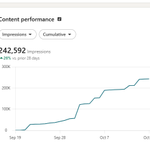
The Last 28 days on linkedin:
Connect there if not already.
There, I post stories that are not on twitter: linkedin.com/in/sohail-khan-…🙂

Western luggage brands designed their products for smooth airports and carpeted hotels—a massive miscalculation for the Indian market. Facing overloaded buses, rough train storage, and heavy monsoons, standard western bags quickly fell apart with broken wheels and torn zippers.
Aristocrat capitalized on this failure by introducing three brilliant product "jugaads" designed specifically for Indian conditions:
1️⃣ Heavy-duty materials: Swapped soft fabrics for heavy-gauge hardshell polypropylene casings.
2️⃣ Unbreakable hardware: Replaced delicate plastic with reinforced steel frame blocks that could survive being thrown.
3️⃣ Smart supply chain: Created decentralized regional molding units to keep up with local demand.
This masterclass in product localization is what permanently replaced traditional steel trunks in Indian households.
What’s your favorite example of a brand perfectly adapting to the Indian market? Let’s discuss in the comments! 👇
#BusinessStrategy #CaseStudy #IndianMarket #AristocratLuggage #ProductLocalization #TheBuildersClub #StartupLessons #Entrepreneurship #MarketingStrategy #BusinessGrowth
This will be true for most Quick services businesses.
While the dark warehouse concept works for the Q-comm, services is a different ballgame.

This is crazy cash burn!!!
Instant househelp startup Snabbit posts Rs 168 crore loss on Rs 12 crore revenue in FY26, @dishaacharya_ @ETtech @pranavmukul
economictimes.indiatimes.com…


Hey guys, we are hiring for a founders office role - Community and marketing domain.
Bangalore Based. Full time. In Office Role.
Person should have 1-2 years of experience in Event organizing or running their own startup.
They can apply here: thebuildersclub.me/hiring/
Please share this in your network / refer if you know anyone.

He made a bold decision that transformed an entire industry: Rajiv Bajaj, upon taking the helm of Bajaj Auto in the 1990s, faced a critical choice regarding the iconic Bajaj Chetak scooter.
For 30 years, the Chetak had been a beloved symbol of middle-class aspirations in India, but Rajiv recognized a harsh reality—the Chetak was becoming obsolete.
As consumers shifted towards fuel-efficient motorcycles, Hero Honda’s Splendor began to dominate the market, leaving Bajaj in the dust.
While many executives might have invested heavily in reviving the Chetak, Rajiv took a different approach.
He made the controversial decision to cease production of the Chetak and instead focus on an untested motorcycle: the Bajaj Pulsar.
Understanding that he couldn't compete with the Splendor on mileage, Rajiv chose to redefine the market through positioning:
- The Power: The Pulsar was launched with powerful 150cc and 180cc engines.
- The Look: It was designed to be sporty and masculine, not just a family vehicle.
- The Emotion: Marketing positioned the Pulsar as a symbol of youth culture and masculinity, making it a standout choice.
This was a risky move; failure could have meant the end of the Bajaj empire and a tarnished legacy.
However, the Pulsar's success redefined the landscape of Indian biking. Today, it stands as one of India’s best-selling sports motorcycles, demonstrating that sometimes, to create a new legacy, one must be willing to let go of the old.

How a small Kanpur company took on thousand-crore FMCG giants with ZERO traditional distribution budget. 🤯👇
This is the ultimate masterclass in Indian business strategy. Here is how Ghadi Detergent won the rural market:
🚚 The Dhaba Hack: Instead of expensive logistics, they tapped into highway dhabas and truck drivers to transport stock in empty returning trucks at ultra-low rates.
🏪 Empowering Kiranas: They skipped massive TV ad spends and instead gave local kirana shopkeepers high profit margins to push the product.
🧵 Hyper-Local Sourcing: By sourcing raw materials locally, they kept product costs low enough for rural households to afford.
By the time the competition figured out their strategy, they were already an iconic brand.
Share this epic breakdown with a founder who needs to see this! 🚀
#BusinessCaseStudy #MarketingStrategy #IndianFounders #StartupStoriesIndia #GhadiDetergent #MarketingTips #GrowthHacking #BusinessJugaad #TheBuildersClub #EntrepreneurIndia