

Science interpreter, palaeontologist, nature lover and music collector.
St. John's
Joined July 2015
- Tweets2.5K
- Following544
- Followers1.3K
- Likes9K


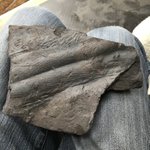

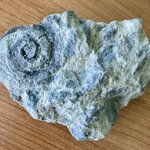


Another big one this #FosilFriday! Our student Heléna has just published a description of the first #Ediacaran ctenophore, Edrathina obditchia. Big science!
frontiersin.org/journals/eco…

It's new publication day this #FossilFriday! My colleague Duncan McIlroy has just published a manuscript outlining lines of evidence used to determine mode of life of the #Ediacaran #Rangeomorpha. Interesting stuff!
doi.org/10.3389/fevo.2026.17…

Dr. Rod Taylor retweeted

#Exceptionally preserved 551-million-year-old fossils indicate the Avalon biota persisted longer than previously believed, suggesting a more severe biodiversity loss during the Kotlin Crisis extinction event. @geosociety phys.org/news/2026-02-except…

Happy #FossilFriday! Here's a thread about the Inner Meadow biota, its unexpected #Ediacaran Date, and a refocusing of Martin Brasier’s #KotlinCrisis.
A link to our just-published paper on the remarkable significance of the Inner Meadow site follows below in this thread.
The team at Geology were also amazing. Here's a link to the article:
pubs.geoscienceworld.org/gsa…
@GSAPublications @MemorialUSci @MUN_EarthSci @WhereLifeGotBig @discoverygeonl
1/2 A reconstruction of Lydonia jiggamintia, a newly described #Ediacaran organism from #Newfoundland, lying on the ancient matground-covered seafloor overgrowing a decaying Fractofusus andersoni.
Paper available (for free) here: bit.ly/4gQ1xF7

New #Ediacaran paper alert! The sponge-like #Lydonia jiggamintia is named for the spiky-topped punk legend John Lydon [aka Johnny Rotten]. The species name is derived from the word for gooseberry in the language of the Beothuk people of #Newfoundland.
palaeo-electronica.org/conte…
