

ForAfrika is an African-founded and led organisation, with over 40 years of impact across the continent, and a vision to see Africa thrive.
Johannesburg, Gauteng, RSA
Joined April 2011
- Tweets3.2K
- Following770
- Followers1.3K
- Likes1.8K




What does it take for a farmers' cooperative to succeed?
In Koboko District, Uganda, 540 smallholder farmers are increasing productivity, creating new income opportunities, and building a stronger future for their cooperative. Through a shared investment model supported by ForAfrika, and the World Food Programme, the Malikuru Multipurpose Farmers Cooperative acquired a tractor that has already helped farmers cultivate 343 acres while creating new revenue streams for the cooperative and local jobs for community members.
"We were tired of using rudimentary ways to plough our land," says Yosa David, the cooperative's chairperson.
Members now hire the tractor, while a new cassava chipper has added another source of income.
This is what co-investment looks like at community level. Read the full story: forafrika.org/economic-empow…
#ForAfrika #MarketSystems #Uganda

Innovate today. Nourish tomorrow. In Mathiang Boma, South Sudan, farmers are doing exactly that.
Three years ago, floods devastated farmland across Mathiang Boma. Today, that waterlogged land is growing rice. Working with @WFP and ForAfrika, farmers turned 55 feddans (about 23.1 hectares) of flood-affected land into productive rice farms, moving from food assistance towards growing, and selling, their own food.
"We planted our first seeds with trembling hands. But when we saw the first green shoots breaking through the water, we knew something was changing," says Adeng Akuith, a lead farmer.
On this #WorldFoodDay, we celebrate African-led transformation in action.
Read the full story: forafrika.org/food-security-…
#ForAfrika #WorldFoodDay #SouthSudan

In six villages in Boma County, South Sudan, families came together to improve sanitation and hygiene practices, creating healthier environments for their children and neighbours.
In just six months, handwashing at critical moments increased from 21% to 34%, while households reporting diarrhoeal illness fell dramatically from 82.8% to 13%.
This #GlobalHandwashingDay, we're celebrating the power of community-led action and the simple habits that help build healthier futures.
Read the Boma Community-Led Total Sanitation (CLTS) Project Evaluation Report: forafrika.org/wp-content/upl…

How do you know nutrition support is working? You follow every child from the first screening to full recovery.
In South Sudan in 2025, ForAfrika's nutrition teams screened 174,689 people for malnutrition, and 11,859 children were treated for acute malnutrition.
The results:
• 99.97% cure rate for severe acute malnutrition
• 98% recovery rate for moderate acute malnutrition
Outcomes like these depend on every link holding: screening, referral, treatment, follow-up, and the food security and livelihoods support that helps families stay well once treatment ends.
Therapeutic food saves lives. A delivery system built around the child is what turns it into lasting recovery.
Explore the South Sudan highlights in our 2025 Annual Report: forafrika.org/wp-content/upl…
#ForAfrika #Nutrition #SouthSudan


We’re thrilled to celebrate an exciting milestone for the Nwoya community!
In September, more than 200 community members, leaders, teachers and pupils gathered in Nwoya District in Uganda, to mark the groundbreaking of Oruka Manfred Bruer Secondary School, a major step toward bringing secondary education closer to families in Purongo sub-county helping ease the financial burden on families who have long relied on schools outside the sub-county for secondary education.
During the ceremony, district leaders highlighted the education gap in Purongo and committed to integrating the school into district and sub-county development plans, with the intention of supporting it under the Universal Secondary Education programme.
We are deeply grateful to the project donor Mr Manfred Bruer for his generosity and commitment to expanding access to education, and to the Nwoya District leadership and community for their contribution.
ForAfrika is proud to help connect generosity, community ownership and local leadership to create lasting opportunities for people in Nwoya.


ForAfrika Uganda was pleased to host Country Directors for the INGO Country Directors Network Meeting, providing a platform to share sector updates, strengthen collaboration and discuss collective action priorities.
The meeting also featured a timely focus on leadership wellbeing, with participants reflecting on the importance of recognising stress early, strengthening peer support and maintaining strong connections across the network.
Thank you to everyone who contributed to the discussions and shared valuable insights.


Behind every child who stays in school is a teacher who shows up for them every day.
On #WorldTeachersDay, we celebrate the teachers, early childhood development (ECD) caregivers, and parent committees who make learning possible in some of Africa's most challenging settings.
In South Africa, we trained 519 ECD caregivers in 2025, strengthening early learning in the centres they lead. In Angola, we strengthened 39 parent-teacher associations and community education committees, our school meals reached more than 4,000 children every day across 12 schools, with students achieving a 78% pass rate in participating schools.
Teachers lead the learning in every classroom. Our role is to help create the conditions for it: a daily meal, safe water, and a community invested in its schools.
Explore our work in Angola and South Africa in our 2025 Annual Report: forafrika.org/wp-content/upl…
#ForAfrika #WorldTeachersDay #Education


How do we know our work is really changing lives, not just delivering services?
Every ForAfrika project starts with a monitoring plan, tracked through our rigorous systems and reviewed with communities through the project implementation. That tells us what support is reaching people, project by project.
Delivery isn't the same as transformation, though. So once a year, we go deeper: the Sustainable Livelihoods Index surveys households across our countries of operation, measuring their access to five capitals that determine whether progress holds.
In 2025, that meant surveying 2,858 households across seven countries, providing insight into the livelihoods of communities representing 8.5 million people. Two levels, one question: are the changes we're seeing lasting?

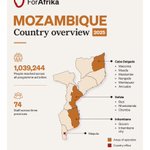
Mozambique faced conflict in the north and recurring cyclones, floods and drought in 2025. Through it all, ForAfrika's presence has remained constant.
Since 1984, our four decades of work in Mozambique have built strong government relationships, deep community trust and the operational infrastructure to deliver emergency response and long-term development side by side, from conflict-affected districts in Cabo Delgado to flood-prone communities in Sofala and Inhambane.
#ForAfrika #Mozambique

When conflict escalated in Cabo Delgado and floods hit Búzi, many partners paused operations in Mozambique, but ForAfrika's rapid-response nutrition teams continued serving communities.
Four decades in Mozambique meant the trust and infrastructure were already built. Nutrition support kept reaching isolated and displaced families, even as the crisis deepened.
This is African-led transformation in action.
Read Arsenio’s reflections in our Annual Report, here 👉 forafrika.org/wp-content/upl…
#ForAfrika #Nutrition #Mozambique


Reliable solar power is strengthening healthcare delivery at Karat Primary Hospital in Konso Zone, Ethiopia. The solar initiative was delivered by ForAfrika Ethiopia in partnership with ForAfrika Deutschland e. V. and Aid Pioneer, with support from the Next Energy Foundation and E.ON Foundation, alongside local health authorities.
The Ethiopian News Agency featured the inauguration, highlighting the importance of this milestone in improving access to dependable and sustainable energy for essential health services. Read the ENA coverage: ena.et/web/amh/w/amh_9517173


Crisis response saves lives. The real test is whether communities can move beyond the crisis and create a more stable future.
In South Sudan, ForAfrika's nutrition teams are helping families move from emergency screening to ongoing care, strengthening trust in local health services. In Angola, trained birth attendants are connecting communities with the healthcare they need.
The goal isn't just to reach people, but to help them achieve better outcomes long after the crisis has passed.
This is African-led transformation in action.
Read the full story, here 👉 forafrika.org/south-sudan/fr…

ForAfrika has made a real difference in improving access to health, nutrition and WASH services across Aweil East and Aweil West. As this project comes to an end, and with donor funding under pressure and drought making conditions harder, we ask that this progress not be lost,” State Minister of Labour, Hon. Abuor Gordon Nhial, during the learning event on ForAfrika’s GFFO-funded Health, Nutrition and WASH project in Northern Bahr el Ghazal, South Sudan.
The event brought together the South Sudan State Minister of Labour, the State Minister of Health, the State Minister of Cooperatives and Rural Development, the State Relief and Rehabilitation Commission, community leaders and partners from Aweil East and Aweil West to reflect on two years of implementation.
Discussions recognised progress in immunisation, maternal health, nutrition, WASH services and local capacity, including the skills built among water committees and technicians to maintain boreholes and water points. At the same time, government representatives stressed the need to sustain these gains beyond the project period, particularly the continuity of health services at Achana PHCU+ and Mathiang Nientok PHCU+.
For two years, the project has supported refugees, IDPs, returnees and host communities with essential health, nutrition, protection, water and sanitation services. ForAfrika will continue working with government, communities and partners to strengthen local ownership, protect essential services and ensure that the gains made through the project become a foundation for longer-term resilience and self-sufficiency.


What if a school could help feed itself? 🌱
That vision was on display at Inhassoro’s District School Production and Gastronomy Fair, where 12 schools showcased how agriculture, nutrition and practical learning can work together.
ForAfrika’s school feeding programme currently supports 4,120 students in the district, alongside 10 school gardens and 5 poultry units being developed to bring more fresh, nutritious food into school meals.
The impact goes beyond the plate: students gain practical skills, schools strengthen their ability to generate food and income, and communities become less dependent on external support.
This is what Food Security and Livelihoods looks like in practice: building the capacity to feed today while strengthening resilience for tomorrow.
#ForAfrika #Mozambique #Inhassoro #FoodSecurity #Livelihoods #SchoolFeeding


ForAfrika is expanding into Sudan.
Communities in Sudan continue to demonstrate extraordinary strength in the face of ongoing humanitarian challenges. We are honored to join local partners in supporting recovery and resilience efforts.
Registered with Sudan's Humanitarian Aid Commission (HAC), we are establishing our operational presence in Sinja locality, Sennar State, leveraging our tested technical, operational and institutional capacity from comparable complex humanitarian settings, particularly South Sudan and building on our deep regional experience and commitment to African-led solutions.
Through principled, community-centered humanitarian action, we aim to help meet immediate needs while protecting livelihoods, strengthening resilience and supporting communities to shape their own futures.

ForAfrika has completed another phase of its cholera response in Mongoumba, Lobaye, strengthening prevention and community preparedness in some of the areas affected by the outbreak.
Our response included:
💧 25 handwashing stations installed
🧼 480 bars of soap distributed
💊 40 kg of Aquatabs and 45 kg of chlorine provided
📢 More than 370 hygiene awareness materials distributed
👥 Community health workers and volunteers trained in cholera prevention and household disinfection
Working alongside local authorities and health services, our teams supported communities including Mongoumba, Zinga, Mongo, Gbango and Sédalé.
Continued access to safe water, sanitation and reliable hygiene information remains essential to protect communities from cholera.
FRENCH:
ForAfrika vient d’achever une nouvelle phase de sa réponse au choléra à Mongoumba, dans la Lobaye, en renforçant la prévention et la préparation des communautés touchées par l’épidémie.
Notre intervention a permis :
💧 L’installation de 25 dispositifs de lavage des mains
🧼 La distribution de 480 savons
💊 La mise à disposition de 40 kg d’Aquatabs et 45 kg de chlore
📢 La distribution de plus de 370 supports de sensibilisation
👥 La formation d’agents de santé communautaire et de volontaires à la prévention du choléra et à la désinfection des ménages
En collaboration avec les autorités locales et les services de santé, nos équipes ont soutenu plusieurs communautés, notamment Mongoumba, Zinga, Mongo, Gbango et Sédalé.
L’accès continu à l’eau potable, à l’assainissement et à une information fiable sur les bonnes pratiques d’hygiène reste essentiel pour protéger les communautés contre le choléra.


Are you attending the Benguela International Fair from 9–13 September?
Come and greet us at Pavilion 2 and meet the ForAfrika team!
Discover how we have been working alongside communities in Angola since 1991, supporting locally led solutions and helping build an Africa that thrives.
📍 Pavilion 2
📅 9–13 September
We look forward to welcoming you!
-----
Vai passar pela Feira Internacional de Benguela, de 9 a 13 de Setembro?
Então venha visitar-nos no Pavilhão 2 e conhecer de perto a equipa da ForAfrika!
Estamos em Angola desde 1991, a trabalhar lado a lado com as comunidades para criar oportunidades, fortalecer capacidades e contribuir para uma África que prospera.
📍 Pavilhão 2
📅 9–13 de Setembro
Passe por lá, venha conversar connosco e conhecer melhor o nosso trabalho. Esperamos por si!

For more than three decades, ForAfrika has walked alongside communities in Rwanda, not just responding to need, but building the confidence, skills and systems that equip people to shape their own futures. From young women building sustainable businesses to farmers moving to year-round production and communities strengthening their own financial systems, this is what sustained, community-led partnership looks like: creating opportunities that continue to benefit families long into the future.
Read the more about our work in our Annual Report: forafrika.org/wp-content/upl…


We know that Africa's food systems require integrated investments to help communities feed growing populations, create meaningful jobs for young people, protect children from malnutrition, sustain farmers’ incomes, withstand shocks from extreme weather events, and support local markets even during crisis. @TopafricanewsC highlights how ForAfrika’s interventions in rural Rwanda are contributing to resilient food systems, improved access to safe water, early education and nutrition support, helping communities strengthen overall household wellbeing. These interconnected, community-centered solutions remain critical to Africa’s food systems transformation. Read the full article topafricanews.com/2026/09/01…

Across Rwanda, women are moving beyond subsistence farming to build their own businesses. In Kamonyi District, livelihood diversification has helped women start enterprises in six business sectors and build stronger business skills, creating steadier household incomes. Many have also taken on leadership roles in their Village Savings and Loan Associations, giving them a greater say over how their families' money is managed.
This is African-led transformation in action: communities building their own pathways from subsistence to enterprise.
