







Pinned Tweet
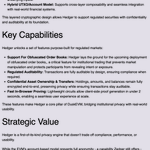
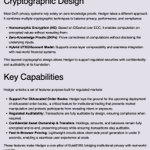
Hedger is $Dusk latest dApp on confidential execution layer for regulated securities on an EVM-compatible L2. (finality, staking, consensus, DA still on L1)
-FHE-based (Proved by #ZK)
-Obfuscated order books
-Private ownership
-Auditable by regulators
-In-browser proving (~2s)


dusk-network:native
Did you know the new Dusk Web Wallet lets you:
→ Stake DUSK without running a node, with @sozu_dusk liquid staking
→ Send DUSK to a .dusk name
→ Request payments with a link or QR code
Have you tried it yet?
apps.dusk.network/wallet


dusk-network:native
#RWA
#Tokenization
Tokenization shouldn't stop at the token.
Many tokenized securities still rely on the same custody, registry and settlement processes offchain. The token is new, and the intermediaries are the same.
With native issuance, the asset itself is created onchain. Dusk can carry the whole lifecycle on one chain:
→ Issuance
→ Trading
→ Settlement
→ Corporate actions
That's the difference between a tokenized asset and an onchain market.
See the full lifecycle on Dusk ↓

Duskodino retweeted

This is why you work with issuers, not around them. The goal is to bring securities onchain and remove unnecessary intermediaries, not just put a token on top of the same old TradFi stack.
Issuers risk their reputation on products they don't control, while investors inherit yet another counterparty, potentially without the legal protections they would otherwise expect. And guess who gets the blame when something goes wrong?

Duskodino retweeted
“Dusk is focused on bringing securities onchain … actually bringing the whole lifecycle onchain and disintermediating a lot of the institutions and players that come in there.”
Our CTO @HeinDauven on the @HouseofChimera Privacy Stack Space.
Duskodino retweeted
The goal is NOT to put intermediaries onchain. It's to make them unnecessary and ensure the value flows back to those operating the network.
STOP tokenizing intermediaries.

“The whole idea behind @DuskFoundation
is to remove intermediaries and return earnings to the people operating the network. Whether it's settlement, issuance or trading. Value creation flows back to participants.”
~ Hein Dauven - CTO of the Dusk blockchain
Duskodino retweeted
Dusk joins @HouseofChimera's Privacy Stack MEGASPACE in less than 1 hour.
Our CTO @HeinDauven joins alongside @RonneTVR from @zano_project and @herelle_jean from @crunchDAO.
Tune in ↓

No financial institution wants client positions on a chain every competitor can read.
So what has to stay confidential first? Hear it from:
🔹 @RonneTVR from @zano_project
🔸 @HeinDauven from @DuskFoundation
🔹 @herelle_jean from @crunchDAO
Mon, 1 PM UTC. RSVP 👇
xitter.cf/i/spaces/1KoXKAzlgXKXB…

Tomorrow, our CTO @HeinDauven joins @HouseofChimera's Privacy Stack MEGASPACE.
20 teams on one stage, including @near_intents, @0G_labs and @Dashpay.
🗓️ Mon, Nov 16, 13:00 UTC
Set a reminder ↓
Duskodino retweeted
Binance Pick closes Sunday at 23:59 UTC.
This weekend decides the final weekly and season leaderboards of the 1,000,000 USDC campaign.
Sponsored by $DUSK, powered by @predictdotfun.
Make your picks ↓

Breaking down @nocturne_stds's 1st building block: Atlas
Think of it as a smart contract phonebook for $DUSK:
• Safe upgrades: swap backend contracts without moving vault funds
• Timelocked governance: guarded by Knot BLS MultiSig delays
Core infra powering Vigil!

Hello again, everyone! We really appreciate all the support we have received so far. Let's start by taking a look at our first public building block: Atlas.
Atlas is a small smart contract registry that manages a list of names. Each entry names a service and includes the address of the contract that provides it.
An Atlas instance is deployed for a specific purpose. Each project maintains its own list on its Atlas instance, and another project deploys a separate one, so many lists exist on the chain at the same time. A contract only follows the Atlas instance whose address it carries. This instance is deployed first. The contracts that use it are deployed afterwards, each carrying the correct Atlas address. When one of these contracts requires a service, it queries Atlas for the name and receives the assigned address. Later, a new contract can be connected to the same name. When the deployed contracts query Atlas again, they find the new address.
Someone has to be authorized to update that list. This role is assigned to the guardian, as specified in the Atlas contract itself. The guardian can be replaced at a later date, and this takes effect after a waiting period. If the guardian is a key, they can change the name on the list and Atlas will then apply the change immediately.
To delay a name change and/or enable MultiSig decisions, the guardian role is given to a warden instead. The warden holds the change and writes it onto Atlas after a set waiting period. This process is based on our Knot BLS MultiSig implementation, which we will discuss next time.
For Rust, the call types are the crate nocturne-atlas-encoding, and the event decoder is nocturne-atlas-event-decoder. The Atlas contract is built from the repository: github.com/Nocturne-Standard…
Our first product, Vigil, keeps your $DUSK in a secure vault. The vault asks Atlas which contract to call for each purpose, and it asks again on every call, so that contract can be replaced while the vault stays put.
So far, we have only deployed and tested Atlas on Nocturne and it has not yet been audited.
Take a look at the docs for more information docs.nocturne-standards.org/…

18
271
Duskodino retweeted

It is good to see that #Atlas is introducing an interesting approach to contract management, combining flexibility with controlled updates and security considerations.
These are the kind of building blocks that can strengthen the $DUSK ecosystem and make it easier to develop secure and reliable applications.
Hello again, everyone! We really appreciate all the support we have received so far. Let's start by taking a look at our first public building block: Atlas.
Atlas is a small smart contract registry that manages a list of names. Each entry names a service and includes the address of the contract that provides it.
An Atlas instance is deployed for a specific purpose. Each project maintains its own list on its Atlas instance, and another project deploys a separate one, so many lists exist on the chain at the same time. A contract only follows the Atlas instance whose address it carries. This instance is deployed first. The contracts that use it are deployed afterwards, each carrying the correct Atlas address. When one of these contracts requires a service, it queries Atlas for the name and receives the assigned address. Later, a new contract can be connected to the same name. When the deployed contracts query Atlas again, they find the new address.
Someone has to be authorized to update that list. This role is assigned to the guardian, as specified in the Atlas contract itself. The guardian can be replaced at a later date, and this takes effect after a waiting period. If the guardian is a key, they can change the name on the list and Atlas will then apply the change immediately.
To delay a name change and/or enable MultiSig decisions, the guardian role is given to a warden instead. The warden holds the change and writes it onto Atlas after a set waiting period. This process is based on our Knot BLS MultiSig implementation, which we will discuss next time.
For Rust, the call types are the crate nocturne-atlas-encoding, and the event decoder is nocturne-atlas-event-decoder. The Atlas contract is built from the repository: github.com/Nocturne-Standard…
Our first product, Vigil, keeps your $DUSK in a secure vault. The vault asks Atlas which contract to call for each purpose, and it asks again on every call, so that contract can be replaced while the vault stays put.
So far, we have only deployed and tested Atlas on Nocturne and it has not yet been audited.
Take a look at the docs for more information docs.nocturne-standards.org/…

A look into @nocturne_stds's 1st building block: Atlas 🌐
Think of it as an on-chain registry for $DUSK smart contracts:
• Dynamic upgrades: update service addresses without moving your vault.
• Security: gated by Guardian/Warden with Knot BLS MultiSig delays.
Hello again, everyone! We really appreciate all the support we have received so far. Let's start by taking a look at our first public building block: Atlas.
Atlas is a small smart contract registry that manages a list of names. Each entry names a service and includes the address of the contract that provides it.
An Atlas instance is deployed for a specific purpose. Each project maintains its own list on its Atlas instance, and another project deploys a separate one, so many lists exist on the chain at the same time. A contract only follows the Atlas instance whose address it carries. This instance is deployed first. The contracts that use it are deployed afterwards, each carrying the correct Atlas address. When one of these contracts requires a service, it queries Atlas for the name and receives the assigned address. Later, a new contract can be connected to the same name. When the deployed contracts query Atlas again, they find the new address.
Someone has to be authorized to update that list. This role is assigned to the guardian, as specified in the Atlas contract itself. The guardian can be replaced at a later date, and this takes effect after a waiting period. If the guardian is a key, they can change the name on the list and Atlas will then apply the change immediately.
To delay a name change and/or enable MultiSig decisions, the guardian role is given to a warden instead. The warden holds the change and writes it onto Atlas after a set waiting period. This process is based on our Knot BLS MultiSig implementation, which we will discuss next time.
For Rust, the call types are the crate nocturne-atlas-encoding, and the event decoder is nocturne-atlas-event-decoder. The Atlas contract is built from the repository: github.com/Nocturne-Standard…
Our first product, Vigil, keeps your $DUSK in a secure vault. The vault asks Atlas which contract to call for each purpose, and it asks again on every call, so that contract can be replaced while the vault stays put.
So far, we have only deployed and tested Atlas on Nocturne and it has not yet been audited.
Take a look at the docs for more information docs.nocturne-standards.org/…
Private KYC on dusk-network:native
#RWA
#Tokenization

Duskodino retweeted
It is fantastic to see that independent developers are building essential tools for #DuskDS and #DuskEVM. The focus on security, open-source development, and practical infrastructure is particularly encouraging.
A strong ecosystem around $DUSK needs more than a solid protocol; it needs developers who create the tools that make it usable and accessible to others.
Hello everyone,
We would like to introduce ourselves to the public by sharing a few handwritten words, as a contrast to our AI polluted timelines.
We are developing services, smart contracts, tooling, and more across DuskDS and DuskEVM, with the aim of providing valuable building blocks for our ecosystem.
Security is a cornerstone of our agenda, and the first upcoming release will be Vigil, a $DUSK Vault, that allows you to control your funds and interact with the chain in a secure environment.
It uses two open source building blocks:
- Atlas, a contract registry github.com/Nocturne-Standard… (credit to @tminus_dusk for making us aware of the concept)
- Knot, a BLS multisig contract implementation github.com/Nocturne-Standard….
We will test on Nocturne (DuskDS Testnet) and see where we can go from there, one step at a time. We are very excited to show you the first version of our vision.
We have already collaborated with the Dusk Foundation on small enhancements to the Dusk stack, identified through exploring use cases on DuskDS. We want to continue this work, and we also want to encourage other developers to join us in demonstrating Dusk's potential to the world.
This project began purely out of curiosity, leading to the development of a solid knowledge base that we are continuing to build on and share as open source. We are currently building a clean workflow and set up our infrastructure, so excuse us if you encounter any issues when exploring our organization on the website and beyond.
We will leave you with the website, where you can find out more about us. Thank you for reading.
nocturne-standards.org

Duskodino retweeted

Hello everyone,
We would like to introduce ourselves to the public by sharing a few handwritten words, as a contrast to our AI polluted timelines.
We are developing services, smart contracts, tooling, and more across DuskDS and DuskEVM, with the aim of providing valuable building blocks for our ecosystem.
Security is a cornerstone of our agenda, and the first upcoming release will be Vigil, a $DUSK Vault, that allows you to control your funds and interact with the chain in a secure environment.
It uses two open source building blocks:
- Atlas, a contract registry github.com/Nocturne-Standard… (credit to @tminus_dusk for making us aware of the concept)
- Knot, a BLS multisig contract implementation github.com/Nocturne-Standard….
We will test on Nocturne (DuskDS Testnet) and see where we can go from there, one step at a time. We are very excited to show you the first version of our vision.
We have already collaborated with the Dusk Foundation on small enhancements to the Dusk stack, identified through exploring use cases on DuskDS. We want to continue this work, and we also want to encourage other developers to join us in demonstrating Dusk's potential to the world.
This project began purely out of curiosity, leading to the development of a solid knowledge base that we are continuing to build on and share as open source. We are currently building a clean workflow and set up our infrastructure, so excuse us if you encounter any issues when exploring our organization on the website and beyond.
We will leave you with the website, where you can find out more about us. Thank you for reading.
nocturne-standards.org