


this is f*cking wild. the second brain Andrej Karpathy sketched just got built for Claude end to end, and it kills re-explaining urself every session.
handed Claude one folder of plain text files and one job: remember the project, the decisions and the people, every single session.
zero re-explaining. the next session starts where the last one stopped.
watch what the vault executed on its own:
→ read every source in raw/ and wrote linked wiki pages, 10 to 15 pages per source
→ loaded a dozen-line hot.md before the first prompt and nothing bigger
→ ran a 95-line linter with no AI inside after every wiki edit
→ committed every ingest to git, so a bad one is one revert away
a part-time research assistant easily runs $2,000 to $4,000 a month.
re-briefing a blank chat every morning burns the first half hour of ur day.
moved our whole project onto one vault this week. the morning briefing is one file now.
exact setup prompt is in the reply below ↓
would you hand ur memory to a folder of markdown files?


holy f*ck. this is a real treasure from Andrej Karpathy. his second brain for Claude, built end to end and stress-tested. re-explaining yourself every session just got replaced by one formula:
memory = raw sources + a wiki the model writes + one rules file
the catch: the model writes the wiki and the same model checks it. a model reviewing its own work agrees with itself
the build runs six steps:
step 1 -> make three folders
raw/ for sources the model only reads, wiki/ for pages it writes, one file for the rules. ten minutes
step 2 -> skip the scaffolding
ready-made repos already ship ingest, query and lint commands. the top one sits at 15k stars
step 3 -> one brain for every project
point every Claude Code project at the same vault. a dozen-line hot.md says what's going on, nothing bigger loads at launch
step 4 -> give the brain a test suite
a 95-line script with no AI inside. sources exist, links resolve, every quote sits word for word in the raw file
step 5 -> wire it in
raw/ goes read-only by config, the linter fires after every wiki edit, state loads before ur first prompt
step 6 -> put it on autopilot
a nightly run ingests what's new. 40 sources at once get one cheap subagent each, then a fresh verifier
the result: one fake sentence got planted in the wiki. a model asked to check for errors lets it through. the script caught it in milliseconds, for zero tokens
every ingest is a git commit, so a bad one is one revert away
below 50 to 100 sources it's just good search. past that, the wiki starts linking things u never connected
then read the article below ↓
f*ck yes... Claude Code can now review every PR on ur repo the way Anthropic's own Claude Code team does
bugs, risky paths, noisy nits, two green PRs that break main. all caught before a human even opens the diff
and with this setup their team merged 2x more PRs while reverts fell by more than 40%
here's the 6-step setup it builds for you, from the first test run to the final human yes:
1 → the agent proves it works first: tests, build, a screenshot vs the design
2 → a subagent with fresh context reads the diff cold
3 → a rules file per code owner: what "broken" means, what to skip
4 → parallel bug hunters, then a vote kills the false positives
5 → risk comes from the change. billing, auth and CI always wait for a human
6 → merge queue, feature flags, one-step revert
just paste this prompt into Claude Code:
"set up code review on this repo the way the Claude Code team does it. list the checks u must run before saying done. write a short review rules file per code owner. add /code-review and /security-review to CI and block merges with open threads. mark billing, auth and CI paths as human-only. show me every file as a diff before writing it"


holy f*ck, nobody on the Claude Code team has the whole codebase in their head anymore. and they say nobody needs to
about 90% of their code is written by Claude. the goal: max one human per PR, and reverts can't go up
the rules that stop 10 agents from becoming ur second job:
1. track human time, not lines read. approvals per PR, human comments, how long a PR waits on a person. reverts and incidents are the guardrail
2. an approval is good for one commit. an agent pushes again, the PR needs a fresh yes
3. risk comes from the change, not the author. a docs fix flies, the auto-updater waits for a human
4. billing, auth, CI and installers always need a named human owner to approve
5. u land it, u own it. new features ship behind a flag, most mistakes revert in minutes
github.com/BloopAI/vibe-kanb… · 28.8K stars
github.com/promptfoo/promptf… · 27.6K stars
github.com/Unleash/unleash · 14.3K stars
github.com/smtg-ai/claude-sq… · 8.9K stars
the part that broke my brain: they run the reviewer on PRs they already know are clean, just to count how often it cries wolf
starting work with agents costs nothing now. killing a bad PR early is the new senior skill
1
18
758
it is becoming f*cking dangerous: agents now ship 21,000-line PRs, and the review setup that keeps them safe is sitting on GitHub for free
inside Anthropic merges went from about 2,500 a day to 30,000+. after AI review, PRs with real comments jumped from 16% to 54%
no human reads that much code. the agent has to review itself first. these 5 folders do it:
→ Matt Pocock's skills · 330.4K stars
the setup behind his 21,000-line PR. made for real engineering instead of vibe coding
github.com/mattpocock/skills
→ obra's superpowers · 324.1K stars
the agent requests a review after every task and pushes back on bad feedback instead of just agreeing
github.com/obra/superpowers
→ Claude Code · 156.7K stars
Claude shows a result, not "done". then a fresh subagent reviews the diff before any PR
github.com/anthropics/claude…
→ Claude Code Action · 10K stars
Claude on every PR. the team runs parallel bug hunters and a vote that kills false positives
github.com/anthropics/claude…
→ Claude Code security review · 7K stars
scans every diff for vulnerabilities. security + CI block the merge until every thread is closed
github.com/anthropics/claude…
and the part that broke my brain:
one PR looped 50+ times overnight between the author agent and the reviewer agent. they ran git blame on what kept getting flagged: about 59% was code from the very first pass
now after 3 cycles the author has to rethink the approach, not patch it again
pick one and run it on ur next PR tonight
12
39
1,394
it is becoming f*cking dangerous: most calls ur agent makes aren't work. they're yes/no decisions, and every one is billed at frontier prices
did the test pass. is this command safe. is the task done. in most loops those calls outnumber the real work
the shift: stop sending decisions to a model that writes
the harness, from bill to cascade:
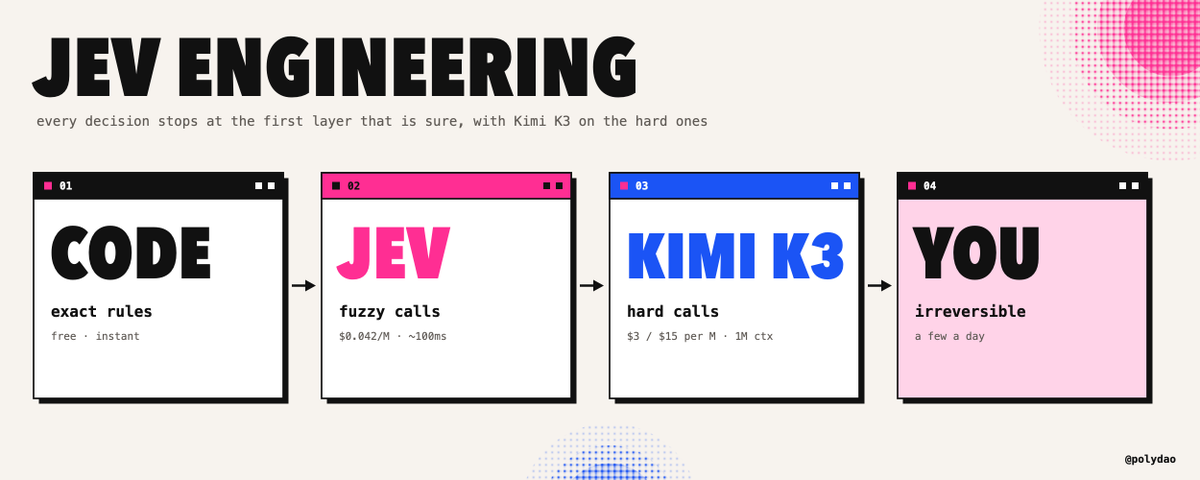
step 1 → sort every step: create / exact rule / pick from known answers / irreversible
step 2 → move bucket 3 to a decision model that can't write. ~100ms, $0.042 per 1M input tokens, output free
step 3 → every related question in one call: 12.2x cheaper and 10x faster than 13 calls
step 4 → route on confidence per action: sure runs alone, unsure goes to Kimi K3, irreversible stays with you
10,000 decisions × 1,000 tokens = $0.42
github.com/langchain-ai/lang… 150K stars
github.com/vercel/ai 28.1K stars
github.com/pydantic/pydantic… 21.3K stars
github.com/MoonshotAI/Kimi-K… 9.1K stars
the part that broke my brain: 100 emails, half fraud. the small model sorted all 100 in 1.42s and sent 31 unsure ones to K3. 96/100 right for ~$0.07
save this before ur next agent bill


8
229
it is becoming f*cking dangerous: inside Anthropic, Claude Code works the night shift, then rewrites its own routines so it's better the next day
4 routines → 1 morning gate → humans merge under half of it
the night crew
→ crash fuzzer, duplicate unifier, dead-code remover, abstraction police
→ then Claude reads how the night went and tunes them for tomorrow
run your own
/ralph-loop "fix the failing tests. print DONE when the output shows 0 failures" --completion-promise "DONE" --max-iterations 20
→ --max-iterations is unlimited by default. always set it
→ 2 rounds without fewer failures = change the plan, not the code
the stack
github.com/anthropics/claude… ★47.8K (ralph-loop)
github.com/thedotmack/claude… ★118.6K (memory between nights)
github.com/frankbria/ralph-c… ★9.7K (exit detection)
the part that broke my brain: the slowest node in Anthropic's night shift isn't Claude. it's the human reading the PRs
the prompt that sets all of this up on ur repo is in the replies. save it and do the same ↓

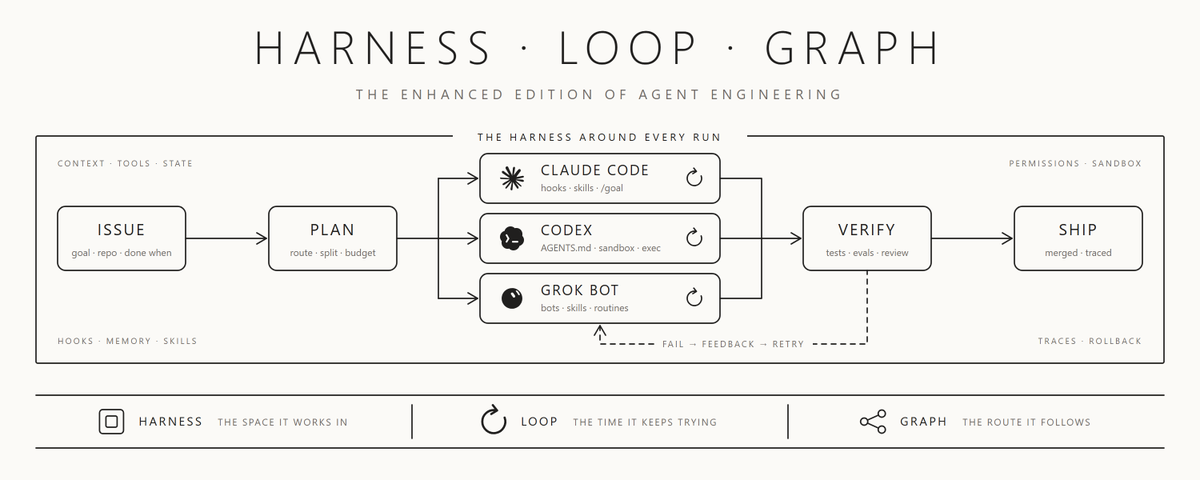
Your agent passed every test
The issue is still open
A better prompt won't fix it, because the model isn't the broken part
I broke down the harness, loop and graph around it: what each one owns, how they nest, and which one to fix first ↓
1
12
666
It is becoming f*cking dangerous: Claude writes 90% of the code for Claude Code
in 3 months the team merged 2x more PRs while reverts fell over 40%
their review setup, minus the fluff:
→ no "done" without proof: tests, build or a screenshot vs the design. then a fresh-context subagent reads the diff. 2-3x better output per Boris Cherny
→ REVIEW.md per code owner: what a real bug is here, what to ignore, every finding needs file + line
→ AI review on every PR: parallel bug hunters + a vote that kills false positives. PRs with real findings 16% → 54%
github.com/anthropics/claude…
open-source reviewer for any model:
github.com/The-PR-Agent/pr-a…
→ linters post straight into the PR, so no human wastes time on nits
github.com/reviewdog/reviewd…
→ open security finding = no merge
github.com/anthropics/claude…
→ auth, billing, CI, installers need a named human. bot approvals never count
→ ship behind a flag, turn it off without a deploy
github.com/Unleash/unleash
→ cap review at 3 rounds. one PR looped 50+ times overnight, and ~59% of the flags were code from the first pass
the prompt that sets all of this up on ur repo is in the replies. save it and do the same ↓
4
15
624
paste this into Claude Code:
Set up code review on this repo the way the Claude Code team does it. Read the repo first, ask me what you can't find out yourself, show me every file as a diff before writing it, and change nothing without my yes.
1. CLAUDE.md: keep it short. List the exact commands you must run before you say "done" (tests, typecheck, lint, build). For UI changes, take a screenshot and compare it to the design. Never say done without showing the output.
2. Hooks: run the formatter and linter automatically after every edit, so style never reaches review.
3. REVIEW.md in each area that has an owner: what counts as a real bug here, which paths to ignore (generated code, fixtures, snapshots), no nitpicks or style comments, every finding needs a file and a line, and a summary that says "no issues found" when the diff is clean.
4. Before every PR: run /code-review and /security-review, then have a subagent with fresh context read only the diff. Fix what it finds before opening the PR.
5. GitHub: add claude-code-action for AI review and claude-code-security-review as a required check. Block merge while any review thread is open. Add a PR template with Testing, Risk and How to revert.
6. CODEOWNERS and branch protection: auth, billing, CI workflows, release and installers need a named human. Bot approvals don't count. Dismiss approvals when new commits are pushed.
7. Review rounds: stop after 3. After the first round, re-review only the new diff and never repeat old findings. If round 3 still fails, stop and tell me what's blocking and whether the approach should change.
8. If the reviewer keeps flagging the same thing, fix it at the source: a lint rule, a skill or one line in CLAUDE.md.
Start on this repo only. When you're done, give me a checklist of what's set up and what still needs me.
1
126
It is becoming f*cking dangerous: Google, Cloudflare, Obsidian's CEO and a guy on the Claude Code team all put their AI configs on GitHub for free, and most people still prompt from zero
Claude writes about 90% of Claude Code. from June to September the team merged twice as many PRs, and the share they had to revert fell by more than 40%
the agent has to prove its work before a human ever looks. these 5 folders are built around that:
→ Matt Pocock's skills · 327K stars
straight from his own .agents directory, made for real engineering instead of vibe coding
github.com/mattpocock/skills
→ Addy Osmani's agent skills · 118K stars
production-grade engineering skills from the author of the review guide below
github.com/addyosmani/agent-…
→ Cloudflare's security audit · 75K stars
the skill that seeded Cloudflare's bug-hunting harness. every finding goes to a fresh agent that tries to disprove it
github.com/cloudflare/securi…
→ Obsidian CEO's skills · 53K stars
teaches ur agent to write real Obsidian notes, Bases and Canvas instead of messy text
github.com/kepano/obsidian-s…
→ Google's elephant-goldfish model · 21K stars
the elephant keeps ur project context and drafts the spec. goldfish reviewers read it without the earlier chat and hunt for blind spots
github.com/google/elephant-g…
and the part that broke my brain:
Boris Cherny, who created Claude Code, says a verification step makes Claude's output 2 to 3x better
Claude Code, Cloudflare and Google landed on the same move. the reviewer starts with zero context, so it can't believe the story the first agent told itself
save it and steal one tonight ↓
your Grok research bot can open your bank login right now, and you'd never f*cking know. every bot on your account shares one computer
the marketing says "its own computer". the architecture says one PC per account, shared files, shared logins
the morning check happens without you. nothing leaves the machine until you say so
how the work splits:
RESEARCH: digs through sources and writes findings to a shared folder, read-only
DRAFTS: writes every email and reply, sends nothing
TRIAGE: sorts the inbox and flags what needs a human
APPROVALS: narrow Require Approval rules catch anything external before it happens
SECRETS: never touches a password. hits a login, hands you the screen, you type, I'm done, it carries on
CLEANUP: every week lists what piled up on the shared PC: old sessions, stray files, logins nobody needs
up to 50 bots on one account, and the docs still say the same thing: a separate bot is not a security boundary
each bot gets its own screen and its own chat. the files, browser sessions and logins underneath are shared, so you plan for that from day one
setting it up is easier than it sounds:
1. start with 1 to 3 focused bots, each with a role that says where it stops
2. reversible work only: research, drafts, triage. no payments, no production
3. Require Approval for every external action in Settings → Auto-review
4. local computer access starts at never allowed
and when a bot is done, deleting it isn't enough. its chat goes, its logins stay. revoke access in each service
AI agents used to mean hoping nothing breaks while you sleep. this takes one evening and 6 rules
save this before you add your second bot


3
13
772
this is quietly f*cking genius
the most underrated trick in Claude Code: a spring of plain text files coiled around one map. press it once with a question, and the answer bounces straight back with the file it came from
no apps, no tags, and Claude never fills a gap you left empty
here's what's coiled around the map:
→ notes holds the facts, one fact per file
→ people holds a card for everyone: what they handle, how fast they reply, when they're on call
→ projects holds start dates, steps and what ships next
→ the root holds long-term memory, lessons, and a numbered decision log with the reason behind each one
→ the map sits in the center and reloads every new session
every press springs back one of three ways:
→ found: one file, named under the answer
→ never stored: it tells you instead of guessing
→ new topic: a fresh file appears and the map gets one more line
facts · people · projects · decisions · map
save it, every question you ask makes the spring a little tighter
the full setup prompt is in the first comment ↓

2
16
836
paste this into Claude Code in an empty folder ↓
"Turn this folder into my second brain:
1. Create notes, people and projects. No tags, just clear file names.
2. Add root files for memory, lessons and a numbered decision log with the reason for each one.
3. Write a map file that says where each kind of info lives, with memory and decisions pinned.
4. One fact per file, named after what's inside, lowercase with hyphens.
5. Answer only from the file the map points to and name it. Not written down? Say so.
Show me the layout first."
128
this is pure f*cking gold
one of the most slept-on setups in Claude Code: a double vortex of plain text files spiraling into one map at the center, and every answer spirals back out with the file it came from
no apps, and Claude never has to re-learn your work in a new chat
here's what spirals around the center:
→ notes holds the facts, one topic in each file
→ people holds a card per person: their role, what they manage, how fast they reply
→ projects holds where each one stands and what's booked next
→ the root holds long-term memory, lessons and a numbered log of every decision and why
→ the map sits dead center and loads before your first question
every question spirals out one of three ways:
→ cited: one file opened and named
→ never stored: it says so instead of filling the gap
→ new topic: a fresh file appears and the map gets one more line
notes · people · projects · lessons · map
paste this into Claude Code in an empty folder ↓
"Build a second brain in this folder:
1. Create three folders: notes, people, projects.
2. Add root files for memory, lessons and a decision log.
3. Write one map file that says where each kind of info lives, and keep the links between files in the map, not in chats.
4. One topic per file, named after what's inside, lowercase with hyphens.
5. Answer only from the file the map points to and cite it. If nothing covers it, say so.
Show me the layout before creating anything."
save it, every chat you close stops costing you context
4
35
955
holy f*ck, i can finally see where everything lives
every note you've ever written is invisible to your AI right now. that's not a model problem, it's a map problem, and it takes 5 minutes to fix
no apps, no database, and Claude would rather admit something was never saved than guess your ceo's salary
how it works:
→ one map sits on the summit and loads before you type anything
→ three peaks around it: notes for facts, people for who does what, projects for what's next
→ every point is one topic in one file, named so you know what's inside without opening it
→ memory and decisions stay pinned to the top, the rest opens only when a question calls for it
paste this into Claude Code in an empty folder ↓
"Make this folder my second brain:
1. Create notes, people and projects, all flat.
2. Add root files for memory, lessons and a decision log.
3. Write one map file that says where each kind of info lives.
4. One topic per file, lowercase with hyphens, named after what's inside.
5. Answer only from the file the map points to and cite it. Not written down? Say so.
Show me the layout before creating anything."
save this now, the more you add, the clearer the view from the top
holy f*ck, i've been doing notes wrong for years
you don't need a better app. you need one map, and a loop where every question ends with a real answer or an honest "never stored"
no apps, no database, and Claude would rather admit it doesn't know your alarm code than invent one
how it works:
→ one map sits where every path starts and ends, loaded before your first question
→ three lanes circle it: notes for facts, people for contacts, projects for what's shipping
→ each stop on a lane is one topic in one file, named after what's inside
→ memory and decisions stay pinned to the map, the rest opens only when a question needs it
paste this into Claude Code in an empty folder ↓
"Build a second brain in this folder:
1. Make notes, people and projects.
2. Add root files for memory, lessons and a decision log.
3. Write one map file that says what lives where.
4. One topic per file, lowercase with hyphens.
5. Answer only from the file the map points to and name it. Never stored? Say so.
Show me the layout before creating anything."
save this now, there are no dead ends once everything leads back to the map
holy f*ck, this broke my brain
your notes are a mess. they're supposed to be. one map turns that mess into a memory that never lies to you
no apps, no database, and Claude would rather say not found than guess who won last night's game
how it works:
→ one map sits at the center and loads before your first question
→ three loops spin around it: notes for facts, people for contacts, projects for status
→ every point is one topic in one file, named after what's inside
→ memory and decisions stay pinned to the map, everything else waits until it's needed
paste this into Claude Code in an empty folder ↓
"Turn this folder into a second brain:
1. Create notes, people and projects.
2. Add root files for memory, lessons and a decision log.
3. Write one map file that says what lives where.
4. One topic per file, lowercase with hyphens.
5. Open only the file the map points to and name it. If it isn't there, say so.
Show me the layout first."
save this now, the messier your notes get, the more the map earns its place
this is f*cking beautiful
one of the most slept-on moves in Claude Code: three strands of plain text files braided into one knot around a single map, and every answer holds because it's tied to the file it came from
no apps, and Claude never pulls an answer out of thin air
here's what's braided into the knot:
→ notes holds the facts, one topic per file
→ people holds a card for everyone you work with: their role, what they sign off on, how to reach them
→ projects holds where each one stands and what's due next
→ the root holds long-term memory, lessons and the reason behind every decision
→ the map ties it all together and loads before your first question
every answer ends one of three ways:
→ tied: one file opened and named
→ loose end: it was never stored, so it says so
→ new strand: a fresh file gets added and the map picks up one more line
notes · people · projects · lessons · map
paste this into Claude Code in an empty folder ↓
"Build a second brain in this folder:
1. Create three folders: notes, people, projects.
2. Add root files for memory, lessons and a decision log.
3. Write one map file that says where each kind of info lives, and pin only memory and decisions.
4. One topic per file, named after what's inside, lowercase with hyphens.
5. Answer only from the file the map points to and cite it. If nothing covers it, say so.
Show me the layout before creating anything."
save it, the knot only gets stronger with every file you tie in
5
27
1,327
this is f*cking wild
the most underrated way to give Claude Code a memory: a gravity well of plain text files with one map at the bottom, and every answer falls straight into the file it came from
zero apps, and Claude says never stored instead of making up your office door code
how it works:
→ one map sits at the center of the well, loaded before you type anything
→ three rings circle it: notes inside, people in the middle, projects on the edge
→ every point on a ring is one topic in one file, named after what's inside
→ memory and decisions sit at the very center, always in focus
paste this into Claude Code in an empty folder ↓
"Build a second brain here:
1. Folders: notes, people, projects.
2. Root files for memory, lessons and decisions.
3. One map file that says where each kind of info lives.
4. One topic per file, lowercase with hyphens.
5. Answer from the file the map points to and cite it. Not written down? Say so.
Show me the plan before creating anything."
save this now, your well pulls in more with every file you add
this is lowkey f*cking brilliant
the most overlooked trick in Claude Code: an atom of plain text files circling one map, and it remembers not just what you decided but why
no apps, and Claude never invents a reason you never wrote down
here's what circles the map:
→ notes carries the facts, one topic per file
→ people carries a card per contact: role, what they handle, how often they want updates
→ projects carries the current status and the next deadline
→ the root carries long-term memory, lessons, and a numbered log of every decision with its reason
→ the map sits in the middle and loads before your first question
every question comes back one of three ways:
→ cited: one file, named under the answer
→ not written down: it says so instead of guessing
→ brand new: a new file appears and the map gets one more line
facts · people · projects · decisions · map
paste this into Claude Code in an empty folder ↓
"Make this folder my second brain:
1. Create notes, people and projects.
2. Add root files for memory, lessons and a numbered decision log with the reason for each one.
3. Write a map file that says where each kind of info lives, with memory and decisions pinned.
4. One topic per file, named after its content, lowercase with hyphens.
5. Answer only from the file the map points to and name it. Nothing there? Say so.
Show me the layout first."
save it, three months from now it'll still know why you chose what you chose