

CEO @ https://xitter.cf/t.co/NjkybKW7MP
Manhattan, NY
Joined July 2022
- Tweets416
- Following185
- Followers210
- Likes74




Pinned Tweet
Last week, I shared about my experiment with Claude Code (CLI only). Today I'm posting the full demo. I finished making a video walkthrough of Open Canvas - a node-based AI generation tool for creatives.
The entire codebase was written by AI using Opus 4 and Claude Code CLI. No IDEs, no manual coding. Just pure human orchestration of AI.
I'm still shocked at how far you can push Claude Code, especially with the recent launch of subagents. This started as an experiment to see if I could create a product where the agent writes every line of code. Turns out you can. There were times where it could not get simple things done fast, but with the proper context, tools, and guidance, it was able to figure it out.
At the end, it's like any other tool, it's about having patience and putting in the effort to understand how best to use it.
This video is just a walkthrough of the product itself. The following post will be about all the tips and tricks I used for Claude Code to make this happen. The fact that this is possible changes everything about how we should think about building software.
#Claude #claudecode @AnthropicAI
2
610
Box’s Aaron Levie put a number on something a lot of us feel: agent swarms doing recruiting, sales signals, and code review in the background — and we’re maybe 1% of the way there.
The hard problems aren’t the demos. They’re governance, identity, budgets, observability, and what the agent is allowed to decide alone.
We’ve spent a decade making interfaces for humans clicking screens.
The next decade is designing behavior for systems that act while nobody is watching.
What the product knows.
How it decides.
What it does when it’s not sure.
Whether it tells you it’s not sure.
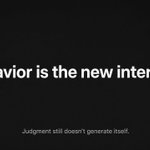
Behavior is the new interface.

Meta’s Muse is doing the thing demos always promised and products rarely delivered: browse, fill forms, negotiate, complete the task.
One early story: uploaded a car insurance policy, found a cheaper plan with the same coverage, bought it, canceled the old one. Five minutes.
I’m less interested in the savings number than in what it does to product design.
When an agent acts for a human, it doesn’t care about your homepage, your brand film, or your campaign.
It cares whether your pricing is clear, your policies are structured, and your flows don’t lie.
Your homepage is not the front door.
Your API is.

2
45
Anthropic’s engineers are shipping 8x more code per quarter. Claude is writing roughly 80% of it.
The interesting part isn’t the output. It’s where the pain moved.
Write got cheaper. Review got louder. Verify became the constraint — tests up 10x, CI up 25x, same headcount.
We keep celebrating generation. The companies that win will rebuild around verification.
The bottleneck moved.

1
39


Made with Claude Code Opus 4.6
Map & Rendering
- Google Maps 2D Tiles — base map imagery (dark styled)
- Google Photorealistic 3D Tiles — 3D building/terrain detail
- CartoDB / OpenStreetMap — dark basemap fallback for 2D mode
- CesiumJS — 3D globe engine
Live Data Layers
- OpenSky Network (opensky-network.org/api) — real-time flight positions (ADS-B)
- OpenSky Routes (lnkd.in/eBbX6_V2) — flight departure/destination
- CelesTrak / NORAD (celestrak.org) — satellite TLE orbital data (active sats, Starlink, debris)
- USGS Earthquake Hazards (earthquake.usgs.gov) — seismic events (last 24h)
- Google Air Quality API (airquality.googleapis.com) — AQI grid sampling
- ISU NEXRAD WMS (mesonet.agron.iastate.edu) — real-time weather radar
- GDELT Project (api.gdeltproject.org) — global news/event geolocation
- NASA JPL (ssd-api.jpl.nasa.gov) — near-Earth asteroid close approaches
- Austin Open Data (data.austintexas.gov) — CCTV traffic cameras
- NYC DOT (webcams.nyctmc.org) — CCTV traffic cameras
- OpenCellID (opencellid.org) — cell tower locations
- Electricity Maps (electricitymap.org) — power grid carbon intensity
#ClaudeCode #opus4_6 #Anthropic
161
Firdosh Tangri retweeted

Andrew Ng says the concept of AGI has become meaningless because everyone defines it differently
The original definition was AI that could do any intellectual task a person can — essentially, AI as intelligent as humans
"by that measure, we're decades away"
Our team at Fantasy has been using Canvas for the last 8 months, and many of our client partners have now adopted the platform as well.
Love all the comments from our users and clients -
- "This is crazy, we are blown away with what you guys have built"
- "The utility nodes are what set it apart from other node-based apps"
- "We have been testing weavy internally, and this is on par. Love it"
fantasycanvas.ai
Create the way you think with visual workflows. One platform connecting every AI model and pro editing tool through custom node-based pipelines.
76
How do you keep up with AI?
People often ask me this question, whether they're students just starting or professionals with demanding full-time jobs.
Here's the thing nobody wants to hear. There's no hack. No shortcuts.
The answer is painfully simple: you put in the time.
When ChatGPT dropped in November 2022, I couldn't stop playing with it. It felt like being a kid again - that same sheer joy I felt when I discovered BASIC and made my first game.
I knew right then that no matter what, I'm going to invest time in this every single day, learning, experimenting, and educating myself.
Not when I "have time." I made it a strict habit.
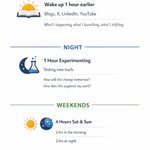
Morning: Wake up an hour earlier. Blogs, X, LinkedIn, YouTube - absorbing what's happening, what's launching, what's shifting.
Night: Instead of Netflix, one hour experimenting. Testing new tools. Asking myself: how does this change what I do tomorrow? How does this augment the work I'm already doing?
Weekends: 4 hours on Saturday and Sunday. 2 in the morning and 2 at night.
Even on vacations, no exceptions.
AI isn't something you "catch up" on once. It's a moving train - the only way to stay on it is consistency. If you're overwhelmed, don't aim for perfect. Aim for daily. Start with 30 minutes. Build the muscle.
Effort compounds. That's how you keep up.
#AI #ArtificialIntelligence #Learning #CareerDevelopment #Tech #Innovation #FutureOfWork

68
Satya Nadella named something most of us have been feeling but couldn’t articulate: model overhang.
The models keep getting smarter. The demos keep getting more impressive. But the gap between what AI can do and what organizations actually deploy keeps widening. Our clients aren’t asking for more powerful AI. They are asking why the powerful AI they have isn’t working inside their actual processes.
This isn’t a technical problem anymore. It’s operational. It’s about trust, workflow fit, and the messy reality of changing how people work.
Capability does not equal value. Usefulness does. The next phase of AI isn’t about building bigger models, it’s about making existing ones cooperate, persist, and act safely inside real processes. Orchestration over raw power.
The companies that win won’t be the ones with the most powerful models. They’ll be the ones who close the gap between what’s possible and what’s actually working. The overhang is real. The question is who figures out how to land it.
66
Unbundling of the app economy
Amazon just added Expedia, Yelp, Angi, and Square to Alexa+. Sounds like a press release, but if we zoom out, what they are doing is building a conversational layer that sits between us and every service we use.
Book a hotel.
Get a contractor quote.
Make a reservation.
No apps. No tabs. Just talk
53
AI is moving from Generate → Edit
We’re finally entering the edit era of generative AI.
For the last year, a lot of “iteration” meant generate again and hope the model lands closer to what you are trying to achieve but now we are seeing a meaningful shift where iteration is moving from generate to edit with models like Firefly Prompt-to-Edit, Luma Modify, Runway Aleph, LTX Retake, models like Kling and Google Veo 3.1 where they let you replace, modify, extend.
When one more revision becomes an edit and not a re-roll it impacts -
1. Velocity: more rounds, less drag
2. Control: you keep what’s working and adjust what isn’t.
3. Process fit: it slots into existing review loops and versioning.
The new advantage will be with the ones who can build the cleanest editing pipeline, with guardrails, brand consistency, and a repeatable way to get from concept to final deliverable.
#GenerativeAI #CreativeOps #Design #BrandSystems #AgencyLife #genai #GenerativeAI
43
Firdosh Tangri retweeted

Made using Fantasy Canvas
fantasycanvas.ai
Create the way you think with visual workflows. One platform connecting every AI model and pro editing tool through custom node-based pipelines.
#veo3 #nanobanana #Kling26 #aiworkflow
Firdosh Tangri retweeted
Following @pabloprompt Tutorial
Made using Fantasy Canvas
fantasycanvas.ai
Create the way you think with visual workflows. One platform connecting every AI model and pro editing tool through custom node-based pipelines.
#veo3 #nanobanana #Kling26 #aiworkflow
Followed @minchoi (on X) prompts for creating iPhone Pro spec ads, but used OpenCanvas so I could use multiple image models like Seedream, GPT Image, Google Nano Banana, and video models (Hailou 2, Kling 2.5, Wan2.5) to get the right cuts and start and end frames.
Used Mirelo, Elvelabs for audio. Could use a lot of finessing for sure.
fantasycanvas.ai

Doing some more tests comparing Sora 2 with Veo 3 using Fantasy Canvas
#aigeneratedimages #aivideo #AIgeneratedvideo #creativeai
79

Using Claude's new sub-agents is such a game-changer. I was able to create a node-engineer subagent that has all the knowledge of creating image, video, 3D , and utility nodes, and a node-researcher subagent that will read the API documentation for the implementation and create a detailed plan.
I was surprised by how many new models and integrations I was able to add just using Claude Code in a week. We are testing it internally, and it is on par with some of the other node-based products.
#claudecode #humanai #creativetools #anthropic #AIGeneration
37