
Professional Dealmaker and Investment Advisor
Zagreb
Joined January 2011
- Tweets191
- Following961
- Followers400
- Likes1.1K




Filip Srdoc retweeted

how the 'girl with the pink hair' ended up here, with 800+ registrations for a VCs & LPs event we're hosting in Singapore, curating some of the most coveted allocator events in the conference circuit around the world (and the #1 capital allocator event at @token2049 according to your favourite LLM, I have receipts 👇🏼😎)...
well. it all started thanks to @FilipSrdoc.
3 years ago in dubai, after one of my first founders & investors events, when @fractlnetwork was a team of one, and a marketing agency, Filip said to me: you should really start hosting events for VCs, they need Investors too...
hum. I hadn't thought about how VCs get their money. up until that point, I was mostly focussed on getting their money into projects. I thought... I dont know what I thought. I wasn't really think that far. I was busy building, and selling marketing. but then. It hit me. if I can figure out how to get VCs funded, then they have funds to deploy into projects... THEN I CAN SELL THEM MARKETING!!! 🤯 big dreams 😂
👀
so anyway, cut to: a few months later.
📸 Singapore. Filip, Fund Collector, and I, are co-hosting fractl's very first VCs & LPs event.
I wasted no time. I know a great idea when I hear one.
so. 2 years ago in Singapore, this allocator adventure started, thanks to Filip. when I was still a baby in the venture capital space.
I even ran a few events before I even knew what 'LP' stands for... 😬
now I know, obviously...
it's Lovely Provider 💕
🤓
fractl has since hosted 12+ of these events around the world, from Davos to Hong Kong, Paris to Dubai, Cannes...
Now we're back in Singapore for a 3rd year in a row and I'm honoured to have Filip join as a cohost, right where it all started.
We’ve each come a long way.
What a journey.
Filip, I owe a big part of fractl's trajectory to you and your generosity in
1) opening your incredible network to me, a network you had spent years carefully building & curating
2) kindly mentored me through the process.... until I didnt have to fake it to make it 🤣
Hvala lijepa 🙏🏼
Aaaaand one last thing (y'all know I get wordy on here, gpts aint got shii on me!! 🤣)
On last thing. for real.
the calibre of people who trust you and value your judgment is a true reflection of the great human you are, all this business stuff aside
so. here's to another great event together 🥳
you reading this, if you know someone who belongs in this event (funds, family offices, FoFs, institutional allocators) tag them below or send them the link in the comments
This edition of fractl's VCs & LPs cocktail hour is presented by:
-> @rodmanlaw Move fast, Stay Covered.
-> Fund Collector by Filip Srdoc: a network of over 300 venture funds, high-net-worth individuals and key opinion leaders, helping ecosystems find the best projects, and funds connect with the best limited partners. (aka lovely providers 🫶🏽)
see you soon Singapore!

ALT Rime Salmi with Filip Srdoc of Fund Collector on stage at the fractl event in Singapore, 2024

ALT Fund Collector, cohost of the fractl VCs & LPs Cocktail Hour at Token2049 Singapore, October 7

ALT Marina Bay Sands in daylight, Singapore
Filip Srdoc retweeted

You raise your seed round.....now what?
The first thing you do when $1-2M hits the bank account is open the app, look at the number, take the screenshot, smile, send it to your family group chat to make your dickhead brother jealous....then close it.
You just got 18-24 months if you're disciplined, 8-10 if you're stupid.
Firstly,
Don't change your fucking life.
Pay yourself enough to not stress about rent. $80-120k depending on city, even lower if you can stomach it.
If you pay yourself $350k after a $2M raise.....chances are, you will not last. You're not running a company just yet.....it's an experiment...one that will end quickly if you prioritize short term gains > long term greatness.
Same with office. You don't need one. The "we need a real space for the culture" is bullshit.
Work from home.
Your only job for the first 6 months is to talk to users and ship quickly.
If you raised $2M and you're not doing (minimum) 5 customer calls a week as a founder........your priorities are messed up.
You need to understand as quickly as possible if the people who use your product, come back without you begging them to do so!
Almost everything else is a vanity exercise.
Series A timeline in 2026 is 600+ days from seed.
Less than 15% of seed-funded startups ever raise an A.
So track burn weekly.
Know your runway to the day.
Every dollar should ship product or facilitates customer feedback .
If a tool, hire, or expense doesn't do that, stop it.
Conference tickets? No. PR firm? Absolutely fucking not. "Brand consultant" don't be stupid. Logo redesign? GTFOH.
72% of seed stage burn is "people".
74% of startup failures involve premature scaling.
You raise, you feel pressure to "build the team," you hire 4 people in 90 days, burn goes from $40k/mo to $180k/mo, the new hires don't have product to work on because there isn't one yet, you spend your time managing them instead of talking to users, runway evaporates, you're back fundraising at month 9 with worse metrics than when you started.
Stay 2-3 founders + AI for as long as humanly possible.
The teams crushing right now have 4 people doing what 15 used to do just 24 months ago.
When/If you do hire.......focus on builders, forget managers. Focus on operators, not "credentials".
If you're not using AI for code (Cursor, Claude Code), customer support, sales prospecting, content, ops, brand, recruitment vetting......your competition is winning.
Tech is commodity now. GTM and data are the moats. Use AI to compress everything that isn't either of those things.
Try to avoid giving advisors equity.
An "advisor" (who you mistakenly thought would enhance "credibility optics") who takes 1%, for doing absolutely nothing, is the same prick that costs you seven figures in a future round.
Model dilution before signing every SAFE.
Don't talk to VCs for 6 months. (forget the "always raising" mindset for now) Keep relationships warm with periodic updates but take the foot of the gas slightly.
I know. I'm a VC saying this. But I mean it. The gravitational, distractional pull of the next round, will fuck up your focus harder than anything else.
Send your existing investors a 5 line monthly email. Don't go to investor dinners. Don't "build relationships for the A." If you're talking to VCs more than building, again, your priorities are misjudged and it will show up against your development goals.
The money will fuck with your head. People will ultimately treat you differently. Nobody really prepares you for that.
You'll get DMs from people you haven't talked to since school. You'll feel the urge to announce, to LinkedIn post, to look like a "real founder."
You'll also be lonelier than ever. You raised, your "friends" think you've made it, you can't tell them you're scared shitless and don't know if it'll work.
I would recommend finding 1-2 founders.....who are 6 months ahead of you, and text them weekly.
That's effective therapy (at least from my personal experience).
Last thing.
The party ended when the money hit.
Now you have a shot and a clock.....the only thing that matters is whether you ship something people genuinely want before that timer runs out.
Most people who give you advice in the next 6 months are probably going to try selling you something. Filter everything ruthlessly. Trust your user feedback and trust the burn rate.
Now go build and say "no"...... consistently.
Godspeed.
Filip Srdoc retweeted

How to save $300m in crypto.
> Step 1: Have $300m.
> Step 2: Stop treating old approvals like live authority.
One of the weirdest things about agentic systems is realizing that the most dangerous failures do not always look dramatic at first.
Sometimes nothing “breaks.”
The system just keeps obeying a decision that no longer makes sense.
That is why the Drift situation stuck with us.
This wasn't the usual crypto story where a contract bug blows open and everyone gets to point at the broken line of code and move on.
It was more unsettling than that.
The real issue was stale authority.
> Approvals were gathered earlier.
> Context changed later.
Execution happened when the conditions were finally right. And the system still treated past consent like present permission.
That is such a brutal design flaw because it sounds reasonable until it costs nine figures.
And honestly, this is exactly where I think zKYC could have helped.
Not in the shallow “identity solves security” way. That is not the point.
The point is that zKYC creates the possibility of live, execution-time verification.
Not just: did enough people sign this once?
But: who is acting right now?
Are they still verified?
Do they still have the right permissions?
Has risk changed?
Should this action still be allowed under current conditions?
That is a completely different security posture.
If a critical admin action had to pass a fresh policy check at execution time — with the system able to return allow, deny, or step-up based on live credential and policy state — then old approvals would stop functioning like permanent authority.
And that is the deeper lesson here.
Crypto has spent years securing signatures.
The next layer is securing context.
Because in systems moving this much money, stale authority is not just a governance problem.
It is an exploit surface.

Drift lost roughly ~$280M.
No obvious smart contract bug.
No simple private key leak.
The exploit path did not look like the usual “code broke, funds vanished” story.
That is what should make people uncomfortable.
What actually happened:
- An attacker manipulated multisig signers
- Got approvals in advance
- Didn’t execute immediately
- Waited
Then used durable nonce, a Solana feature that can keep a transaction executable longer than a normal blockhash window.
When the timing was right, the attacker used that approval path to:
- take admin control,
- reshape market and collateral conditions,
- weaken or remove safety protections,
- and drain funds quickly.
That is the core pattern.
This was not just a normal hack story.
It was a case of approvals gathered earlier being treated as valid authority later, after the context had changed.
And the system largely asked:
“Was this approved?”
It did not adequately ask:
“Should this still be allowed right now?”
That is the dangerous part.
You think multisig protects you.
It does.
But only at one moment in time.
After that?
👉 You’re trusting that nothing changes
👉 That nobody got tricked
👉 That the situation is still safe
That is a much bigger assumption than most people realize.
Crypto systems ask:
“Did enough people sign this?”
They don’t ask:
“Should this still happen right now, under current conditions?”
That’s the gap.
And that gap is what a Drift-style exploit makes painfully visible.
We need a different rule:
Critical actions should not execute just because they were approved at some earlier point.
They should require a fresh decision at the moment execution happens.
Not before.
Not “a few days ago.”
Not “it was signed already.”
Now.
This is exactly the gap we’re building around.
Not replacing multisig.
Not replacing timelocks or guardrails.
Working alongside them to add the missing execution-time check before critical actions go through.
Execution-Time Authority adds a fresh runtime decision before critical actions go through.
Just making sure: approval doesn’t turn into permanent authority
Drift was not just a story about broken code.
It was a story about stale authority being treated like live authority.
Approvals made in the past were treated as authority in the present.
Execution-Time Authority fixes this by requiring every critical action to be validated in real time.
If your system can’t do that,
it’s not secure.
It’s just delayed failure.

Filip Srdoc retweeted

Stablecoins just crossed $200B. In 5 years. Everyone's watching the number. Few are thinking about what the number means.

Filip Srdoc retweeted

3/ Wed 2/7 VC<>Startup Connect: lu.ma/zm6ed1xr?tk=YBqrGZ
12:00-15:00|Jury Startup Pitch Contest and Panel
@0xryankim, @hashed_official
@FilipSrdoc, @Aptos
@nichanank, @1kxnetwork

Here's one of the best life advice I've heard recently:
"Don't save the good wine for a good day. Good wine is wasted on a good day. On a good day, all wine is good wine. Bad wine is good wine. Drink good wine on a bad day. That's what it's for."
Hope all of you are gonna be opening bad wines tonight!


Filip Srdoc retweeted

Can’t wait to see you both there @FilipSrdoc & @filipblagojevi8
Such a great initiative 👏👏
If any of you’re in Dubai be sure to join the waitlist 👇

@CardanoTalent event in Dubai!
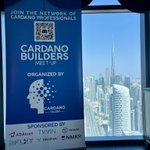
🤝Originally designed just for friends and colleagues, my co-founder @filipblagojevi8 and I gathered the biggest and most important #CardanoBuilders at one place and upgraded this initially "small meet-up" into the hottest side event at the #CardanoSummit2023 this year
🗓️Date: November 1st, 2023, 07:00PM
📍Location: JW Marriott Hotel, Weslodge Saloon on 68th floor, Business Bay, Dubai
🔥This invite-only event exceeded our wildest expectations, with 80 attendees and over 100 people on the whitelist!
🙏Of course, none of this would be possible without our amazing friends and sponsors at @get_revuto @nmkr_io @adamailme @TVVIN_Platform @rflxtstudio and @ThespianAgency. We're truly grateful for your support.
Can't wait to see you all there!
#Cardano

Filip Srdoc retweeted

The best BD people have the following traits:
- structured / can run a deal process. great at shepherding all internal and external stakeholders through the various phases of a deal (ideation, pitching, negotiating, structuring, closing, and implementing). mining a list of prospects, aggressively framing a negotiation, and setting up internal prep meetings before calling external parties. unstructured deals create churn internally due to a lack of consensus on external factors or a lack of planning for a negotiation.
- good communicator. need to communicate well with both internal teams (engineers, PMs, lawyers, execs) as well as the customer or partner (which may include their legal, engineering, and deal people).
- not afraid to ask or push the envelope on what is possible and are willing to make a crazy ask from the partner or client. you never know what someone will give away until you ask.
- smart, creative, and think well on their feet.
- self-starter. figure out a lot through creative ideas and finding the right people to help you move things forward.
- detail-oriented. this allows to catch all sorts of gotchas that are otherwise buried in unexpected ways and to think through the implications of what the contract says.
- work well with cross-functional teams.
- understand partner and market needs. understand what the partner really wants (versus claims they want), as well as trends in the marketplace that may impact both their company's and the partner's leverage and needs.
- have endurance. deals can take a long time and a lot of back and forth. bad deal people give up towards the very end to "just close the deal" and may leak enormous amounts of value that they didn't need to give up.
- relentless. sometimes you need to keep following up until someone finally answers.
Filip Srdoc retweeted

📓 When the difference between Theory and Practice matters
🔸In theory we can mint NFTs, purchase and swap from dexes in one click
🔸In practice, which dapp allows it?
As developers we have to care about using the 100% of the Cardano power.
Some ideas:
🟢Tx chaining is powerful, it makes dapps faster and adiòs to "input exhausted" (of course it needs a good handling of chains breaks)
🟢Parallel outputs in the same transaction, imagine a marketplace that allows you to purchase many nfts in 1 click and not multiple signatures
🟢We have seen a new aggregator where multiple things can be done in one click, let's make it a standard for dapps (currently my focus at @FluidTokens )
🟢On wallets level, how many wallets have the possibility to add multiple receivers? Only @lace_io ?
🟢We can create dinamic policyIDs with smart contracts, but how many are still with time lock scripts? (simple nft collections can of course use time lock)
🟢Interoperability: We can interact with a marketplace and a dex in the same transaction... but where? maybe on wallet level
🟢Liquid staking: When you make an offer on a marketplace that ADA has to be staking with you!
🟢Plutus v2: What are we waiting?
Am I missing something? Let's think outside the box together

Filip Srdoc retweeted

Your participation in this contest is more than just a chance to win 300 ADA, it's an opportunity to shape our brand's identity.
By joining in, you become a key part of our logo's evolution.
We invite you to be part of our creative community and make your mark on our future.
