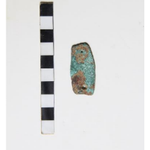
Bronze Age, copper alloy lamellar armor, with axe and dagger from excavations in Saudi Arabia.
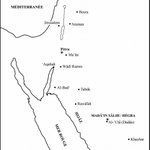
Three Roman production iron arrowheads dated to the 1st - 4th c. CE. found at a decorated Nabataean tomb at Madāʾin Sālih, ancient Hegra, in northwestern Saudi Arabia.
1
8
306
The paper proposes that Nabatean archers, who possibly served as Roman auxiliary, could've been buried there after service.
journals.openedition.org/syr…
1
48
The "Mamilla" hoard, unearthed just west of Jerusalem's Jaffa Gate, a 7th-century weapons hoard containing six swords, spearheads, and shield bosses provide a glimpse into the military equipment of the Byzantine-Early Caliphate transition period.
Another Byzantine Asiatic-type spatha was found in Spain with silver Umayyad coins dating to the 9th C., held in a private collection.
xitter.cf/Fihriposts/status/2108…
Repost - 9th C. Iron sword with Umayyad Emirate dirham coin hoard, it is the oldest sword known from al-Andalus.
2
50
Iron Celtiberian "pugio" dagger with scabbard,
Iberia, 1st C. BCE.
Lyon & Turnbull Auction.
The Romans actually adopted Iberian short sword and dagger designs, which would become the famous gladius.
Neo-Assyrian Copper alloy lameller armor, 800-700 BCE. from Ardabil, Iran.
Neo-Assyrian Iron conical helmet, 800BC-700 BCE. from Nimrud, Iraq.
Double-edged long sword with hilt and blade of iron, 1100–600 BCE. from Saruq al-Hadid, UAE.
3rd C. Sassanian ridge helmet found in Dura-Europos also shows a mail aventail.
Mail is an ingenious Celtic invention, the tradition of full face covering could be an eastern frontier tradition.
There's this wall mural from a synagogue in Dura-Europos, Syria, pre-244 CE.
Which shows mail hauberks with coifs, which is interesting for the 3rd C.
They are usually not depicted by modern illustrators, but they were used by Roman soldiers, in this region at least.
Qasr Bshir is one of the best-preserved examples of a castellum (a small Roman fort) located in Jordan.
Built in 293–305 AD under Emperor Diocletian.
Part of the Limes Arabicus, protecting against Saracen raids into Roman territory.
Qasr al-Alia in the Makkah province, Saudi Arabia.
Built with black basalt rubble stone masonry.
Dating to the 7-8th century CE.
1. Fragment with the name of Abbasid Caliph al-Muti, 946–974, Egypt.
2. Fragment with the name of Abbasid caliph, al-Mu'tadid 892–902, Eastern Iran or Khurasan.
3 & 4. Fragments with the name of Abbasid Caliph Al-Radi bi'llah, 934 – 940, Egypt.
7th C. Byzantine Bandhelm, with chainmail and plate aventail.
Found in Thebes, Egypt.
Brooklyn Museum
6th century CE. conical spangenhelm from Nineveh, Iraq, The British Museum.
7th or 8th century CE. conical spangenhelm from Iran, The Khalili Collections.
Ivory plaque of a standing Umayyad era soldier, first half of 8th century CE. Humayma, Jordan.
Charging Sogdian Cavalry 7th-8th C. Piandjikent, Tadzjikistan, now in Hermitage Museum, St. Petersburg.


