Our latest paper is out! iopscience.iop.org/article/1…
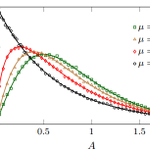
We solve the zero-temperature dynamics of the Sompolinsky-Crisanti spherical model with asymmetric interactions. Slow dynamics does not survive, but the model, surprisingly enough, never reaches equilibrium! #StatisticalPhysics
1
27
Happy to share our recent work on the SIS model on directed networks! #ComplexSystems
journals.aps.org/pre/abstrac…
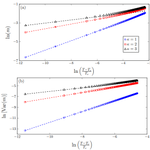
We combine random matrices and spin-glass methods to compute the epidemic threshold and study disease localization within the QMF theory.
Proud to share my work on DMFT for dynamical systems on complex networks, selected as an Editors'Suggestion in PRL! @CompSysSoc @ifufrgs
The paper presents a general solution for models of complex systems on sparse and directed networks. Check it out:
journals.aps.org/prl/abstrac…
I apply DMFT to derive the phase diagram of the Sompolinsky-Crisanti neural network model (1988) in the sparse regime. This model has shaped neural networks and spin glasses research for over 30 years. My work reveals how its phase diagram depends on network structure!
1
2
101
Fernando retweeted
Just out in @PhysRevE:
journals.aps.org/pre/abstrac…
Many thanks to coauthors @physicsidea and @FernandoL2006!
New work with Tuan Minh Pham (@physicsidea) and Fernando Metz (@FernandoL2006)!
"Effects of clustering heterogeneity on the spectral density of sparse networks"
arxiv.org/abs/2404.08152
I'm excited to share my new paper on DMFT!
arxiv.org/abs/2406.06346
I derive an elegant solution for the dynamics of sparse and heterogeneous complex systems. Neural networks, epidemic spreading, Lotka-Volterra, all handled by a single equation! #ComplexSystems #NetworkScience

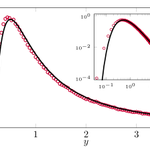
ALT Time evolution of the standard deviation of microscopic variables for Lotka-Volterra (LV), neural networks (NN) and epidemic spreading (SIS model) on directed networks with average degree c=5, Poisson and geometric distributed degrees, and random couplings (Gaussian and uniform). Solid line: DMFT. Symbols: simulations.
Fernando retweeted
New work with Tuan Minh Pham (@physicsidea) and Fernando Metz (@FernandoL2006)!
"Effects of clustering heterogeneity on the spectral density of sparse networks"
arxiv.org/abs/2404.08152
Consider a large number of pointlike sources of light and distribute them at random along a line. How the interference pattern depends on the distribution of sources? Check out our recent paper for an answer to this problem:
journals.aps.org/pra/abstrac…
#Optics #Physics @ifufrgs
Our latest paper is out:
journals.aps.org/pre/abstrac…
The message is simple: details of the microscopic dynamics modify the critical behaviour of nonequilibrium systems on networks. We show this property for the Ising model.
The critical exponent of the magnetization is determined by the tails of the distribution of the thermal noise.
1
103
Our new preprint is out:
arxiv.org/abs/2212.09424
We analytically solve the nonequilibrium dynamics of the Ising model on networks with large degrees. When detailed balance breaks down, the critical exponents surprisingly depend on the tails of the distribution of thermal noise.
I'm delighted to share our new paper on JPhys:Complexity: iopscience.iop.org/article/1…
We find an analytic, exact, and nontrivial solution of the resolvent equations that determine spectral and localization properties of networks!
We find an analytic solution for diverging mean degree that still depends on the shape of the degree distribution. The spectral density is not always given by the Wigner semicircle! The method is simple and it can be extended to graphs with triangles, for instance.
1
1
146