

Crypto Marketer | VP Business & Revenue @Hypepartners | Jiu-Jitsu enjoyer 🥋| Music maker 🎸🤘(may or may not be CJ)
Berlin, Germany
Joined February 2010
- Tweets1.8K
- Following1.8K
- Followers1.1K
- Likes3.4K




Pinned Tweet
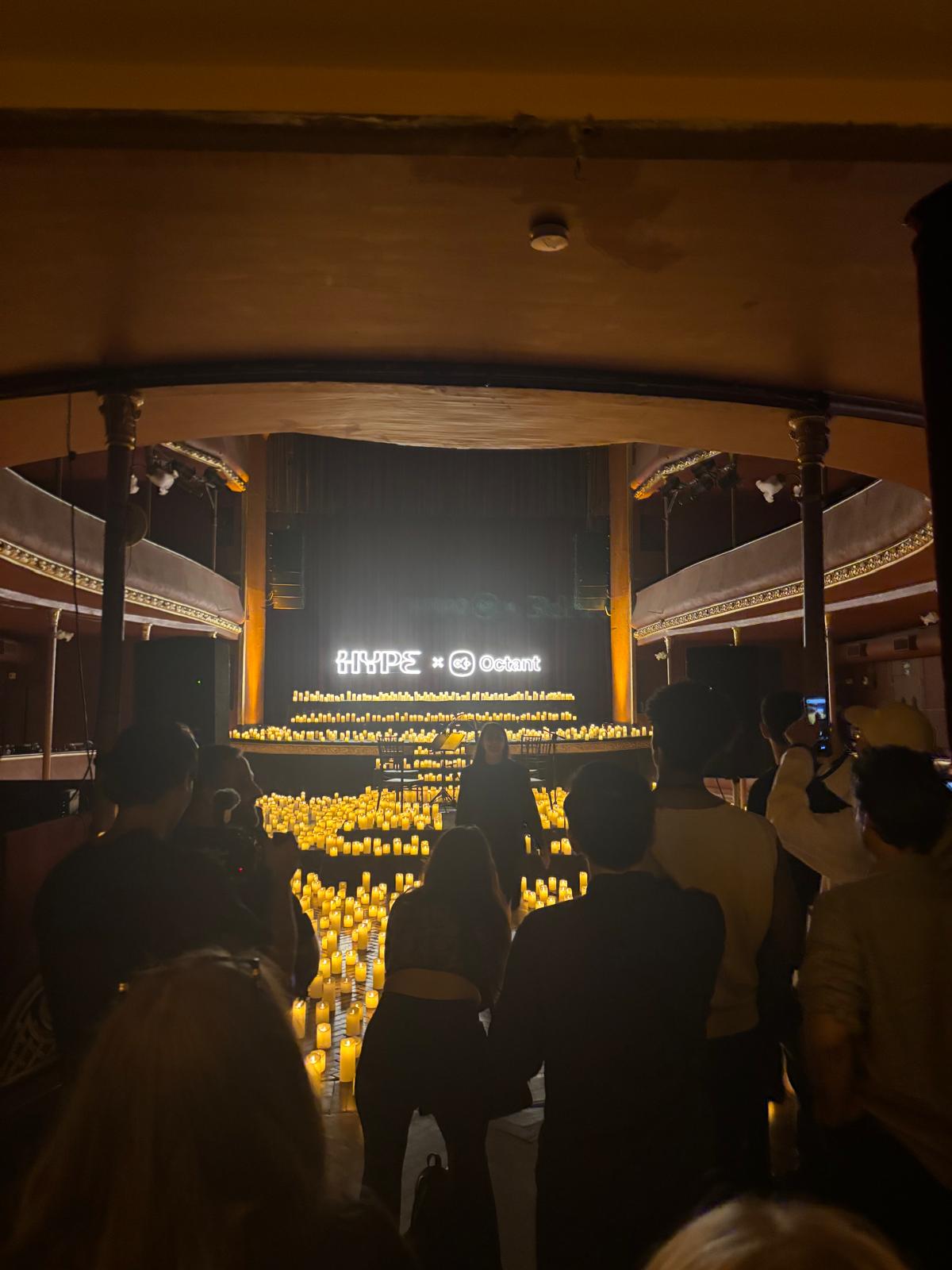
The candlelight concert collab last night gave us time to stfu and think. Here are some of my thinks:
1. A good song will always be a good song. I love old rock and pop classics. I'm a cheese ball. It made me look forward to Christmas with my family and playing them all again with new love. They played Dream On by Aerosmith, Life on Mars by Bowie, God Only Knows by Beach Boys and a bunch of other greats. I cried a little at the last two mentioned.
MARKETING TIP: a great campaign will always be remembered and talked about regardless of what you are selling.
2. Reinterpretation is revival. These songs are played to death and probably skipped by many because they've been heard so many times. But in a silent theatre, surrounded by candles, delivered by a string quartet, I literally had goosebumps the entire time. Totally captivated. Very emotional.
MARKETING TIP: look for inspiration in what people already love, or have loved, and reimagine. So what you create is still recognisable but completely fresh and feels new.
3. I hate AI. I don't hate AI, but in a time when there's so much fast fake content, moments like this where you can completely disconnect, not have to talk, stay off your phone, reminisce, immerse yourself, feel nostalgic etc, are invaluable. This was a MAGICAL experience.
MARKETING TIP: Unique irl experiences matter. They don't have to have an angle to sell your product. People appreciate the thought and care and they ultimately do help sell the product because they produce amazing content, increase the brand visibility and loyalty, and increase audience entering the funnel.
4. People connect with emotions. I know every word to every song played last night, most of us do, but there were no words last night. Just beautiful string music and a stunning candle sea. You don't need sensory overload to have an impact.
MARKETING TIP: include more emotion in your marketing. You have words, sound, visuals, touch even irl, to make your audience feel something. It could be anger, desire, glee, heartache, fear, yearning... What emotion do you want to evoke as part of a story that your product/tech helps to realise. What future do you make possible. What individual story can you tell for a normal human being affected by your product. You might think this is a stretch, but it's called brand marketing and the best way to explore it is with the butterfly effect.
5. @hypepartners Events Queen @cryptokwueene absolutely nailed this. Dm her if you want an amazing xp. And thanks to @OctantApp for helping us make it happen. And thanks to all the wonderful people who came.
6. KUDOS to @proofofjake_ in an all white suit wearing Hype x @ethereumfndn special collab kicks, that I've never even seen!!!! (and props to @vijaymichalik for loaning them)
What. A. Moment. More of this please.
Meme moment: Men being emotional and uncomfortable together @cryptofreedman @0xDannyHype @0xjawor me. It's a beautiful thing.


The wise man built his house upon the rock.
Everyone knows this old parable from the bible. What can it teach us about marketing?
A surprising number of teams are trying to build their house on three product updates, an old founder interview and a social feed that goes quiet for weeks at a time.
Projects want paid media, KOLs, PR, partnerships, events and a big campaign moment. Great. All of those can be useful.
But the attention has to land somewhere.
Usually, the first thing somebody does after hearing about a company is check its website and socials. They want to understand what it does, whether the team has anything interesting to say, if the story holds together and whether there is any actual momentum behind it.
If the key organic channels are inconsistent, confusing or mostly reposts and product announcements, there is no strong base for the rest of the marketing to build from. You can pay to send more people there, obviously, but you are mostly paying to show more people the confusion.
Consistent quality content is downstream of clarity.
You cannot expect a founder, internal marketing team, social media manager and external agency to produce one coherent brand if nobody has agreed on the messaging, narrative and positioning first.
What problem are we solving?
Who really cares?
Why now?
What do we believe that others in the category don't? Which proof points make the story credible?
What should people repeatedly associate with us?
Without those answers, every brief starts from zero.
The social manager pulls language from an old deck. The agency guesses what matters from the last call. Sales tells one version of the story, product tells another, and the founder rewrites the post at 11pm because it “doesn't sound like us”.
The individual pieces of work might look fine. Together, the brand feels like five different people trying to explain the same thing from memory.
Nobody needs to disappear for six months and produce a 90-page messaging bible. You do need enough of a strategic spine that everybody understands the story they are contributing to.
Then you have to maintain it.
Good organic content builds that understanding over time. Some posts explain the product. Some share a point of view. Some show the work, the people, the decisions, a CTA and the progress. Some respond to what is happening in the market.
It should feel varied, but recognisably from the same brand.
That consistency makes everything else work harder. Creators have better language to use. PR has a clearer story to pick up. Paid campaigns send people somewhere credible. And, internal teams and agencies spend less time decoding contradictory Slack messages and more time making good work.
The messaging, narrative and positioning work can feel like the slow bit at the start. Skipping it creates a much slower and more expensive mess later (usually with far more people involved).
Before spending more money sending people towards the brand, make sure you have one.
Hit me up if you need help. I might know a guy @hypepartners
Current Events.
TOKEN2049 Singapore starts today, and the surrounding calendar is absolutely rammed. Somewhere in the city, another project is currently putting its logo behind a DJ, ordering free drinks and celebrating a huge RSVP list full of people who have also RSVP’d to eight other events.
People arrive late, spend 20 minutes scanning the room, shout into somebody’s ear, collect a drink and ask where everyone is going next. Whether the right people met each other is a different question.
A big, loud side event can be exactly right. If you want reach, energy, spectacle and a lot of the industry in one place. It can also land you with a huge bill and no ROI.
But who do you actually want in the room?
As with all things in marketing thinking about your audience, how you want them to behave, and your objective, should decide the format.
The size and type of venue, time of day, food, drinks, music and volume. Whether people sit, stand, listen, talk, make something or take part. How much programming you need, and how much empty space to leave for an unplanned conversation. Even the guest list should be curated around the outcome, rather than signup numbers.
For one project, the right answer could be a small breakfast where ten useful conversations happen before. For another, it might be a private dinner, a workshop, or a cultural experience - for the location or the brand.
A dinner for 20 can sometimes create more commercial value than a party for 500 - as we've seen time and again for our clients. Equally, some briefs genuinely need the party. The format only makes sense in relation to the people and the reaction you want.
Crypto makes this especially obvious. It is relationship-driven and community-driven, and the same founders, investors, builders and community members travel between the same conferences all year. They notice when an event has been copied from the usual playbook.
A busy room is easy to photograph. It doesn’t tell you whether anybody had the conversation you brought them there to have.
At @hypepartners we think about concept, audience, creative direction, production and the wider campaign together. Otherwise you can end up producing a very impressive answer to a question nobody asked. @cryptokwueene has talked about this at length.
Make sure you're doing your NPS and check the feedback given. If answers like “the DJ was too loud” came up , maybe it's time to rethink.

There's a launch video problem.
A project spends months building something genuinely interesting, gets close to launch, then commissions a very polished 60-second film to explain how important it all is.
The video goes live. The team reposts it. Investors and partners say “great work guys”. It gets a short burst of attention and then, within a couple of days, it disappears down the timeline with every other launch video.
I like a great film. We make plenty of them at @hypepartners and they can be brilliant for setting a tone, saying hello to the world or giving a launch some emotional weight.
But projects keep treating video as the obvious answer to every creative brief. There are so many other things a brand could build.
There are deeper brand experiences that can be easily built and people can actually do something with - which we've also been doing with cool projects who want to stand out.
Not an exhaustive list:
- An interactive experience people can explore.
- A small game built around a world or culture.
- A useful digital product that delivers a message.
- An app that produces personalised content people can make on their own and share.
- An installation people can interact with at an event.
- Something that responds, changes, rewards curiosity or gives the audience a role in what happens.
(all on brand, subtly or full-in the face, each campaign is unique)
The practical difference is pretty simple. A video asks someone to watch. An experience asks them to participate.
Participation gives people more reasons to stick around. They spend time with the idea, make choices, discover things, create something, compete with a friend or send the result into a group chat. That interaction creates a stronger memory than another cinematic montage of servers, cities, particles and people looking meaningfully into the distance (you know the one).
It also gives the campaign more places to go.
The experience can produce content from the audience. It can become a reason for creators to get involved. It can travel through communities because people have something to show, compare or talk about. Distribution starts inside the idea instead of being left to a media plan after the creative is finished.
This feels especially relevant for crypto and blockchain projects, but also broader tech launches in AI, fintech, robotics etc.
Crypto audiences specifically are extremely online, community-driven and used to participating. They test products early, join Discords, vote, mint, trade, make memes, collect things and compete for status. They rarely behave like a normal passive audience, so I’m not sure why so many campaigns still treat them like one.
Projects should be asking:
What can somebody actually do with this campaign?
How could they become part of it?
What would make them spend five minutes exploring it instead of five seconds scrolling past it?
What might they create or unlock?
And what would make them send it to somebody else?
Sometimes it will still lead to a film. Fine. The point is to choose the format because it serves the idea and the audience, rather than because “launch video” was already a line item in the budget.
Technology alone doesn’t make any of this good, obviously.
Adding AI, AR, real-time 3D or some complicated mechanic to a weak idea just gives you a more expensive weak idea. People can smell the gimmick immediately.
The concept has to come first. Then the audience. Then the reaction you want from them.
Do you want them to feel curious? Competitive? Proud? Surprised? More connected to the community? Do you want them to understand the product, try it, make something or bring somebody else in?
Once that is clear, you can work out how technology helps bring the brand idea to life in a natural way. Sometimes the tech can be genuinely advanced while feeling almost invisible to the person using it (usually a good sign).
This is a big area of focus for us at @hypepartners and we have an amazing team that consistently concept more meaningful campaigns for our clients (even if we just end up doing the video). A lot of this is made possible not least because we've thrown ourselves headfirst into AI and built a bunch of creative products (not least hy.pe/flow)
Creative ideas, design, technology and distribution should work together so the output feels like a complete experience, rather than a collection of campaign assets and deliverables.
Crypto already has one of the most participatory audiences in the world. We should probably make more creative work that rewards that behaviour.
Before commissioning the next launch video, ask what people could experience, explore, use or create instead.
If the only thing somebody can do with your campaign is press play, there is probably a much bigger idea waiting to be discovered.
If you made it to the end, dm me for a cookie
Imagine if you're event's actually led to measurable positive outcomes. If you're an event marketer, learn from the best.

Next event you host, make sure you’re actually considering the intent
the funnel here is a good basic guide to know where youre at, what kind of event you should be spending $$ on.
as a general rule - STOP asking your marketing & event leads/agencies to get you awareness, conversion and retention in the same event. focus on 1 outcome per event.
event format <> intent funnel doesnt operate like a typical funnel. It doesnt implies that we are losing people across all stages of the funnel. So, ignore attrition in this case, just focus on a format / shape to the funnel to the intent.
the funnel narrows by audience breadth and touch. as you descend, intimacy increases and cost per head climbs.
1. Intimacy increases - at the top of the funnel youre choosing event and activation formats that gain the highest mindshare, and get you known within the space. As you trickle down the funnel, you want to be hosting more VIP experiences for a select few people, focusing on quality vs quantity so the avg no of attendees will drastically drop down as you work your way down the funnel
2. Cost per head climbs - just because youre running an event for select few, dont expect your cost of event to drastically goes down. At the level of VIPs and decision makers, you end up spending more per head because now youre curating the experience to the T.
A 200 person party will have a lower cost per head in comparison to a 50 person dinner/game experience.


Tomorrow I will be posting a selfie, but today...
You remember when people used to google themselves? Now you can do it with AI. Or more importantly, other people can do it about you... and they might find absolutely nothing.
Crypto has one of the most AI-savvy audiences on the planet. Our industry adopted ChatGPT, Claude, Grok and Perplexity faster than almost anyone. Degens research tokens with it. Devs live in it. VCs screen deals with it. There's a good chance someone is asking an AI "what is X, is it legit, how does it compare to Y."
The numbers back it up
ChatGPT is at roughly 900 million weekly users, double a year ago, and passed 1 billion monthly users in June. It handles over 2.5 billion prompts a day. Visits across AI assistants grew 70% year on year. And it's no longer a one-horse race: ChatGPT's share of AI traffic has dropped from around 76% to 53% while Gemini has grown to roughly a quarter and Claude keeps climbing. So this isn't "optimise for ChatGPT". It's optimise for all of them.
The stat that matters most for marketers is the rate at which AI answers cite and link out to sources, which has gone from 1.6% to 6.8% in a year. AI answers increasingly send real traffic, and they increasingly name specific brands. Either you're the name in the answer or your competitor is.
This is GEO (rip GEO targeting). Generative engine optimisation. SEO's weirder younger sibling, and right now it's where SEO was in 2005: early, messy, and disproportionately rewarding for the people who move first.
So how can you take advantage of this new AI search frontier to find more users.
AI models learn about you from what's out there. A study of 30 million citations found the most-cited domain across ChatGPT, Gemini, Perplexity and others is Reddit - remember we talked about using reddit the other day ;)
Then YouTube, LinkedIn, Wikipedia and Forbes. Each model has its own diet: ChatGPT leans on Wikipedia, Reddit and editorial sites, Perplexity pulls hard from Reddit and LinkedIn, and Google has cameras in your house so knows everything about you - just kidding.
Notice what's not on that list - your website. AI builds its opinion of you from communities, video and third-party coverage, not your homepage. So if your Reddit presence is dead, your team isn't posting on LinkedIn and nobody's making video about you, the machines have nothing good to say. So you need to have a multitude of voices talking about you everywhere in the way you want to be perceived.
So what type of content gets noted? Content that answers questions. Models lift from pages that clearly explain what you do, who it's for, and how you compare. Docs, listicles, FAQs, third-party articles. AI loves structure and facts that is can crawl through easily. Also news to me, but could be worth shipping an llms.txt while you're at it.
The more mentions the better, and they don't have to be linked. Across news, YouTube, podcasts and forums all feed the indexing machine. Distribution and GEO are the same job wearing different hats.
Stay consistent. Don't deviate from your positioning and messaging for fun or your story will be muddled across the LLM universe.
The tools
A whole category of services has appeared to track and improve how AI talks about you. These are the ones I've learned about:
Profound. The enterprise heavyweight that tracks your brand across ChatGPT, Claude, Perplexity and more, analyses hundreds of millions of prompts to find where you're invisible.
Peec AI. Same idea for smaller budgets. A good starting point
Semrush AI Toolkit and Ahrefs Brand Radar. The SEO giants bolting GEO onto what you already use. Brand Radar tracks unlinked mentions across Reddit, TikTok and YouTube.
AthenaHQ ties AI share of voice to actual revenue via your analytics. For when the CFO asks why you're paying for this.
Goodie. Watches for AI hallucinations about your brand. In crypto, where a model confidently repeating year-old FUD can cost you a listing or a raise, this matters more than people think.
There are a dozen more. The tracking tool matters less than just getting to work, because almost no one in crypto is doing it seriously yet.
We track AI visibility for clients at @hypepartners now as standard, same as we'd track mindshare on CT. Because your audience is asking the machines about you, the machines are forming opinions, and those opinions are built from whatever content is out there today.
Make sure you have some control over it.
And another!
Writing about how tech works is not marketing. It's boring. All people want to know, is it going to be adopted and make everyone money. Your job as a marketer is to find a way to convince people that it is.
On Tuesday I had a rant about KOLs and UGC, so I thought I better take a step back and look at what happens before you spend all your budget on creators. You must know what actually matters to people about your project or product, before spending marketing money - and it's not the tech.
Watching a group of gigabrains that everyone respects talk about the tech DOES matter to people. Not the discussion, the fact it happened. Maybe there's two great lines that can be pulled out and repeated from a 1 hour podcast (maybe more, who knows).
Your TPS, your novel consensus mechanism, your modular whatever, are sending people to sleep. The people you're trying to reach don't wake up thinking about infrastructure. They wake up thinking about themselves. Your job is to help them see a future they like the look of, and where you fit in. That's the whole trick. Not "look at what we built" but "look at where things are going, and look at what that means for you."
Positioning, narrative and messaging. Three words that sound like agency fluff until you try to run a campaign without them.
Why it comes first
If you don't get this right up front, you have no content guide and no direction to give anyone. Your team writes one thing, your creators post another, your agency pitches a third angle, and your partners lack confidence to co-market with you. Everyone's technically talking about the same project and nobody's telling the same story.
Get it right and everything downstream gets easier.
A killer brief is essential.
Take the time to create a source of truth that's clear, easy to read, feels EXCITING, key facts, numbers, quotes from the team, the experience behind the project, what you've actually shipped, who it's for etc. Now it's easy to hit the key points and put their own brand/creator flare on content. A bad brief means everyone makes it up as they go, and the the content is weak.
Direction and management is just as important. Aligning on key moments with planned coordination to spike visibility. Launches, listings, partnerships, user milestones whatever. You pick the moments, and you coral your KOL/creator/partner/community the best you can to make noise when it matters. That's how things "go viral" hehe.
Use external help.
You cannot do this alone, and you're the worst person to judge your own story.
You're married to the tech. It's your baby. You've spent two years in the weeds and you think the weeds are fascinating. Fair enough. But if you want your baby to grow up and be successful, you need fresh eyes to check this stuff before you go whole hog on a campaign. Outsiders aren't biased. They'll tell you which parts of your story can be hidden on the last page of the docs vs what should be chanted every damn day.
This is nearly always the first thing we do with clients at @hypepartners even if they don't want to...
If you made it to the end, thank you for reading my 2nd essay this week
First post in a while. Expect more to come.
KOLs are still the first thing every project asks for.
I've lost count of the calls where a founder comes in with a marketing brief and it's basically one line: "we need KOLs." Not a strategy. Not a distribution plan. KOLs. It's the most requested service at @hypepartners by a mile and it's what most projects think marketing is.
And I get it. You see other projects trending, you see the big accounts posting about them, and you assume that's the whole game. It's part of it. But how you engage KOLs matters more than most teams realise, and it should never be the only thing you're doing.
So here's how I'd think about it.
How to actually work with KOLs
Most of the pain in this space comes from how deals are structured, not from the creators themselves.
If an agency takes a percentage of your spend, your incentives are broken from day one. The more you spend, the more they make. They have zero reason to negotiate hard on your behalf, and every reason to inflate budgets. You will overpay and you'll never know by how much.
If an agency only works from their own roster, you're not getting the best creators for your project. You're getting the creators they have deals with. That's their inventory problem being sold to you as a curated network. The right KOL for a DeFi protocol targeting sophisticated traders is not the same as the right KOL for a consumer app, and no fixed roster covers the whole market.
Then there's hidden fees. Undisclosed margins baked into creator rates, "management fees" stacked on top, kickbacks from the KOLs themselves. If you can't see exactly what the creator is being paid versus what you're paying, walk away.
The alternative is working with a neutral agency. One that isn't taking a cut of spend, isn't pushing a roster, and can analyse the entire market to find the creators that actually align with your project. That's how we run it at Hype: transparent rates, negotiate the best deals we can get, and pick from everyone, not just whoever we have a relationship with. It sounds obvious but it's shockingly rare.
KOLs are one piece of a distribution strategy
This is the bigger point. Even done perfectly, KOLs are one channel. If that's your whole plan, you are not doing the basics of cost efficient distribution.
The projects doing distribution properly right now are stacking channels, and the common thread across the ones that work is UGC, not brand accounts.
Reddit. Real community growth, not a brand account posting announcements into the void. Crypto Twitter is a bubble; Reddit is has a huge amount of crypto community discussion, and it's indexed heavily by Google and every AI model. Posts and comments from real users build karma and compound for years. A brand account gets ignored or nuked by mods. Users talking about you doesn't.
Shortform video. TikTok, Instagram Reels, YouTube Shorts. This is how content is consumed now. And again: UGC massively outperforms brand accounts. A polished brand video does a fraction of the numbers that dozens of creators posting daily content will do. The algorithm doesn't care about your logo. It cares whether people watch, and new accounts are rewarded with better push to satisfy user dopamine.
The play is volume. Hundreds of videos per month, at a cost per view that makes a single big KOL deal look mad.
Putting it together
Use KOLs for what they're good at: credibility, narrative, reaching a specific audience through a voice that the audience trusts. Pick them carefully, buy them transparently, work with someone neutral who can target the whole market.
Then complement them with high-volume UGC distribution: Reddit communities, shortform video, a mix of real people making real content AND AI generated content. We've seen it with numerous clients now that AI SFV content outperforms a lot of real content. UGC is where massive views are found at a cost that is negligble when compared to KOLs, and it's the part almost everyone skips because it's harder than wiring money to ten influencers.
KOLs get you trusted attention. UGC gets you major distribution. You need both, and most projects are missing half the opportunity.
The best creative I know being creative - and making fun of me :P

Doing things with AI I probably shouldn't :) built a confessional. he forgives everything. even $FARTCOIN.
confess thy sins → cryptojesus.junkdrawer.lol Luv you Crypto Jesus


Breakfast is the most important meal of the day
We hosted Early at @ethconf with @boundlesshq & @RWA_xyz . Every guest was chosen with intention and @hypepartners's concierge service introduced them morning of the event, to make the room feel already warm.
A few things we learned as we wrapped our pilot:
1. morning is an untapped window.
by the time dinner rolls around, social bandwidth is low moving the format to 8:30am meant we tapped into people when they were sharp and open.
2. intention. connections.
we optimised for alignment with our brekkie. every guest was chosen with intention, bringing together partners we believed would be genuinely glad to be in the same room as each other.
3. kill the cold intro.
before the brekkie began, every attendee told us the 2 people they most wanted to meet. We made the introduction personally the morning of, over tg/email. 80% of attendees signed up. We're already hearing about partnerships that came out of it.
4. food should come to the conversation
a hard sell for us to the hotel as passed around breakfast is not very common. historically buffets are the way to go. but we wanted guests to spend time on connecting and speaking instead of queueing up for food at 8am. food came to them instead.
Early is coming to @kbwofficial, @token2049, and @solana breakpoint later this year, with new formats and new tools for making the matching feel less like a service and more like a natural part of the room.
If youre interested in partnering, my dms are open.
Our Head of Community is a weapon

Massively under-rated distribution tool: Reddit
In 24hr my team is able to generate 500k-1M views per post & link back to a client's website
No paid ads, no influencer shilling, $0 spent. This is one of the best organic growth methods available rn
Here's how we do it over & over:
1. We make fresh accounts for each client & start genuinely adding value with posts and comments in large, brand-aligned subreddits
2. When the accounts have enough history & karma, we continue interacting as normal but subtly start adding links to client website as a source
That's it.
It sounds simple, but it actually takes a lot of finesse because Reddit HATES marketing. You will be quickly banned and lose all progress if you are obvious in any way
This is why a lot of Reddit services are a huge waste of $. They are low-quality shill factories
But if you know what you're doing, you can add value to the Reddit community AND capture some too
Bonus: Reddit is the best place to start seeding GEO ;)
DM me if you have questions!! Happy to help!
I write a lot of campaign ideas. Some good, some unhinged, some never intended to be used. The experiment is to gauge reaction. Most of these ideas never get used in the their original form. They are thought starters. Then our creative directors fix them, use brand guidelines (if they exisit), refine the the copy, flip the angle, and by the end I can’t believe how good some of the concepts we’re pitching are. We get excited. The client gets excited. But then it doesn’t happen - with us. I hate putting red tape on anything. It stifles creativity and positivity. But if someone spends time to give you a mega campaign and you want it - “urgently” buy it. Don’t be that guy


DAS ist Berlin! First class BA flight to LHR on way to NY. Should be illegal to provide this much legroom. Luxury

Quick update on this. We managed to get a hold of some friends at Ton who helped us fast track getting the account frozen. Apologies again for anyone affected. I have wiped my computer and will be far more vigilant in future. As a BD you talk to a lot of people and are honestly always excited to get on the phone and stay optimistic. It’s sad but necessary to stay remain somewhat suspicious. Don’t let the bastards grind you down!

WARNING: MY TELEGRAM ACCOUNT HACKED
Apologies for the dramatic headline but it's warranted.
My Telegram business account has been compromised and we've just discovered is sending unauthorised messages to my contacts.
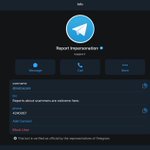
I have attached a picture of the hijacked account profile. It does not have a username/handle which is how you can tell it's not me.
Please do not interact with the account and especially do not click any links or docs it sends.
If you have received any message from the account recently I would appreciate you contacting me to let me know and reporting the account, as it might help to get the account terminated or recovered with Telegram support (who only seem to do anything when there is strong risk attached). cc @telegram @smstelegram
I would also suggest deleting any chat history we might have had together.
I have since created a new account with the same phone number and the same username felixhowes (as it is on all platforms). You can tell this account is the real Felix because the username is listed in the profile. The other way to tell is that the profile picture has Hype colours overlayed.
This account is the owner of hundreds of business group chats so cannot be removed by my colleagues. Internally we are working to alert all contacts and clients.
Please update your security. This can happen to anyone. Take action to make sure your accounts are safe.
I will share any news as it becomes available and sincere apologies to anyone if they have been affected.
- (the real) Felix Howes