

Exploring federal govt history https://xitter.cf/t.co/hh3GFxW38I Immigration, legal history, federalism... [email protected]
Joined May 2020
- Tweets566
- Following265
- Followers154
- Likes1.3K




Why didn’t the Constitution include a bill of rights? Richard Primus reasons that the debates on slavery in the Constitutional Convention obstructed such written guarantees. See Terri Halperin’s review of Primus’s article in our Reviews in Legal History: shfg.wildapricot.org/page-18…

Absolutely!

In a @postlive interview at the Building America Summit, @ENERGY undersecretary for science @dariogila addressed what he thinks is the most important investment the U.S.has to make to build better for the future for the future. "We need a National Defense Education Act 2.0 version," Gil told @washingtonpost White House reporter @Cat_Zakrzewski.
Federal History 2026 is now online: shfg.wildapricot.org/page-18… A roundtable, interview, and legal history reviews. Caption: The WWI peace negotiations, Hall of Mirrors, Versailles, June 1919

Our interview with Sam Lebovic on his book A Righteous Smokescreen: Postwar America and the Politics of Cultural Globalization (2022): networks.h-net.org/h-fedhist… collection: networks.h-net.org/node/5299…


The Commerce Court was established by the Mann-Elkins Act of 1910 to centralize, harmonize, and expedite judicial review of railroad challenges to orders of the Interstate Commerce Commission (ICC), the nation’s first regulatory commission--Jake Kobrick #UShistory #History

1-“Andrew Preston credits the Roosevelt administration with the ‘invention of national security,’ making the case that the concept of ‘national security’ as we came to understand it in the Cold War originated in the New Deal.” #ColdWar #FDR #nationalsecurity

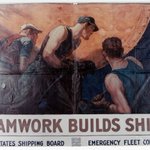
“To reduce reliance on foreign ships transporting American goods, Congress created the U.S. Shipping Board (1916) to encourage development of a naval auxiliary and reserve [and] merchant marine to maintain commerce…[but it was] staffed with shipowners and business interests”

“The Seaman’s Act of 1915 was hailed as the landmark federal law that finally placed sailors on par with shoreside workers, allowing them to break an employment contract and demand wages for work done rather than to flee…”


Postal money orders were integral to the expanding mail-order business that transformed the consumption practices of households throughout the nation at the turn of the [20th] century— Christopher W. Shaw #postoffice

Constitutional debates in the [interbellum] period were conducted far outside the chamber of the Supreme Court…My focus [is on]… the important contributions made by Maria Henrietta Pinckney, Elias Boudinot, John Ross, and Frederick Douglass, among others---Alison L. LaCroix

"This book is deeply interested in understanding how humans and technology might be part of possible solutions, but it is equally concerned with the dangers of the ways in which (some) humans exert themselves on others and a broader environment through technology" #Singapore

Federal History retweeted
Federal History 2025 is now online at shfg.wildapricot.org/page-18… A roundtable, interviews, and legal history reviews. Join SHFG to receive copy. #government #history @SHFGHistorians

“although the 1848 Treaty of Guadalupe Hidalgo conferred citizenship on Mexicans living in the United States, in practice the widespread public perception of Mexicans as nonwhite often rendered them ineligible for citizenship”---Natalia Molina #Immigration #citizenship
Our interview with Michael Willrich, Brandeis University, has now been published in Federal History at shfg.wildapricot.org/page-18… #FreeSpeech #UShistory #History

