
Professor at the University of Lausanne, interested in environmental control (particularly light) of plant growth & development.
Lausanne, Switzerland
Joined July 2015
- Tweets2.7K
- Following484
- Followers3.3K
- Likes1.7K


Christian Fankhauser retweeted

It is with deep sadness that I share that Meng Chen, pioneering plant photobiologist, suddenly passed away on Sept. 10 2026.
His family, colleagues & friends are devastated at this sudden loss. The plant photobiology field has also suffered a great loss.
cnas.ucr.edu/news/2026/09/15…

Christian Fankhauser retweeted

In Memoriam: Meng Chen, Professor of Botany and Plant Sciences cnas.ucr.edu/news/2026/09/15… - our desr colleague, you will be always in our heart Meng - 🌙

Christian Fankhauser retweeted

Grateful to present my work at #ISPP2026🇨🇭, and learn from photobiologists I admire.
Huge thanks to my supervisor @apslab_nipgr for motivating me to attend, & the organizers @Roman_ulm @FankhauserCh @EDemarsy @martina_legris and AHiltbrunner for such warm Swiss hospitality! 🔬🌿


Christian Fankhauser retweeted

I am recruiting a postdoc to join my lab at UC Riverside to study anterograde signaling and chloroplast biogenesis in Arabidopsis.
The project focuses on how nuclear light signaling regulates plastid transcription and chloroplast biogenesis.
Info: arabidopsis.org/news/jobs/vi…
Christian Fankhauser retweeted

Professeur à la Section de chimie et biochimie (Faculté des sciences) Omaya Dudin s’est vu décerner la médaille d’or 2026 de l’Organisation européenne de biologie moléculaire (EMBO). Cette distinction compte parmi les plus hautes récompenses en sciences de la vie en Europe pour les chercheur-es de moins de 40 ans. Le professeur Dudin reçoit ce prix en reconnaissance de «ses travaux remarquables qui éclairent les origines évolutives de la multicellularité».
À la réception de ce prix, le professeur Dudin a déclaré: «Je suis profondément touché de recevoir cette reconnaissance. Elle revient autant à mon équipe, qui fait preuve de curiosité et de rigueur chaque jour, qu’à ma famille, qui rend tout cela possible, ainsi qu’à mon pays, la Palestine: son peuple, sa terre et cette obstination joyeuse à célébrer la vie.»
Plus d’informations 👉 unige.ch/lejournal/distincti…
#prix #chimie #biologie
@EMBO @sciences_UNIGE

Christian Fankhauser retweeted

In this haunting 1923 photograph, a Selk’nam woman stands in Tierra del Fuego with her child wrapped against her back in a guanaco fur cloak. At first glance, it looks like a quiet image of motherhood: a woman, a child, protection, survival. But behind it is one of the most devastating Indigenous histories in South America. The Selk’nam, also known as the Ona, lived for thousands of years on the island of Tierra del Fuego, at the far southern edge of Chile and Argentina. They were nomadic hunter-gatherers who survived one of the harshest climates on earth, relying heavily on guanaco for food, clothing, shelter, and tools.
Then came settlers, gold prospectors, sheep ranchers, and the brutal logic of colonization. Land that had never been “owned” in the European sense was suddenly fenced, claimed, and turned into ranching territory. The Selk’nam hunted sheep as they had hunted guanaco, not because they were criminals, but because their world had been violently overwritten. To the ranchers, they became an obstacle. To the state, they became a “problem.” To bounty hunters, they became targets. Historians have documented campaigns of extermination in which Selk’nam people were hunted, captured, displaced, and killed as ranching and colonial expansion took over Tierra del Fuego.
Missionaries later gathered survivors into missions, where forced assimilation, disease, confinement, and cultural destruction continued what the rifles had begun. Children were separated from old ways of speaking, moving, believing, and remembering. Survivors often stopped passing down language and identity because being visibly Selk’nam had become dangerous. That is one of the cruelest parts of genocide: it does not only kill bodies. It teaches descendants to hide themselves in order to live.
For many years, the Selk’nam were spoken of as if they had vanished completely. But that language is changing. Descendants have fought to be recognized, to reclaim identity, and to challenge the idea that genocide made them disappear. In Chile, Selk’nam recognition became a major issue in recent years, with descendants insisting: *we are still here.*
#drthehistories

Christian Fankhauser retweeted

Imaginez sa réaction sidérée s’il revenait parmi nous, lui qui, en son temps, avait écrit (dans Du côté de chez Swann) : « Les faits ne pénètrent pas dans le monde où vivent nos croyances. Ils n’ont pas fait naître celles-ci. Ils ne les détruisent pas. Ils peuvent leur infliger les plus constants démentis sans les affaiblir. »

Christian Fankhauser retweeted

'Since the passage of the Clean Air Act in 1970, the #EPA has used a metric called the “value of statistical life” to weigh the benefits of clean air against the costs of regulation,' writes @statnews. 'The math has consistently shown that protecting human health is one of the best investments a society can make. Now the EPA says these benefits are “too uncertain” to quantify.' geneticliteracyproject.org/2…

Christian Fankhauser retweeted

I’m a chemist. I need to say this - because it’s getting dangerous out there. The biggest health myth in the world isn’t about vaccines.
Or GMOs. Or fluoride.
It’s the root of all of them.
It’s called chemophobia - and it’s killing science.
Fear of “chemicals” now drives vaccine rejection, GMO bans, food hysteria, and entire political movements.
From tampons to tap water, people have been taught to fear chemistry - the very thing that keeps us alive.
Chemophobia tells us:
“Natural is good.”
“Synthetic is bad.”
That’s a lie.
Botulinum toxin is 100% natural and one of the deadliest molecules known.
Aspirin is synthetic and life-saving.
We’ve gone from banning harmful substances for good reason…to banning safe, well-tested molecules for emotional reasons.
You’ve seen the slogans:
“If you can’t pronounce it, don’t eat it.”
“Paraben-free.”
“Clean beauty.”
They sound empowering. But they’re not science - they’re marketing.
And they’re making the world dumber, poorer, and sicker.
Your body doesn’t care if a molecule comes from a plant or a lab.
Vitamin C is vitamin C.
Formaldehyde is formaldehyde and your body makes more of it every day than any vaccine ever could.
Dose matters. Source doesn’t.
This fear isn’t harmless.
It shapes public policy.
It blocks innovation.
It raises food prices.
It slows down cancer treatments.
Chemophobia is now mainstream and it’s costing lives.
Scientists aren’t losing because we’re wrong. We’re losing because fear spreads faster than facts.
Because influencers sell fear for clicks. Because lawyers monetize doubt.
And because scientists are too tired to fight back. So here’s my message, as a chemist and as a citizen:
Learn how toxicology works.
Call out chemical fear-mongering.
Support policies based on evidence, not emotion.
Chemistry isn’t the enemy.
It’s the reason you have clean water, safe food, and modern medicine.
If we let fear win, we lose all of it.

Christian Fankhauser retweeted

🧪 Curious about the #HFSPFellowships?
Join our webinar on the 2027 call and hear directly from HFSP Fellows about their experience.
📅 25 Mar 2026
🕘 09:00 CET – with Samuel Miravet-Verde
🕓 16:00 CET – with Sandra Reinert
🔗 Register: zurl.co/3BywS
#sts #lifesciences


Christian Fankhauser retweeted
Excited to share our review: “Twenty-Five Years of Photobodies: Formation, Composition, and Two-Compartment Phytochrome B Signaling Logic.” We synthesize how photobodies form, what’s inside, and how PB-nucleoplasm partitioning tunes phyB signaling dynamic range. doi.org/10.1093/plphys/kiag0…


Christian Fankhauser retweeted
📢 Deadline extended!
Following strong interest from the HFSP community, abstract submission for the 25th HFSP Awardees Meeting is now open until:
📅11 March 2026 (23:59 CET)
If you needed a few extra days, this is your chance! 🧪
👉 zurl.co/WNYCA
#HFSPmtg2026 #sts

Christian Fankhauser retweeted

Une Direction collégiale pour servir l’Unil dans son ensemble dlvr.it/TRFWG0

Christian Fankhauser retweeted

We have an open position for a #PhD student (last week to apply!) & a lab technician/TA. For more information see: beuschlab.org/join-us
Interested in understanding post-transcriptional regulation and how #RNA #splicing decisions are made? Then take a look or share with others!

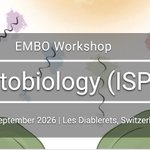
Please consider attending this conference in the Swiss Alps meetings.embo.org/event/26-p… . Exciting science & great venue, lots of opportunities for selected talks from abstracts.

I have a PhD student and a post-doc position available in my lab to work on plant photobiology. Please use the links below to postulate
Please RT, many thanks
career5.successfactors.eu/ca…
career5.successfactors.eu/ca…

Christian Fankhauser retweeted

Incroyable !
@franceinfo comprend enfin comment les #OGM transgéniques (= transfert horizontal de gènes) peuvent permettre de diminuer la consommation de phytosanitaires. 🙄
franceinfo.fr/environnement/…

Christian Fankhauser retweeted
Do you want to understand how RNA #splicing decisions are made? We‘ve got a PhD position open for you (see 👇👇)!!
Please share #RNAbiolohy and RT!
tinyurl.com/4ztu9cb9