

Daily Facts for Curious Minds What's blowing your mind today? Follow for science, art, history facts and more!
Joined August 2025
- Tweets302
- Following2
- Followers38
- Likes716




Wait, you can cut glass with SCISSORS? ✂️🍷
It sounds like a magic trick, but it’s actually the Rehbinder Effect. If you submerge a sheet of glass in a tub of water, you can actually trim it like cardboard.
How it works:
Softening the Surface: Water molecules aren't just "wet"—they’re chemically active. They penetrate the microscopic cracks on the glass surface and weaken the chemical bonds.
The "Toughness" Drop: This phenomenon reduces the glass's surface energy and hardness, making it "softer" and more plastic.
No Shattering: Usually, glass cracks uncontrollably because of high surface tension. Underwater, that tension is neutralized, allowing the scissors to create a controlled "crush-cut" rather than a total shatter.
The "Did You Know?" Facts:
Discovery: Named after Soviet chemist Piotr Rehbinder, who first realized in 1928 that surfactants (and even water) could fundamentally change how hard materials behave.
It’s not just glass: This effect is a huge deal in mining and drilling. Engineers use specific liquids to "soften" rock, making it easier for giant drill bits to chew through solid stone.
Safety First: Don't expect a clean, window-pane edge—it’ll be jagged, and the water will be full of tiny glass shards. (Wear gloves!)
Science is basically just a series of "glitches" in the matrix that we've learned to exploit. 🧪✨
#ScienceFacts #Physics #lifehacks
NASA's Artemis II mission isn't just a trip back to the Moon; it’s a record-shattering 10-day test flight that changes our perspective of deep space forever.
The Flight Plan:
The Route: After two Earth orbits, the SLS rocket and Orion capsule will perform a massive figure-eight trajectory, swinging around the lunar far side before heading home.
The Distance: The crew will reach a perilune (closest approach) of 3,000 to 9,000 miles from the lunar surface.
The Record: This puts them further into deep space than any human in history.
Why this view is different:
Apollo vs. Artemis: While Apollo missions orbited at just ~70 miles up, Artemis II stays much higher (4,000–6,000 miles).
The "Basketball" Rule: At their closest point, the Moon will look like a basketball held at arm's length. 🏀
The Full Picture: Unlike previous missions, this altitude lets the crew see the entire disk of the Moon at once, including the mysterious North and South Poles.
From the Kennedy Space Center to the far side of the lunar disk, we are going. 🌎✨
📸 Credit: NASA Goddard/CI Lab
#ArtemisII #NASA #SpaceExploration #Orion

Here's the visualization of Artemis II's route towards the moon.
400,000 km from home, and the facts only get weirder. 🚀🌑
Think you know the @NASA's Artemis II mission? Beyond the records, this flight is packed with high-stakes engineering and "space-life" quirks you won't believe:
The "Inner Circle" Secrets:
The "Integrity" Toilet: On Day 1, the crew’s top priority isn’t looking at stars; it’s a "Waste Collection" test. They have to verify the capsule's compact toilet works perfectly before they're allowed to leave Earth’s orbit. No working plumbing = mission scrubbed. 🚽
🌶️Hot Sauce & No Fresh Food: Since Orion has zero refrigeration, there’s not a single fresh apple on board. To compensate, the crew is carrying 5 different types of hot sauce to make their shelf-stable, rehydratable meals actually taste like something in microgravity.
🚀Retro Power: The massive SLS rocket is actually a "Franken-rocket." Its four main engines are refurbished veterans from the Space Shuttle program, but unlike the Shuttles, these legendary engines won't be recovered—they'll be discarded in the ocean after one final ride. 🌊
⚡️Optical High-Speed: This is the first crewed mission to test Deep Space Laser Communications. Instead of just grainy radio, they’re trying to beam high-def data back to Earth at speeds that would make 1970s NASA's head spin.
They are 10 days away from a splashdown, but a lifetime away from anything "normal."
#ArtemisII #NASA #MoonMission #spacex
“When we do hard things, we get a lot out of it.” 🚀🛰️
Retired @NASA astronaut and current US Senator @SenMarkKelly shares his thoughts on the Artemis II Moon mission and what it means for the future of space exploration! 🌕🇺🇸
#Artemis #ArtemisII #NASA #SpaceExploration
History was just made! 🚀🌕
@NASA's Artemis 2 has officially launched, marking the first time humans have headed toward the Moon in over 50 years. This isn’t just a flight; it’s a massive leap for representation and exploration.
The Artemis 2 "Did You Know?" Stats:
The Crew: A historic lineup featuring the first woman (Christina Koch), the first person of color (Victor Glover), and the first non-American (Jeremy Hansen, 🇨🇦) to ever leave Earth’s orbit.
The Distance: They aren’t just orbiting; they’ll travel 4,600 miles beyond the far side of the Moon, the furthest humans have ever ventured into deep space.
The Speed: On their way home, the Orion capsule will hit the atmosphere at a blistering 25,000 mph (about 40,000 km/h).
We’re no longer just dreaming of the stars—we’re back on our way. Next stop: The Lunar Far Side! 👨🚀👩🚀✨
#Artemis #Artemis2 #NASA #SpaceExploration #moon
🚨 Japanese scientists have created a hydrogel that "reprograms" regular cancer cells into Cancer Stem Cells (CSCs) in just 24 hours. 🧬
Cancer stem cells are incredibly difficult to isolate and study, but they are the root cause of tumor relapse and metastasis.
This breakthrough means researchers can now rapidly produce CSCs in a lab, paving the way for targeted treatments designed specifically to destroy them. 🔬
#Cancer #BreakingNews #Breakthrough #Science
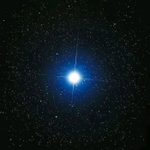
🌟Sirius, the brightest star in Earth's night sky.
It sparkles so intensely (sometimes flashing red, white, and blue) because its light is so bright that it gets dramatic distortion from Earth's atmosphere.
But the coolest fact? It's not one star.
It's a binary system, a massive star paired with a tiny, faint "white dwarf" companion, Sirius B!
Facts about Sirius, the "Dog Star":
1️⃣ It is the brightest star in the night sky.
2️⃣ It’s part of the Canis Major ("Great Dog") constellation.
3️⃣ Its extreme brightness isn't just because it’s big,it’s also one of our closest neighbors, just 8.6 light-years away! 🚀
4️⃣ Historically, its rise in the morning sky marked the "Dog Days of Summer" in ancient Egypt.
#Space #Stars #Astronomy
Source: Hubble, ESA/ Akira Fujii

🌍 WATCH: Here is what a sunrise looks like from 250 miles above Earth from the International Space Station (ISS). 🌅🛰️
While we get one sunrise a day on Earth, ISS astronauts witness 16 sunrises and sunsets every 24 hours.
They are orbiting Earth at a mind-blowing 17,500 mph (28,000 km/h), completing a full orbit every 90 minutes.
#ISS #NASA #Space
Forget AI; meet the brainless engineer. 🧠❌
In a now-famous experiment, scientists used a slimy, amoeba-like protist (Physarum polycephalum) to model the Tokyo subway system.
By placing oats as "stations," the slime mold grew a transport network almost identical in efficiency and resilience to the real thing, in just a few days. 🛤️
Video Credit: Scandishrooms
#ScienceFacts #AI
🚨🧠 Consciousness may have existed 100 million years before LIFE?
What if consciousness isn’t a byproduct of evolution, but a fundamental building block of the universe? 🌌
New analysis of NASA’s Bennu asteroid samples suggests that the precursors to life, and potentially to consciousness, existed 100 million years before Earth even formed. 🧵👇
1st Image: @NASA (JWST)


Beyond chemistry, researchers are looking at "self-assembling" organic structures within Bennu.
Some experts suggest these function as "time crystals" or quantum oscillators—hinting that the structural blueprints for consciousness were present in the vacuum of space long before microbes appeared.
Look closely at the Keeler Gap. 🪐
This is Daphnis, a tiny moon only 8 km wide.
As it orbits, its gravity pulls at the edges of Saturn’s A-ring, kicking up these spectacular vertical waves.
Nature’s literal ripple effect. 🌊
#Saturn #Space #Astronomy
NASA releases insane new footage from Mars, 250 million miles away from Earth.
Will humans terraform Mars in the near future? What do you think? Let us know in the comments 👇
Source: @NASA
#space #NASA #Astronomy #science
The Pyramids of Giza (built ~2600–2500 BC) may mirror the stars of Orion’s Belt 🌌
🔺Khufu, Khafre & Menkaure line up like Alnitak, Alnilam & Mintaka. The smallest pyramid is even offset, like Mintaka.
🔺In 1994, Robert Bauval’s Orion Correlation Theory argued this was intentional, linking the pyramids to Osiris, the Egyptian god of rebirth.
🔺Ancient Egyptians saw Orion as Osiris’s celestial form, guiding the pharaohs’ souls to the afterlife.
🔺But archaeologists note: while the resemblance is striking, the pyramids are aligned with cardinal directions (north–south–east–west) using circumpolar stars, with unmatched precision.
Coincidence, sacred symbolism, or a master plan written in the stars? 🏜️✨
#Egypt #Astronomy #History #Pyramids

🌌 NASA’s James Webb Space Telescope just spotted something jaw-dropping: the “Cosmic Vine.”
A chain of 20 galaxies linked together across 13 million light-years—a structure so massive it helps us unlock the secrets of how the universe built itself after the Big Bang.
This isn’t just cosmic eye-candy. The Cosmic Vine is a living laboratory for scientists:
✨ Revealing how gravity wove galaxies, stars, and planets into place
✨ Mapping the hidden scaffolding of dark matter and gas—the “cosmic web” that binds the universe
✨ Exposing how galaxies interacted and evolved in the universe’s earliest days
Think of it as finding one of the backbone strands of the universe—a glimpse into the architecture that shaped everything we see today.
Credit: @NASA

