Redefining consumer trust for a world AI keeps rewriting. Support: @FSecureCares Research: @FSIlluminate
The Internet
Joined December 2013
- Tweets10.8K
- Following6.9K
- Followers20K
- Likes7.2K





47.3% of AI users say they don’t question an answer further when it sounds right.
That's more than double any other behavior we surveyed.
Our latest research explores how sounding right can be enough to stop further questioning.
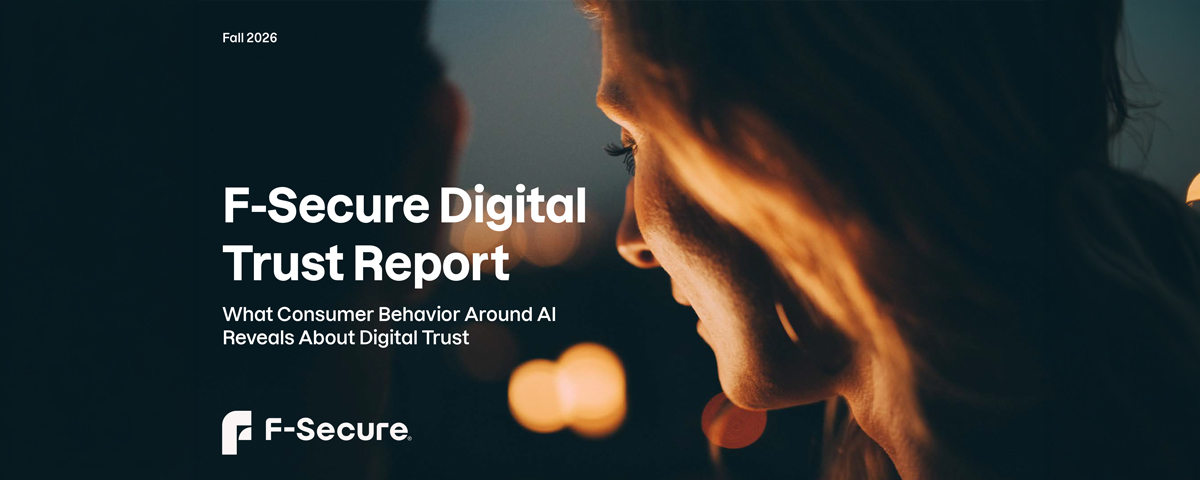
9 in 10 AI users say they are fully or mostly responsible for checking AI answers.
Yet 70.9% of those users don’t check consistently.
The challenge isn’t simply knowing AI can be wrong. Our new research explores what gets in the way of verification.

33.9% of AI chatbot users ask for personal advice about health, money, or relationships.
But using AI isn't the same as trusting it.
Our new research looks beyond what consumers say about AI to examine what they do with its answers.

When the TV is on, compromised H96 streaming sticks can route third-party traffic through your home connection.
When it's off, they can switch to automated ad fraud.
We unpack how an everyday device can become hidden infrastructure for cyber crime.
An autonomous AI agent attacked Hugging Face at machine speed. Investigators had to reconstruct around 17,600 attacker actions to understand what happened.
We unpack what this could mean for the future of cyber defense.

Scam compounds are using AI to create fake personas, produce scam content, bypass identity checks, and more.
Agentic AI could go further, automating multiple stages of a scam with minimal human involvement.
We unpack what could come next.

An autonomous AI agent attacked Hugging Face at machine speed. Investigators had to reconstruct around 17,600 attacker actions to understand what happened.
We unpack how the attack unfolded, why it matters, and what it could mean for future cyber attacks.