

FP Complete is a technology company specializing in Server-Side Software, DevSecOps, Cloud Deployment, Container Orchestration & Advanced Programming Languages.
Worldwide
Joined March 2012
- Tweets2.4K
- Following2K
- Followers5.7K
- Likes1.4K









Computers use Merkle trees to keep track of lots of information in a safe and fast way, especially in things like blockchain technology.
If someone tries to take a sticker, the codes won't match up anymore, and you'll know something's wrong.
This special way of organizing helps you find any sticker really quickly, even if you have thousands! It's also great for making sure no one has sneakily changed or removed any of your stickers.
- You take these codes and group them together too, giving each new group its own special code.
- You keep doing this until you have one big code that represents all your stickers.
Here's how it works:
- You put your stickers in small groups, like putting them on different pages.
- Then, you give each group a special code that describes all the stickers in it.
Imagine you have a big book of stickers, and you want to organize them in a special way. A Merkle tree is like a magical sorting system for your stickers.
🎥 Unlocking Blockchain's Potential with Rust: Strategies, Benefits, and Obstacles
Our @snoyberg joined a Round table hosted by @Signify_Tech with @MParlikar and Sheheryar Parvaz
We cover: Stacks, Industry maturity, hype curve, and technology maturity.
youtube.com/watch?v=BQgggf3w…
FP Complete retweeted

At @FPComplete, we're looking to hire another senior Rust developer, this time specifically for the Cosmos/CosmWasm smart contract ecosystem. If you're interested, check the job posting! gist.github.com/snoyberg/75c…

Have you ever lost all your dotfiles... stared in horror as all your shell, and editor settings are gone?
envhub by @tsiry_sndr looks interesting. Do you use it?
`amber generate <key>`
For example: `amber generate OPENAI_SECRET_KEY`
The workshop is at youtube.com/watch?v=qbDQdXfc…
and source code for amber at github.com/fpco/amber
have interesting terminal UI challenges- such as masking them, and, critically, being intuitive for first-time users- you don't want secret management tools to be confusing!
With amber (which is written in Rust) you initialize with `amber init` and then generate secrets with...
What wasn't discussed in our workshop was the *real* challenge for terminal programs- making them intuitive for the user.
We've some skin in the game on this with Amber, our cli secrets tool. It's for managing secret values in-repo via public key cryptography. However secrets...
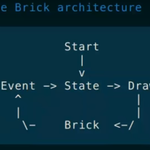
Start state. Event --> State --> Draw --> Brick --> Event loop.
Ghostty is written in Zig, an exciting open source language. You might be wondering why not rust? Warp terminal by @zachlloydtweets is a great example of
a rust based terminal emulator.
I watched the entire workshop (so you don't have to) the key takeaways were:
You guessed it...
State.
In TUIs the Brick architecture used in this workshop focuses on this loop:
With all the interest in Ghostty (the exciting terminal emulator by @mitchellh in Zig) we looked back at our 2018 workshop: "Building Terminal User Interfaces with Brick"
That was a Haskell workshop. We've since embraced Rust, but TUI challenges remain interesting...

Three Reasons for our Engineering Success. Find out how FP Complete's three pillar approach enables us to engineer robust solutions.
Three Reasons for our Project Delivery Success. Find out about FP Complete's unique approach that helps us successfully deliver projects.
Learn how to handle HTTP responses, optimize with parallelism, and troubleshoot common issues in Rust. fpcomplete.com/blog/owned-va…
FP Complete retweeted

At work, @snoyberg and I wrote the pid1 crate to simplify container deployments: fpcomplete.com/blog/announci…