

Professor Catedrático e Decano da IQS School of Management, Universitat Ramon Llull; VHI; bye-fellow St Edmund’s;ex-econ sênior PNUD
Joined March 2010
- Tweets14.1K
- Following421
- Followers9.9K
- Likes19.6K
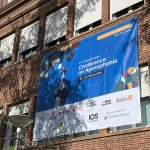


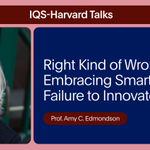


It is about to start, the 4th edition! This time we will also release the results of the first national survey on aporophobia for Spain!

Flavio Comim retweeted

Has vist alguna persona vivint al carrer? Saluda-la, pregunta-li com està i què necessita. De vegades, escoltar-la i oferir-li companyia pot ser més útil que procurar coses materials.
T’expliquem què pots fer 👇
arrelsfundacio.org/persones-…

Flavio Comim retweeted
Viure al carrer implica una exposició continuada a situacions de violència, pèrdua, intimidació i discriminació.
El 80 % de les persones que viuen al carrer han patit situacions de violència.
arrelsfundacio.org/el-80-de-…

Muita gente entusiasmada com essa escolha?

The Nobel Prize for economics has been awarded to Robert E Hall and Michael Woodford, for their work on the 'microeconomic foundations of macroeconomic stabilisation'. Follow our live blog for more: ft.trib.al/sZ0k4IA

Flavio Comim retweeted

The Nobel Prize for economics has been awarded to Robert E Hall and Michael Woodford, for their work on the 'microeconomic foundations of macroeconomic stabilisation'. Follow our live blog for more: ft.trib.al/sZ0k4IA
Flavio Comim retweeted

🚨 Are universities still relevant in the age of AI? Will they continue to provide economic value to students and society in the coming years? Can they SURVIVE AI disruption?
Over the past few years, we have watched AI models become as capable as or more capable than humans in most cognitively valuable fields, and many young people today are deeply uncertain about the skills and career paths least likely to be undermined by AI advancements.
We have also seen AI enter schools and universities as students use it for homework, projects, and as a learning assistant, while teachers struggle to adapt their materials and teaching methods to this emerging ‘co-learning’ environment.
Many watch these developments and declare that universities are dead and that pursuing a degree is a useless or futile endeavor.
Maybe not, if they evolve and reshape their mission.
In his new paper, “The University after AI,” @profjasonpotts offers a fascinating analysis of the role, function, and value of universities, explaining in detail how AI is disrupting them and putting them at risk of becoming irrelevant in the post-AI age.
When describing universities, he writes:
“A university is a self-governing micro-republic, corporate in form, approximately 1000 years old (older than nation states, younger than religion), that exists within but always apart from society (for instance they often have their own police and justice tribunals), and which serves as the custodian of knowledge, creator of new knowledge, and whose primary business is to upload that knowledge into a select group of the next generation. This is a service that students want and that society is willing to pay for.”
He also states:
“A university, then, is neither a cloister nor a factory but a platform, or a multi-sided market whose primary economic function is to reduce the transaction costs of matching distinct groups who wish to trade with one another.”
In light of the threat posed by AI, the author offers the following ten proposals to restructure the role, function, and value of universities:
- Institutionally separate certification from instruction
- Restore the costly signal
- Rebuild the missing junior loop
- Fast-response accreditation
- Sell the cohort
- Host scholars rather than employ them
- Move to the new frontier
- Shed sides
- Make the claim on graduate outcomes explicit
- Governance as the production technology of the warrant
The paper offers a fantastic economic analysis of AI’s impact on this 1,000-year-old institution, informs broader discussions on AI ethics, policy, and regulation, and makes for a great weekend read.
👉 You can find the paper and my follow-up recommendations below.
👉 To receive all my paper recommendations, classes, and essays on AI, join my newsletter's 100,500+ subscribers below.

Essa ponte entre progresso e psicologia é fundamental

Super interesting!
"Agency: The Psychological History of Human Progress" by Martin Seligman.
amzn.to/4yuc2VV
"What actually drives human progress? Ecologists point to geography and climate. Sociologists invoke wars and class. Economists follow the money. But none of these accounts explains why innovation and human thriving occurs in some eras and stalls in others—often under identical material conditions. The missing variable, Seligman argues, is the psychological state known as: agency. Agency is built from three interlocking capacities: efficacy, the confidence that you can accomplish a specific goal right now; optimism, the expectation that your efforts will pay off far into the future; and imagination, the breadth of goals you can envision. When all three align, civilizations leap forward. When they collapse, societies stagnate—no matter how rich their resources or how brilliant their citizens."
"From the world’s most influential psychologist and bestselling author of Flourish, a landmark work spanning ancient Greece to the age of AI that identifies agency—the fusion of efficacy, optimism, and imagination—as the hidden engine of human progress, and shows how we can unleash it to build a better future."
amzn.to/4yuc2VV


Interesante

MIT published a brutally honest report on what AI is doing to students.
A committee of professors and students spent five months studying how AI changed learning on campus, and the findings read like a warning to every university on the planet.
Study groups are disappearing. Office hours are emptying out. Problem sets and take-home exams no longer prove anything, because AI can produce credible solutions to almost any written assignment in the undergraduate curriculum. Students who lean on chatbots lose mastery and confidence, and some slip into what the report calls cognitive surrender, reaching for AI at the first hint of struggle.
The numbers are rough. 46 percent of surveyed MIT undergrads use LLMs daily. 90 percent worry about their own overreliance. Undergrads who feel AI makes them replaceable now outnumber those who feel it makes them capable.
The committee's answer surprised me. They refused to fight AI with surveillance. The report calls AI detectors unreliable, says lockdown browsers feel like spying, and warns that policing students builds a classroom atmosphere of mutual distrust.
Instead, MIT wants to rebuild education around the things AI can't replace. That means oral exams, semester portfolios, in-person project work, and a required social component in every subject. The report even floats the idea of rethinking grades entirely, since without a GPA to optimize, much of the incentive to cheat with AI evaporates.
The committee warns professors against replacing undergrad research assistants with AI agents just because they're cheaper, because a university exists to grow people, not output.
The most famous tech school on earth admitted the machines broke its way of teaching. Its answer is more humans, not more software.

Vai vendo….parece ficção científica, sqn

“You just said that 10% doesn’t seem an unreasonable estimate that AI could kill all humans”
“Yes”
“Wow… oh my God.”
@vicderbyshire speaks to Nobel Prize Winner and so-called ‘Godfather of AI’ Geoffrey Hinton about predictions by an Anthropic researcher that there’s a more than 10% chance AI could kill all humans within a decade.
#Newsnight

Ninguém estava esperando esse aumento de empregos relacionados com a IA; governos devem ficar de olho nessas mudanças estruturais

A realidade é que esse pessoal vive em outro mundo, dá até medo www1.folha.uol.com.br/poder/…

Interessante

We assume we live in a shared reality, with differences in experience attributed to differences in perspective. But @ProfSteveFuller argues this is a radical mistake. bit.ly/4zSfRpw
Breakthroughs in neuroscience, quantum mechanics, and AI show that we don't have different perspectives on the same reality, but inhabit different realities altogether.

Preocupante?

"Even under the best circumstances, the transition to this new AI era will be one of the most turbulent times in human history," Bill Gates writes in a new, 12-page essay. on.wsj.com/4gTfp2M

Very interesting
Highly relevant!
"AI and Our Economic Future" by Charles I. Jones.
"Artificial intelligence (AI) will likely be the most transformative technology of the modern era. Earlier technologies such as electricity, semiconductors, and the internet profoundly reshaped economic activity and increased living standards throughout the world. In some sense, AI is simply the latest in this line of general purpose technologies and at a minimum should continue the economic transformation that has been ongoing for the past century. However, a case can be made that this time is different. Automating intelligence itself—that is, creating a technology that can perform any cognitive task that humans can do today—would have broad ramifications. Previous technological advances replaced humans in many physical tasks or in a narrow set of cognitive tasks, making human intelligence more valuable. But what if machines— AI for cognitive tasks and AI plus advanced robots for physical tasks—can perform every task a human can, at least as cheaply? ...What does economics have to say about this possibility, and what might our economic future look like?"
pubs.aeaweb.org/doi/pdfplus/…

Poor FT, it missed the real story behind Gaudí’s awareness of timing and deadlines
Opinion: We moan about them but imagine how awful working life would be if we were drowning in unfinished business. ft.trib.al/HCwrYwQ

Corretíssimo
Emotion is often portrayed as a threat to rational thought.
Daniel Vanello argues the opposite: that emotions are themselves rational, shaped by our values and open to justification or criticism.
If this is right, emotional development should not focus on control and management, but on learning how to reason with what we feel.
Tap here to read the full article. iai.tv/articles/emotions-are…


Super interessante!! Lies, big lies and statistics!

OPINIÃO | 📊 ECONOMETRIA FÁCIL | A manchete diz que brasileiros preferem pagar menos impostos a receber serviços públicos. Mas será que a pergunta do survey permite concluir isso?
Neste vídeo, mostro por que o desenho de uma pergunta importa tanto quanto a resposta. Quando uma mesma questão mistura impostos, saúde, educação, serviços privados e confiança no governo, diferentes motivações acabam produzindo a mesma resposta.
Em pesquisa, uma boa pergunta é aquela que consegue medir exatamente o que pretende medir.
📌 Referência: Stantcheva, S. (2023). How to Run Surveys: A Guide to Creating Your Own Identifying Variation and Revealing the Invisible. Annual Review of Economics, 15, 205–234.
📲Leia mais na #Folha: folha.com/colunas
📊 Victor Rangel (@EconometriaFaci) é bacharel em economia e mestrando do Insper