

@FBRorg
🇺🇸Account based in
About this account
- Account based in
- United States
- Connected via
- United States App Store
Account-level information from X, not a live location or the device used for a specific post.
Most cures have happened as a direct result of biomedical research, saving human and animal lives.
Washington, DC
Joined March 2009
- Tweets8.6K
- Following1.3K
- Followers3.7K
- Likes1.3K
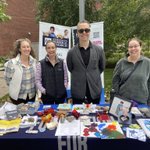




Thanks @CambSciCarnival for the opportunity today to tell families about biomedical research. #CambridgeScienceCarnival #CSC2026 #CSC26


The @LaskerFDN announced its 2026 award recipients, recognizing groundbreaking work that has expanded our understanding of human health and advanced treatments for serious diseases.
Behind two of this year’s award-winning breakthroughs was research involving dogs, mice, rats, rabbits and nonhuman primates.
Learn how animal research contributed to this year’s discoveries: fbresearch.org/2026-lasker-a…
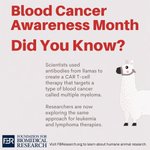
🔬 During Blood Cancer Awareness Month, we’re highlighting how biomedical research has helped advance new treatments for blood cancers.
CAR T-cell therapy is one example. CARVYKTI, an FDA-approved treatment for multiple myeloma, uses a CAR designed with llama-derived antibodies to help T cells recognize and attack cancer cells.
Researchers are continuing to explore new ways to apply this approach to other blood cancers, including leukemia and lymphoma.
Learn more about the research behind today’s medical advances. #BloodCancerAwarenessMonth #CancerResearch #MultipleMyeloma

Where do nonhuman primates fit into translational research today?
Join Bioculture and the European Animal Research Association (@The_EARA) for a webinar on Xtalks exploring the evolving role of nonhuman primates as a critical translational research model, alongside emerging research methods and the 3Rs.
📅 Sept. 25 | 11 a.m. Eastern time
Learn more and register: xtalks.com/webinars/assessin…
#AnimalResearch #BiomedicalResearch #TranslationalResearch

Blood cancer research has led to remarkable advances that are helping more people live longer, healthier lives. During Blood Cancer Awareness Month, FBR recognizes the decades of biomedical research that have expanded our understanding of leukemia, lymphoma and myeloma. Research involving animals has also contributed to innovative therapies in unexpected ways: llama-derived antibody fragments are part of CARVYKTI, a CAR T-cell therapy approved to treat multiple myeloma. By combining animal models with complementary research methods, scientists continue to develop innovative therapies that offer new hope to patients.


From vaccines to treatments for neurodegenerative disease, research with nonhuman primates has helped advance some of medicine’s most important breakthroughs.
A new position statement from APV and EPV highlights why primates remain valuable to biomedical research and the importance of responsible research with these animals.
Read more: pmc.ncbi.nlm.nih.gov/article…

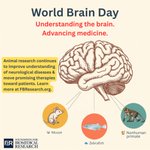
The brain is the body's most complex organ, and understanding it requires many scientific approaches. On World Brain Day, FBR recognizes the research that has expanded understanding of the brain and helped advance treatments for neurological diseases. Scientists rely on a variety of research methods (including animal models such as mice, zebrafish and long-tailed macaques, alongside complementary approaches like cell cultures, organoids, computer models and advanced imaging) because each provides unique insights into brain function, disease and potential therapies. Together, these approaches have helped scientists better understand the brain and advance treatments that improve lives for people with conditions such as Alzheimer's disease, Parkinson's disease, stroke and epilepsy.

Medical breakthroughs don't come from a single method.
From animal research to cell-based technologies and computer models, researchers use many complementary approaches to understand diseases and develop new treatments.
#BOARD26 #BeOpenAboutAnimalResearch #AnimalResearch @The_EARA

Animal research and NAMs aren't competing approaches; they're complementary scientific strategies. Animal research + NAMs = better science.
Researchers select the best methods to answer scientific questions and advance treatments, vaccines and cures.
#BOARD26 #BeOpenAboutAnimalResearch #MedicalResearch #NAMs @The_EARA

Today for #BOARD26, we're sharing FBR’s newly updated Animal Research Success brochure.
Medical advancements depend on a range of scientific approaches, including animal research and new approach methodologies (NAMs). Learn how animal research is helping contribute to medical breakthroughs.
📖⚕️Read the brochure: flipsnack.com/fbresearch/ani…
💙⚕️Support science education with a donation to FBR: fbr.secure.nonprofitsoapbox.…
#BeOpenAboutAnimalResearch #AnimalResearch #MedicalResearch #NAMs @The_EARA


FBR's updated Animal Research Success brochure is now available!
The expanded edition includes new sections on animal research oversight and the 3Rs (Replacement, Reduction and Refinement) along with examples of how animal research contributes to medical advancements.
📘 View the brochure: flipsnack.com/fbresearch/ani…
Help us get this resource into the hands of teachers, students and community leaders across the country.
❤️ Support FBR with a donation: fbr.secure.nonprofitsoapbox.…

On World Sickle Cell Day, we recognize that animal research has expanded understanding of this inherited blood disorder and helped drive the development of new treatments and potential cures. Animal models, especially genetically engineered mice, have helped scientists understand sickle cell disease and develop new treatments. Additional studies in nonhuman primates have supported the advancement of promising gene therapy approaches. #AnimalResearchSavesLives

Did you know? Woodchucks played an important role in hepatitis research.
Because woodchuck hepatitis virus closely resembles human hepatitis B, researchers were able to study liver disease progression, improve vaccine development and advance treatments that benefit patients today.
National Hepatitis Testing Day is a reminder that research, prevention and testing save lives.
#NationalHepatitisTestingDay #ScienceSavesLives #BiomedicalResearch #HepatitisAwareness #AnimalResearch

New from FBR: Our latest op-ed in the Milwaukee Journal Sentinel highlights how research with dogs has helped advance medicines and treatments that improve and save lives for both people and animals.
Our op-ed also underscores the importance of keeping protests legal and non-violent.
Read more: yahoo.com/news/articles/acti…

From vaccines to chronic disease treatments, animal research at Oregon’s ONPRC has helped enable lifesaving medical advances. Learn more at SaveScienceOregon.org #SaveScience

During World Immunization Week, we recognize the science behind lifesaving vaccines.
Vaccines don't happen overnight. They are developed through a combination of scientific methods including laboratory research, computer modeling and studies with animal models to better understand how the immune system responds and to help ensure safety before human trials begin.
#WorldImmunizationWeek #BiomedicalResearch

FBR’s 2025 Annual Report is now available. Inside, you’ll find a look back at a year of impact, highlighting how FBR is advancing public understanding of animal research, expanding educational outreach, and elevating the conversation around biomedical innovation. Take a look here: flipsnack.com/fbresearch/fbr…
