

💻🖥️📱🧑💻 Expert, ex Satellite support technician Inmarsat, Iridium, Thuraya. Antique computers, Adult fan of Lego, Rail fan, Star Wars, Every Day Carry.
Toulouse, France
Joined August 2018
- Tweets1.6K
- Following2.7K
- Followers1K
- Likes14.7K





F4CZD Philippe retweeted

info : le logiciel de décodage MultiPSK sera totalement gratuit à partir du 1 er janvier 2027 👍
f6cte.free.fr/
F4CZD Philippe retweeted

Haha 🤭 I hadn't shown it yet, but I've also (of course) done the same thing with the @M5Stack Tab5 😊
And naturally, feel free to share these videos! I'd be more than happy for you to do so 😌


F4CZD Philippe retweeted

100 years ago, in 1926, the Yagi-Uda beam antenna was invented! A century later, it remains a cornerstone of directional RF.

F4CZD Philippe retweeted

To be clear, Skeptic Robert does not necessarily believe this story. I've been enjoying communicating with amateur satellites and even the space station astronauts for over four decades and, yes, I have sometimes communicated with an HT and made contacts via those amateur satellites – but with receive frequencies and transmit frequencies most often not being the same, it greatly changes the probability of this success… What do you think? 73 de Robert K3RRR
Possum Creek Times Reporter: "POSSUM CREEK MAN FACING POSSIBLE FEDERAL CHARGES AFTER $19 TEMU RADIO CONTACTS INTERNATIONAL SPACE STATION. POSSUM CREEK, Ohio — Sept. 14, 2026 — What started with a $19 purchase from Temu has reportedly turned into a federal investigation for a Possum Creek man who says he accidentally made contact with the International Space Station over the weekend.
Earl “Buck” Hensley, 61, said the handheld radio arrived at his Possum Creek home Friday afternoon, Sept. 11.
Hensley said he ordered the radio because the listing claimed it had “long range communication” and he wanted something to listen to truck drivers with while sitting in his garage.
“I figured long range meant maybe Cambridge or Zanesville,” Hensley said. “I didnt know they meant space.”
According to Hensley, at approximately 6:43 a.m. Saturday, Sept. 12, he began scanning frequencies while drinking coffee in his garage.
At approximately 6:51 a.m., Hensley said he heard voices and began transmitting.
Believing he had reached a truck driver, Hensley repeatedly asked for a radio check and then asked whether the truck stop outside Possum Creek was still serving biscuits and gravy.
“I kept asking about breakfast and the fella kept saying Houston,” Hensley said. “I thought maybe that was his CB handle.”
The situation reportedly became more serious when Hensley asked the unidentified voice for his location.
“He said they was about 250 miles up,” Hensley recalled. “I thought he meant up around Cleveland.”
Hensley continued transmitting for several minutes before another voice reportedly instructed him to immediately stop using the frequency.
He did not.
“I thought somebody was messing with me,” Hensley said. “So I told them they didnt own the air.”
By approximately 7:06 a.m., the transmissions had stopped.
Hensley said he thought the incident was over until two men identifying themselves as federal officials arrived at his home Sunday afternoon.
The radio was reportedly taken as part of an investigation into whether Hensley was operating transmitting equipment without the proper authorization and whether his transmissions interfered with federally regulated radio communications.
Hensley has not been formally charged as of Monday morning, but says he was informed the matter could involve violations of federal communications law.
Federal law does regulate unauthorized radio transmissions, and some willful violations can carry monetary penalties or, depending on the circumstances, criminal consequences. (Legal Information Institute)
Hensley maintains he had no idea what frequency he was using or whom he was talking to.
“The thing came from Temu,” he said. “I figured if I wasnt allowed to talk to astronauts they wouldnt put the button on there.”
His wife, Darlene, said she had warned him not to order the radio.
Hensley is currently waiting to learn whether federal authorities will pursue the case.
He also says Temu has denied his request for a refund.
Dan Mercer | The Possum Creek Times

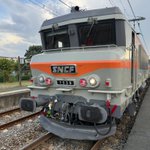
Journée magique hier à bord de la BB7338 du Train Historique de Toulouse, l'arrivée en gare de Saint-Jean-de-Luz et un arrêt d'une heure à Bayonne pour régulation.


4
218
F4CZD Philippe retweeted

Elegant. Focused. Precise.
A beautiful YL and her chrome key… pure CW poetry in motion.
No rush. Just perfect dits and dahs.
Class never goes out of style.
Credits: CW/MORSE
Mr. Sam Yang 🇨🇳
💯 @DTelegrafo @wa1gov
@lilislittlelife @TA3TGC @CT1ILT


Download. Flash. Boot. The all-in-one USB creator for Mac, seen on @Korben this morning : github.com/Kruszoneq/macUSB

89

F4CZD Philippe retweeted

A French engineer who lives quietly in Paris has spent 30 years writing software that the entire internet now runs on without knowing his name.
He wrote the code that streams every YouTube video, every Netflix show, every TikTok clip. He wrote the code that runs the virtual servers underneath AWS, Google Cloud, and Microsoft Azure. He calculated more digits of pi than anyone in history. He has no Twitter. He has no marketing. He just keeps shipping.
His name is Fabrice Bellard.
Here is the story, because almost nobody outside the systems programming world knows what one man has built.
Fabrice was born in 1972 in Grenoble, France. He studied at École Polytechnique, the top French engineering school. He never went to Silicon Valley. He never built a startup empire. He just wrote code.
In 2000 he started a project called FFmpeg, an open-source multimedia framework for encoding, decoding, and streaming video. He was 28. The project did one thing nobody else had done well. It handled every video and audio format that existed, in one library, on every operating system. He led it himself for years.
Today FFmpeg is the invisible engine of the internet. YouTube uses it. Netflix uses it. VLC uses it. Chrome and Firefox use parts of it. Every Android phone, every iPhone, every smart TV, every video editing tool you have ever touched runs FFmpeg somewhere underneath. If you have watched a video on a screen in the last 20 years, Fabrice's code processed it.
He was not done.
In 2003 he started QEMU, a machine emulator and virtualizer. He wrote it solo until version 0.7.1 in 2005. QEMU lets you run any operating system on any other operating system. It became the foundation of modern virtualization. KVM, the Linux kernel hypervisor, runs on top of QEMU. Every major cloud provider, AWS, Google Cloud, Microsoft Azure, IBM Cloud, runs virtual machines on infrastructure built around it. The Quick Emulator is the most cited piece of cloud infrastructure code on Earth.
He kept going.
In 2001 he won the International Obfuscated C Code Contest with a small C compiler that grew into TCC, the Tiny C Compiler. TCC can compile and boot a Linux kernel from source in under 15 seconds. In 2004 he calculated the most digits of pi ever computed at the time, using a personal desktop computer and an algorithm he derived himself called Bellard's formula. In 2011 he wrote a complete PC emulator in pure JavaScript that runs Linux in your browser, a project called JSLinux that engineers still cannot believe is real.
In 2019 he released QuickJS, a small but complete JavaScript engine that fits where V8 cannot. In 2021 he released NNCP, a neural network based lossless data compressor that immediately took the lead on the Large Text Compression Benchmark.
Then he turned his attention to large language models. He built TextSynth Server, a web server with a REST API for running LLMs locally. He released ts_zip and ts_sms, compression utilities that use language models to compress text and short messages at ratios traditional algorithms cannot reach. He released TSAC, a very low bitrate audio compression system. In December 2025 he released Micro QuickJS, a new JavaScript engine for microcontrollers, separate from QuickJS, designed for environments with almost no memory.
Fabrice co-founded a telecom company called Amarisoft in 2012, where he serves as CTO. Amarisoft builds 4G and 5G base station software used by carriers and labs around the world. He has been running it for over a decade while continuing to ship personal projects from his own home page at bellard dot org
He has no Twitter. He has no Instagram. He gives almost no interviews. His personal website is a flat list of projects with no styling, no fonts, no marketing copy. Just titles and links.
A quiet French engineer who never moved to Silicon Valley wrote the code that quietly runs the internet.
He is still shipping.

Suite à une discussion sur un album de Spirou et Fantasio, QRN (À l'origine QRM) sur Bretzelburg, j'ai cherché la signification de QRN. Il s'avère qu'avec le temps l'interprétation en langage courant du code Q a beaucoup dérivé : hb9v.ch/code-q-radioamateur/

F4CZD Philippe retweeted
SDRPlay Roger Need: "StationFinder version 3.0 has been released. This is a major update and includes many new features including shortwave band selection, scanning, frequency hopping and manual stepping through frequencies. A full band scan (like 25M) takes under two seconds and is continuously updated. Frequencies are highlighted based on a user set SNR threshold. Frequency hopping of highlighted frequencies is adjustable from 1 to 10 seconds.
You can read more about and it and get download details -->> groups.io/g/SDRPlayUsers/mes…

New Bambu Lab A2L available with Expanded Build Volume:
eu.store.bambulab.com/fr/pro…

2
182
F4CZD Philippe retweeted

This STAR WARS teaser trailer was screened before ‘King Kong’ in December of 1976.
The special effects weren’t finished, the music is NOT John Williams, and all in all it gives off a very different much darker vibe.
Interesting. xitter.cf/drsditt/status/2040390…


