

Techie geek 💻🎮, Lives cartoon life 💯% Love The Doggos 🐶, Hip-Hop purist 🎤🎧, horror fan 🔪🩸, fly 🦅fly, shy porn lover, godless heathen, future-proof dad
Charlotte, NC
Joined May 2017
- Tweets19.5K
- Following4.4K
- Followers1.3K
- Likes41.8K










The Stone The Builder Refused retweeted

Pablo Torre tracked down Wu-Tang Clan’s legendary one-of-a-kind album, Once Upon a Time in Shaolin, famously purchased by Martin Shkreli for $2 million,
and played it for Method Man for the first time 🔊


The Stone The Builder Refused retweeted
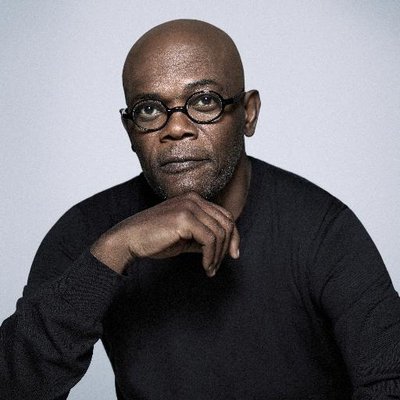
👤SAMUEL L. JACKSON👤
📺FRISCO KING📺
◻️SPIN-OFF TO SYLVESTER STALLONE’S TULSA KING◻️
◻️EXECUTIVE PRODUCED BY TAYLOR SHERIDAN◻️
🚨FRIDAY DECEMBER 18TH🚨
◻️ Russell Lee Washington befriends Dwight in prison. he's inspired to build his own criminal empire in Frisco, Texas.

The Stone The Builder Refused retweeted

Since I've summoned boom bap twitter has anyone seen the Arsenio Show's hip hop all star special?


The Stone The Builder Refused retweeted
32 Years later, I still got this one on Lock!!! #pulpfiction
The Stone The Builder Refused retweeted

More than FOUR HUNDRED families were thrown off the land in one Tennessee winter.
Not for a debt. Not for a crime. They had registered to vote.
So they spent the winter in army surplus tents, in a field, with children.
Fayette County, Tennessee, 1960. Sharecropping families — they did not own the land they worked, and
that was the whole lever.
They registered. The landowners evicted them, many without notice.
Then came the part that was meant to finish it. **The merchants closed ranks.** Names were circulated.
Families who had registered could not buy groceries. Could not buy seed. Could not get petrol. Credit
was cancelled. Insurance policies were cancelled.
And white doctors refused to treat their own patients.
Read that again. Not a mob. Not a night ride. A list, passed between shopkeepers, that meant a
pregnant woman could not see the doctor she had always seen.
John and Viola McFerren had started the civic league that ran the registration drive. A landowner
named Shepard Towles let the evicted families put tents on his ground, which took more courage than
most people will ever have to find.
They called it Tent City. Surplus army canvas, through a Tennessee winter, with no running water,
cooking outside, children going to school out of a tent.
In Haywood County next door, about thirty more families did the same.
They did not fold. The Justice Department came in. By December 1960 it had sued forty-five
landowners, twenty-four merchants and one bank. On 26 July 1962 the landowners were permanently
ordered to stop interfering with Black registration and voting.
So this one ends with a win — a federal injunction, won by sharecroppers living in tents.
But hold the price in your head. Four hundred families. Two winters. And the weapon was not a gun.
It was a grocery list.


The Stone The Builder Refused retweeted
"You cannot kill the working class."
Angelo Herndon was 19. Two detectives arrested him while he was collecting his mail at the post office in Atlanta.
The evidence against him was the books in his hotel room. The sentence: 18 to 20 years on a chain gang.
Born in Wyoming, Ohio, 1913. Down the mines in Kentucky at fourteen. By 1930 he was working for the Tennessee Coal, Iron and Railroad Company in Birmingham, and he had worked out what his wages were for.
He went to Atlanta and organised the unemployed — Black and white together, which was the actual offence.
July 11, 1932. Two Atlanta detectives picked him up at the post office. They searched his hotel room and found pamphlets.
They charged him under a Georgia insurrection statute written during Reconstruction. That law existed for one purpose: to be used against people who might encourage enslaved people to rise. They dusted it off and used it on a teenager with a box of leaflets.
Convicted January 18, 1933. Eighteen to twenty years of hard labour on the chain gang.
He fought it for five years. On April 26, 1937, the Supreme Court struck Georgia's insurrection statute down by five votes to four, on free speech grounds.
Five to four. One judge's mind between a nineteen-year-old and twenty years on a chain gang for reading.
The title of the book he wrote about it: You Cannot Kill the Working Class. He was twenty-four.
