

A curious mind, always exploring the vast landscapes of knowledge and creativity. Passionate about learning, the future of AI, and philosophy
South East Asia 📍
Joined April 2011
- Tweets6.9K
- Following861
- Followers1.3K
- Likes3K



Pinned Tweet
Life is Interpretation: Starting from Newman&Sarkar "Biology and Physics", which considers BMCs (Biomolecular Condensates): having 5 distinct simultaneous properties which cannot fit any existing physics 🧵

Extended Brain retweeted

🚀 DeepSeek-V4.1-Flash-1017 is here!
Stronger benchmark performance, faster task completion, and shorter outputs than the previous version—a Pareto improvement in performance and cost. Now live on our website, app, and API.
🛠️ Optimized for @DeepSeekHarness, Tencent CodeBuddy, WorkBuddy, and more. Upgrade to DeepSeek Harness v0.2.1-rc.1 or later for the best experience with the new model.
1/4


Extended Brain retweeted
The AI Scientist v3 is out: The Agentic Scientist.
GitHub: github.com/SakanaAI/AI-Scien…
Blog: pub.sakana.ai/agentic-scient…
arXiv: arxiv.org/abs/2610.18933
The Agentic Scientist is the 3rd iteration of our automated AI Scientist research system, and the shift this time is from “one agent writes a paper” to “a scaffold of parallel agents orchestrates the full research loop.”
The system now orchestrates a pool of parallel workers that share memory and distilled conclusions. Crucially, it features Evidence Generation: isolated agents automatically run controlled baselines and ablations to prove why an idea actually works.
It works as a co-scientist. We used a development version as a co-scientist to explore biologically plausible learning rules. The agent handled the empirical heavy lifting, proposing mechanisms and running experiments. We stayed in the loop to steer direction, verify results, and moderate claims. That feels like the right division of labor for where the technology actually is.
This resulted in a new biologically plausible learning algorithm, and the resulting paper was accepted at ALIFE 2026 as an oral presentation.
We are also releasing AutoIllustrate. It generates editable draw.io vector figures instead of uneditable, hallucinated raster images. Real scientists need vectors, not pixels. I am an SVG junkie ;)
Incredible work by Robert Lange, Luca Grillotti, Yutaro Yamada, Rujikorn Charakorn, and the team!


The Agentic Scientist: Orchestrating Coding Agents for Automated Scientific (Co-)Discovery
Blog: pub.sakana.ai/agentic-scient…
GitHub: github.com/SakanaAI/AI-Scien…
arXiv: arxiv.org/abs/2610.18933
Since 2024, we’ve used The AI Scientist as a way to test how far AI alone can take scientific research, from v1 to v2 to the paper published in Nature earlier this year. The Agentic Scientist is the next step in that line of work, built for the era of coding agents.
Coding agents such as Codex and Claude Code now carry out long software tasks on their own. Handing them a research problem, however, tends to produce a strong hyperparameter optimizer rather than a scientist: scores go up, but ideas stay narrow, and the reasons for the gain are rarely examined.
The Agentic Scientist makes the research loop explicit. It wraps off-the-shelf coding agents in a scaffold that controls what they see, what they write, how they are evaluated, and how results are handed to the next stage.
Parallel workers test hypotheses against rubrics defined before any experiment runs, share successes and failures through a common memory, and then ablate the winning program to generate evidence.
We used an early version of the system to study Error Diffusion, a biologically motivated alternative to backpropagation. Our researchers set the question and the rubric, chose directions at each stage, and verified the results, references, and claims before submission. The resulting paper was accepted as an oral presentation at ALIFE 2026. In autonomous runs, the system also raised Doc-to-LoRA retrieval accuracy from 52% to 98% on multi-needle tasks and designed a learned evolution strategy that improves over its CMA-ES reference on unseen tasks.
Alongside it we release AutoIllustrate, a pipeline for scientific figures that keeps an editable draw.io file as the source of truth, so every diagram can be corrected by hand.
Humans define the question and the standards of evidence; agents expand the experiments researchers can run. We call this Co-Discovery, and we are releasing both systems as open source for the community to build on.
Standing while working?

After about 25 minutes of sitting, the muscles in your thighs are almost completely quiet. A new study in npj Exercise Medicine and Health tracked this in real life, and it may help explain why long sitting is so hard on metabolic health.
Prolonged sitting raises the risk of diabetes, heart disease, and some cancers. Most studies measure how long people sit, usually with accelerometers. That tells you nothing about what the muscles are doing. Not all sitting is the same, and muscle activity may be the missing piece.
Researchers from Australia, Finland, and the UK used shorts with electrodes woven into the fabric. This is electromyography, or EMG, which detects the electrical signals muscles produce when they switch on. They tracked 84 adults across three cohorts, including people with type 2 diabetes, during 7,684 sitting bouts in normal daily life.
Why muscle activity matters: muscles are a major site where your body clears sugar from the blood. When they contract, they pull in glucose with less need for insulin. When they go quiet for long stretches, that disposal system idles.
What they found:
• Muscle activity drops fast. Detectable activity fell to about 10% at 9 minutes, 5% at 12 minutes, and 1% at roughly 26 minutes into a sitting bout. The decline follows a power-law curve, steep early and then flattening out near zero.
• Long sitters were quieter overall. People who usually sat for 25 minutes or more at a time had about 6.5 minutes of muscle activity per hour of sitting. People who sat in shorter bouts had about 10.4 minutes.
• What you did before sitting mattered. Sitting bouts that followed longer (over 10 minutes) or more intense activity had more muscle activity. Bouts that followed only standing had the least.
• Breaking up sitting added up. More frequent and more intense interruptions meant about 5 extra minutes of muscle activity per hour of sitting.
The practical takeaway is that the first 10 to 25 minutes of a sitting bout is when your muscles switch off. Interrupting sitting before that window closes, and doing it with more than just standing, keeps them engaged.
There are limits. This was observational, so it shows how muscle activity behaves, not that boosting it directly improves blood sugar or disease outcomes. The sample was also small, and very long sitting bouts were rare, so estimates there are noisier.
But it shifts the question. Instead of asking how many hours you sit, it may be more useful to ask how long your muscles stay silent. That is a more specific target for the metabolic damage sitting seems to cause.
For longevity, the implications are practical but untested, since the study didn't test any intervention. Skeletal muscle is the largest site of glucose disposal, and it is also a tissue that declines with age. Hours of silent muscle each day may add up to a chronic reduction in glucose clearance and in the signals that keep muscle healthy. If so, a short walk, a set of squats, or a few calf raises every 20 minutes may matter more than one hard workout followed by eight hours in a chair. That second point is my inference, not something the study tested.
It also means exercise and sitting are not the same variable. You can train regularly and still spend most of your day with idle muscles. Daily habits in your 30s, 40s, and 50s shape insulin sensitivity and muscle quality in your 70s and 80s.

Extended Brain retweeted

A number of these results are in theoretical or mathematical physics!
For example: A proof of spontaneous magnetization in quantum Heisenberg ferromagnets (Lean-verified)
If it survives scrutiny, it would be the first rigorous proof of quantum ferromagnetic order and a landmark in mathematical physics, with or without AI.
Claude:
The question is whether, at a low but nonzero temperature and with no external field, an infinite magnet spontaneously picks a direction and becomes magnetized. Physicists have assumed the answer is yes since Bloch's spin-wave theory in the 1930s. Proving it rigorously has been another matter:
Dimensions 1 and 2: the Mermin–Wagner theorem shows it can't happen, so the question is only for 3 or more dimensions.
The classical version (spins as ordinary arrows) was proved by Fröhlich, Simon and Spencer in 1976 using "infrared bounds."
The quantum antiferromagnet (neighbors anti-align) was proved by Dyson, Lieb and Simon in 1978 with a related technique called reflection positivity.
The quantum ferromagnet is the case that stayed open. Reflection positivity doesn't give the needed bound there, which Dyson–Lieb–Simon pointed out themselves. The paper notes that Lieb listed it as an open problem in 1999. Results since then, such as Correggi–Giuliani–Seiringer's 2015 free-energy asymptotics, controlled thermodynamics and finite length scales but never produced an ordered state.
What's claimed
For every dimension d ≥ 3 and every spin S (½, 1, 3/2, …), at all sufficiently low temperatures, there is a translation-invariant infinite-volume equilibrium state (a KMS state, the rigorous definition of "thermal equilibrium" for infinite quantum systems) whose spin expectation is at least S/4. In other words, a genuinely magnetized phase exists.
For spin ½, the paper also derives a consequence for lattice bosons: a form of the long-range order associated with Bose–Einstein condensation.


We’re releasing a broad range of new mathematical results produced by an internal frontier model.
We’ve been consulting with the independent Advisory Group on Mathematics and Artificial Intelligence at the Institute for Advanced Study, and we have drawn on their advice and public recommendations to inform how we release these results.
github.com/openai/math

Extended Brain retweeted

Today @KarlDeisseroth of @StanfordMed @Stanford won the @NobelPrize for his co-discovery & development of Optogenetics. Here he explains what that is, and how it is unlocking the secrets of brain function & helping to cure diseases.
(And he explains that in ~1min).
Very neat satire about AI, souls etc

Extended Brain retweeted

wow. another one
Mathematician Benedikt Jahnel said that, if a human had solved a problem like this, it could plausibly have been Fields Medal level work 👀
AI just solved a decades old “holy grail” problem in probability theory that resisted elite mathematicians for decades
Anthropic says its AI generated a proof resolving a famous conjecture in percolation theory, the mathematics of how random local connections suddenly form large scale connected structures.
The big open question concerned dimensions 3 through 10. Mathematicians already knew the relevant phase transition was continuous in 1D, 2D, and dimensions 11+, but the middle range had remained unresolved. The new AI generated proof shows that the transition is continuous there too, filling the decades old gap.
2022 Fields Medalist Hugo Duminil-Copin had tried and failed to solve the conjecture, then wrote in late August that it was only a matter of time before AI beat humans to it.

Extended Brain retweeted

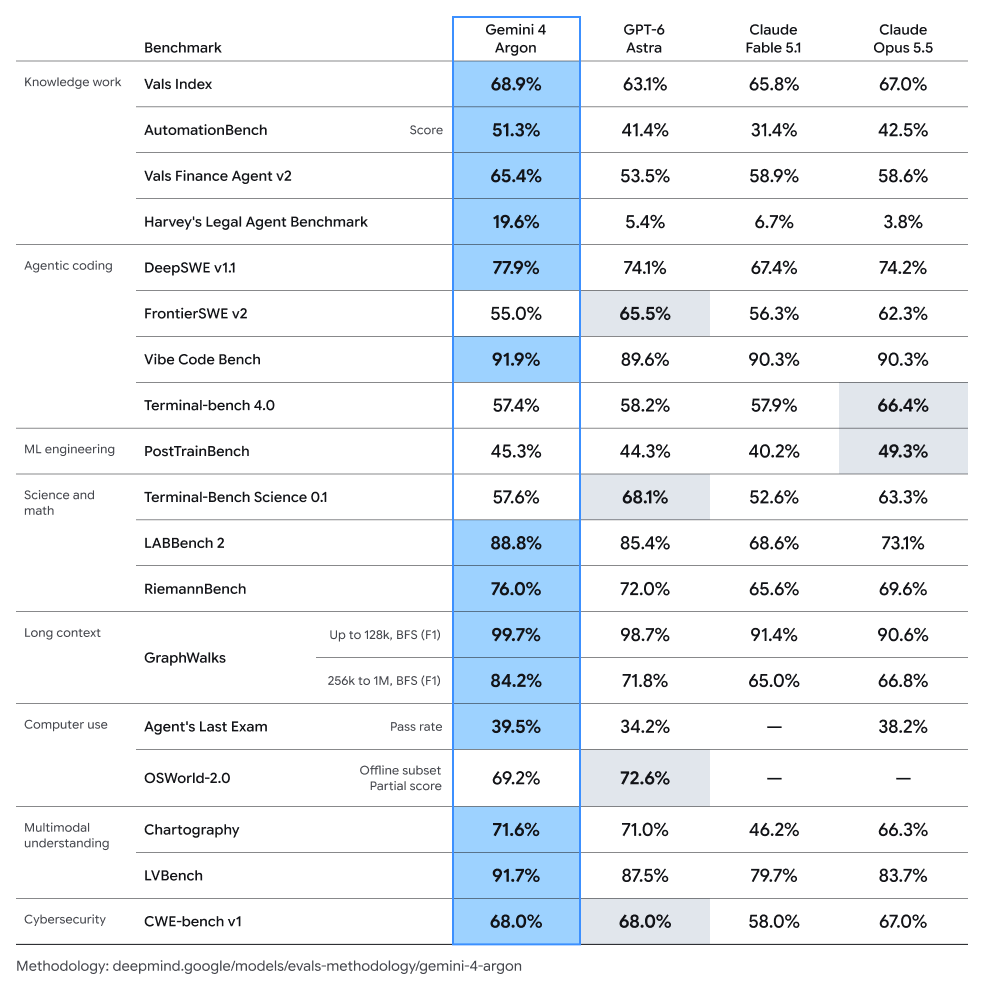
Introducing Gemini 4 Argon – our new frontier model.
It’s built for complex workflows across coding, enterprise knowledge work, and cybersecurity defense – rolling out today to a set of trusted testers through our Fairwind Program.


"If verified, the ability to manipulate these quantum channels could pave the way for revolutionary treatments targeting metabolic diseases, aging, and chronic genetic conditions"

🚨 Chinese scientists just detected an unexplained 71-terahertz vibration inside mitochondria — the microscopic "powerhouses" of living cells.
The work was published by researchers at the University of Shanghai for Science and Technology.
The signal, which oscillates 71 trillion times per second, was detected in living human cells and mouse tissues but vanished completely once the cellular structures were dried or disrupted.
This dependency on structural integrity led the scientific team to propose that mitochondria may utilize a quantum hybrid state, known as a polariton, created by light-matter coupling inside their highly folded inner membranes to optimize how they function.
To test this theory, the scientists stimulated human cell cultures with weak infrared light tuned to specific frequencies associated with this quantum state. The experiment yielded a stunning 10 percent jump in the production of adenosine triphosphate (ATP), the vital molecule that fuels almost every biological function in our bodies.
While the study was published as a bioRxiv preprint and is still awaiting peer review, it represents a monumental leap for quantum biology. If verified, the ability to manipulate these quantum channels could pave the way for revolutionary treatments targeting metabolic diseases, aging, and chronic genetic conditions.
source: Song, B., et al. (2026). A quantum state of mitochondria in the living cell. bioRxiv.


Wow! Looking forward to great ideas in great products

Jürgen Schmidhuber is joining Sakana AI as Chief Scientific Advisor.
@SchmidhuberAI pioneered meta-learning, recursive self-improvement, and world models back in the 1990s, when compute was a million times more expensive. He has been thinking about machines that improve themselves since before compute was cheap enough to make it practical.
These ideas inspired the Darwin Gödel Machine and The AI Scientist. Our RSI Lab in Tokyo, now under Jürgen’s guidance, is working on agent-native world models and recursive self-improvement for physical AI.
Extended Brain retweeted

Claude has discovered a previously unknown enzyme system hidden in the DNA of bacteriophages. Beside the enzyme’s gene sits a long array of repeating DNA—a structure that looks somewhat similar to CRISPR.
We don’t yet understand what this system does, but only a handful of known systems share its features, and all of them are able to cut, copy, and paste DNA. Historically, the discovery of such programmable systems has helped revolutionize medicine. CRISPR, for instance, is now the foundation of genetic medicines. But it will take much more work to learn what this system does, and whether it can be put to similar use.
Read more: anthropic.com/news/claude-di…

Growing number of mathematians concerned about the pace of development of AI. List of 283 who signed this xitter.cf/OxUniMaths/status/2100…


Extended Brain retweeted
big AI news
Google just demonstrated a recursive self improvement loop for AI discovery
Google/DeepMind researchers introduced Dream-RSI, a system where an AI agent improves how it explores problems by replaying its past discovery attempts, testing thousands of alternative strategies cheaply, then deploying the better strategy in the next round.
Across algorithm design, mathematical optimization, and GPU kernel engineering, it matched or improved discovery quality while cutting search costs dramatically, in one setting reducing agent calls by up to 162x. 👀
Importantly, it improves the exploration policy, not the underlying model weights.

Extended Brain retweeted
We’re introducing Gemini 3.8 Live and 3.8 Live Extended Thinking – our best conversational AI.
The models talk, think, and handle tasks in the background without breaking your flow. 🧵


Extended Brain retweeted

TradingView yeni bir kapı açtı: Resmî MCP Server artık beta olarak kullanıma sunuldu.
Bunun anlamı şu: TradingView verileri ve bazı platform araçları artık ChatGPT, Claude ve MCP destekleyen diğer yapay zekâ istemcileriyle doğrudan bağlanabiliyor.
Şu anda MCP üzerinden OHLCV verileri, screener sonuçları, teknik göstergeler, haberler, temel veriler, ekonomik takvimler, watchlist’ler ve alert’ler gibi birçok veriye erişilebiliyor. Bazı işlemler, örneğin alert oluşturma ve watchlist yönetimi de destekleniyor.
Bağlantı OAuth 2.1 ile yapılıyor; API key gerekmiyor. TradingView tarafında özellik Essential ve üzeri planlarda sunuluyor.
Ben de bugün ChatGPT ile bağlantıyı kurup test etmeye başladım.
Şimdilik kişisel Pine Script indikatörlerinin kendi ürettiği özel değerleri doğrudan okumaya yönelik bir araç görünmüyor. Ancak MCP araç seti beta aşamasında ve TradingView bunun zamanla genişleyeceğini belirtiyor.
Bence asıl ilginç olan, piyasa verisi ile yapay zekâ arasındaki bu doğrudan bağlantının bundan sonra nereye evrileceği.
Resmî TradingView MCP dokümantasyonu:
tradingview.com/mcp/docs