

Math professor at Wellesley College; author of student-centered math books; Buddhist/Daoist at heart.
Wellesley, MA
Joined March 2014
- Tweets450
- Following64
- Followers253
- Likes46
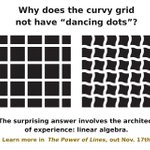



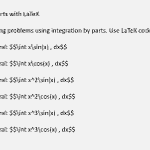

Countdown to #ThePowerofLines pub day (27 days!) from @mitpress. Enjoy today's teaser!

Countdown to #ThePowerofLines pub day (28 days!) from @mitpress. Enjoy today's teaser!

Countdown to #ThePowerofLines pub day (29 days!) from @mitpress. Enjoy today's teaser!

Oscar E. Fernandez retweeted

I curated 125 free math textbooks, written by the mathematicians who teach the courses and shared on their own university pages. No sign-up, no paywall, no pirated copies. From high school algebra to graduate analysis. 👇
abakcus.com/book-lists/free-…

Oscar E. Fernandez retweeted

Destroy any website with a stickman.
Have fun: destroy.spritefusion.com
Oscar E. Fernandez retweeted

Researchers proved AI has deleted every reason universities exist.
Harvard University ran a controlled experiment pitting a custom AI against their own top-tier classrooms.
And the results are going to collapse the higher education bubble.
They took 194 undergraduates and split them up.
One group learned physics in one of Harvard’s best hands-on, active-learning physical classrooms. Group work. Instructor support. The premium university experience.
The other group went home and learned the exact same material with an AI tutor.
The AI didn't just win. It embarrassed the institution.
Students using the AI learned more than twice as much as the students in the elite Harvard classroom.
They scored 30% higher on the final assessment.
And they did it in less time.
Let that sink in.
A piece of software sitting on a laptop outperformed a world-class faculty in one of the most elite learning environments on Earth.
Universities have always justified their exorbitant tuition with two things: access to elite knowledge and the physical classroom experience.
This study just proved both of those moats are gone.
When software can teach you complex physics twice as well as a $60,000-a-year institution, the math of higher education breaks permanently.
The AI didn't just give the students answers. It used strict pedagogical guardrails. It guided. It questioned. It forced the students to do the cognitive work.
It offered perfect, one-to-one tutoring, personalized to the exact moment a student misunderstood a concept.
That level of attention is mathematically impossible to scale in a physical lecture hall.
For a thousand years, the university was the only place to get a premium education.
Now, it’s the bottleneck.
If AI can double your learning speed for a fraction of the cost, what exactly are students taking on decades of debt to pay for?

Oscar E. Fernandez retweeted

What's the most fascinating example of mathematics you've seen in nature? ✍️

Oscar E. Fernandez retweeted

We’re working with an independent advisory group of mathematicians to help OpenAI responsibly share advances in AI and mathematics.
The group will advise on how we assess and communicate new mathematical results, uphold academic and professional standards, and build tools that support mathematical research and learning.
Through this work, we want mathematicians to be at the center of shaping how AI supports mathematical understanding and how its benefits reach the wider community.
openai.com/index/advisory-gr…

Oscar E. Fernandez retweeted
Journalist: How could one explain the content of the relativity theory in a few sentences?
Einstein: If you don't take my words too seriously, I would say this: If we assume that all matter would disappear from the world, then, before relativity, one believed that space and time would continue existing in an empty world. But, according to the theory of relativity, if matter and its motion disappeared there would no longer be any space or time.
-- as mentioned in Einstein, His Life and Times (1947) 1st edition

Oscar E. Fernandez retweeted

Put simply, we now have rigorous, empirical evidence on the real world, long-term impact of students using AI. This research indicates that AI substantially harms learning for half of all students, what the researchers call the “Generative AI penalty,” and provides no discernible benefit to the other half. Again, by the time this study concluded, 50 percent of students using AI with regularity had fully outsourced their homework to generative AI. For these students, when at home, they just stopped thinking about their schoolwork.
buildcognitiveresonance.subs…
Oscar E. Fernandez retweeted

Using AI helps people achieve higher grades and get their work done much faster, but they learn less and suffer on actual exams.
I have seen this in my own large Intro Psych class:
-the class average for open book exams is almost always 85%
-after AI, the average shot up to 95% (because it was easy to use AI)
-after I made the final cumulative exam in person (without AI) it went down to 68%
It perfectly mirrors the results of this new research and poses a serious problem for education and work performance. We are going to see inflated performance even as people learn less:
economist.com/graphic-detail…

Oscar E. Fernandez retweeted

Terence Tao, one of the most well known mathematicians, speaks up on AI in mathematics in his new paper:
“What if an AI tool generates a lengthy proof that is verified to be correct, but which nobody — 𝘯𝘰𝘵 𝘦𝘷𝘦𝘯 𝘵𝘩𝘦 𝘩𝘶𝘮𝘢𝘯𝘴 𝘸𝘩𝘰 𝘱𝘳𝘰𝘮𝘱𝘵𝘦𝘥 𝘵𝘩𝘦 𝘵𝘰𝘰𝘭 — understands? This is no longer hypothetical. Sites devoted to collecting mathematical problems already contain dozens of AI-generated proof submissions. Many of these are likely to be correct; but in a substantial number of cases no human expert has yet volunteered to verify and vouch for them, and in several cases the human submitters have themselves declared that they are not qualified to do so.
We may soon be faced with the very real possibility of a verified proof of a major result that NO HUMAN understands well enough to explain.
For a proof to actually contribute to its field, then, it is NOT enough for it to be correct, and NOT enough for it to be readable. It also needs to be accepted and valued by the community: other mathematicians need to 𝗱𝗶𝗴𝗲𝘀𝘁 𝘁𝗵𝗲 𝗿𝗲𝘀𝘂𝗹𝘁 𝗮𝗻𝗱 𝗶𝗻𝗰𝗼𝗿𝗽𝗼𝗿𝗮𝘁𝗲 𝗶𝘁 𝗶𝗻𝘁𝗼 𝘁𝗵𝗲𝗶𝗿 𝗼𝘄𝗻 𝘄𝗼𝗿𝗸.
Our current publication infrastructure relies on human editors and referees to provide this acceptance, voluntarily and largely without credit. This work is routinely regarded as less prestigious than the work of generating proofs in the first place; but it is an essential component of the profession, and it is precisely the mechanism by which the individual achievements of mathematicians are converted into collective progress and understanding.
Finally, even publication is not the last stage. Key results should ultimately become part of the definitive textbooks and reference material of their subject, in the form in which 𝘁𝗵𝗲𝘆 𝗮𝗿𝗲 𝘁𝗮𝘂𝗴𝗵𝘁 𝘁𝗼 𝘁𝗵𝗲 𝗻𝗲𝘅𝘁 𝗴𝗲𝗻𝗲𝗿𝗮𝘁𝗶𝗼𝗻 𝗼𝗳 𝘀𝘁𝘂𝗱𝗲𝗻𝘁𝘀. This process of canonicalization is the slowest stage of all. It requires broad, deliberative consensus, and it is the stage least amenable to optimization by AI tools.”
📍 Terence Tao concludes:
“We will transition from an era of proof scarcity to an era of proof abundance. Most of our institutions — journals, priority conventions, hiring and promotion criteria, prizes, the very notion of a research program — were designed under the assumption of scarcity, and it should not surprise us if they behave poorly under abundance.
In some areas, particularly in education and in the training of young mathematicians, it will be crucial to emphasize 𝘁𝗵𝗲 𝗶𝗿𝗿𝗲𝗱𝘂𝗰𝗶𝗯𝗹𝘆 𝗵𝘂𝗺𝗮𝗻 𝗮𝘀𝗽𝗲𝗰𝘁 of our work, and to restrict the use of AI tools quite tightly; the goal of training a mathematician is NOT achieved by producing correct homework.
In other areas, we will need to take the initiative on AI usage, and define best practices for incorporating these tools into our workflows on our own terms rather than on terms set for us by vendors.”
__
[I highlighted & capitalized words in the text for clarity]

New (unofficial) book trailer for my upcoming book with MIT Press: The Power of Lines: How Linear Algebra Explains Everything youtu.be/-fmn8q9rLBk

Oscar E. Fernandez retweeted

An acoustic guitar strings' oscillation. The frame rate of the camera allows you to see the wavelength of notes.
Oscar E. Fernandez retweeted

A rotating ball casts a shadow that perfectly matches a mass on a spring, revealing how circular motion and simple harmonic motion are linked. A visual proof of sine-wave physics in action.
Oscar E. Fernandez retweeted
Humpback whales in Antarctica blew bubbles in a Fibonacci spiral while hunting, a mesmerizing natural tactic. The spiral concentrates fish into a dense cloud, showing how even massive animals instinctively use universal math to optimize energy and catch. Cropped and zoomed.
Oscar E. Fernandez retweeted

While washing the balcony, she decided to put her routine aside and play with her children. They slid together in the water, laughed, got wet and enjoyed a beautiful moment.
🎥: renataa.oliveiira
Oscar E. Fernandez retweeted
The Sun photographed for more than a year from the same spot at the same time ♾
xitter.cf/i/status/1832703923162…
Oscar E. Fernandez retweeted

That's your job, hooman..🐕🐾😅 xitter.cf/Yoda4ever/status/19157…