Anoura caudifer or the tailed tailless bat (that is really its name) has an unusually high metabolic rate, & must spend at least 4 hours a night feeding.
(Photo Arthur Tahara)
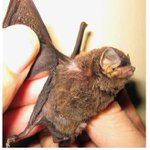
Peterson's long-fingered bat (Miniopterus petersoni) from southeastern Madagascar.
(Photo Goodman et al. 2008)
Seba's short-tailed bat (Carollia perspicillata) is a common bat species from Latin America.
(Photo Marco Mello)
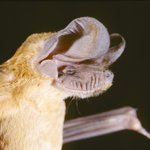
The big-eared brown bat (Histiotus macrotus) is native to Argentina and Chile.
(Photo Pablo Caceres Contreras)
The cyclops roundleaf bat, or cyclops leaf-nosed bat (Hipposideros cyclops) can be found in the forests of equatorial Africa.
(Photo KD Dijkstra)
Dekeyser's nectar bat (Lonchophylla dekeyseri) is an endangered species from Brazil & Bolivia.
(Photo Hernanifi)
A white-shouldered short-faced bat (Ametrida centurio) from Suriname.
(Photo @burtonlim)
A female Eastern red bat (Lasiurus borealis).
(Photo @joelsartore)
The Azores noctule (Nyctalus azoreum) is a vulnerable species found only in the Azores archipelago. It is the only bat species in the world that hunts insects principally by day.
(Photos Filipe Lopes)
The African long-fingered bat (Miniopterus africanus) is a type of vesper bat, found only in the tropical montane forests of Kenya.
(Photo João Pedro Silva)
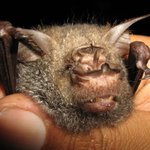
Khajuria's leaf-nosed bat (Hipposideros durgadasi) from central India. It is vulnerable & threatened by habitat loss.
(Photo Kaur et al. 2014)
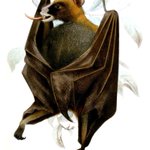
The Admiralty flying fox (Pteropus admiralitatum) is a fruit bat from Papua New Guinea and the Solomon Islands.
(Photo Lars Petersson)