





Pinned Tweet
I’m very excited to be joining MIT Biological Engineering @MITdeptofBE as an Assistant Professor and the Ragon Institute @ragoninstitute as a member in January 2026! I will be recruiting students and postdocs (see more info below).

Eric Sun retweeted

Interested in aging and rejuvenation?
We have a new Research Assistant position to understand aging at the cellular level!!
Come join our team!!! 😎
careersearch.stanford.edu/jo…

Eric Sun retweeted

#CellVoyager is published in @NatureMethods!
🔬 Autonomous comp bio agent
🧬 Analyzes bio data to make new discoveries
💻 Runs in Jupyter notebooks → interactive & reproducible
📊 Generated expert-validated insights on COVID-19, cell–cell communication and aging
Eric Sun retweeted

Aging may feel gradual… but what if it’s not?
In our paper out today, we tracked fish continuously from puberty until death.
This gave us a unique view of how aging unfolds across the adult lifespan.
🧵
Eric Sun retweeted
We have posted a Research Assistant (LSRP1) position to work on aging and 'rejuvenation' using mouse models!! 🐭
careersearch.stanford.edu/jo…
Apply and join our awesome lab!! (please share) 😎

Eric Sun retweeted

How to get AI to make discoveries on open scientific problems?
Most methods just improve the prompt with more attempts. But the AI itself doesn't improve.
With test-time training, AI can continue to learn on the problem it’s trying to solve: test-time-training.github.io…

Eric Sun retweeted
We recently organized #Agents4Science, the 1st conference where LLMs are both authors and reviewers🤖
It was an open experiment to assess how well AI can lead research and review papers.
Today we report what we learned in @NatureBiotech Highlights in 🧵

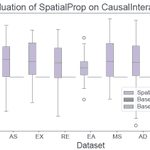
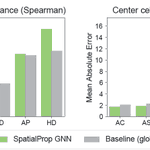
Can we predict the spatial effects of single-cell perturbations? Excited to share our preprint introducing SpatialProp, which computationally propagates single-cell transcriptomic perturbations across tissues, along with key frameworks for evaluating spatial perturbation models.

Our preprint can be accessed here: biorxiv.org/content/10.64898…. The API and analysis code for SpatialProp can be found at: github.com/abuendia/spatial-….

Can we predict the spatial effects of single-cell perturbations? Excited to share our preprint introducing SpatialProp, which computationally propagates single-cell transcriptomic perturbations across tissues, along with key frameworks for evaluating spatial perturbation models. xitter.cf/EricDSun/status/199623…
Eric Sun retweeted
#Agents4Science received over 300 submissions and accepted 48 papers. Check them out here: openreview.net/group?id=Agen…
Many of these AI agent-written papers are quite interesting! The online conference will be on Oct 22; you can register for free at stanford.zoom.us/webinar/reg…

I would like to extend a big thank you to my amazing co-advisers @james_y_zou & @BrunetLab and to my many fantastic mentors, colleagues, and collaborators!
For interested postdocs and students (grad & undergrad), please reach out to me at [email protected]!