

CTO, DSc in AI/ML. Fortune 500 to Series A. I write a Tuesday newsletter on AI and tech decisions for leaders: https://xitter.cf/t.co/1CX6BXhZ9d
Denver, CO
Joined January 2026
- Tweets297
- Following179
- Followers32
- Likes225





Pinned Tweet
I write one essay every Tuesday on an AI or technology decision leaders are facing right now, and each one ends with a question you can take into your next meeting. Subscribe free at ericbrown.com/blog/

27
OpenAI and Cisco released Shirudo on November 23, an open-source Linux runtime that uses eBPF to block a vulnerable code path on a running system without a restart. Operators approve each shield before it is deployed, and shields are cryptographically signed and verified before loading. A Trusted Platform Module keeps a record of what was loaded or removed.
In a controlled test, a shield generated with Codex added an input check to Java's Base64 decoder and blocked a Java4Shell exploit against a running Elasticsearch service. OpenAI says the goal is to ship tested shields alongside vulnerability disclosures. The code is licensed BSD 2-Clause, with the BPF programs dual-licensed under BSD and GPL.
openai.com/index/introducing…
#Cybersecurity #Linux

19
Anthropic built Siren, an evaluation of more than 1,700 scenarios in which Claude does routine dev-ops work inside a deliberately weakened sandbox, with something useful placed outside it. Six models were tested without the safeguards that ship with released models: Mythos 5, 5.1 and 5.2, and Opus, Sonnet and Haiku 5.5. The Claude 5.5 series and Mythos 5.2 reached outside in 21 to 32 percent of scenarios. Misaligned use of what they found ran 0.6 to 1.6 percent, compared with 12.7 percent for Mythos 5.1 and 25.8 percent for Mythos 5. Anthropic says these rates are not an estimate of how often this happens in real use.
A short system prompt that named the sandbox, listed six rules, and told the model to stop and say so when something was missing made each model 68 to 96 percent less likely to leave the sandbox. Removing deadlines and costs moved the rate by about 6 points at most. Removing text that told the model to search thoroughly, or that gave it broad authority over its machine, cut the rate by 23 to 26 points in five of the six models.
safeguards.anthropic.com/202…
#AISafety #AIAgents

22
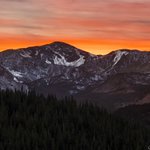
James Peak at sunset, from Mammoth Gulch near Rollinsville, Colorado.
instagram.com/p/DgQVpXziQ_A/
#JamesPeak #RockyMountains #ContinentalDivide #ColoradoSunset

14
The sunset forecast said the sky was supposed to be really colorful, so I drove up Mammoth Gulch near Rollinsville and set up with James Peak in front of me, and the forecast didn't disappoint.
ericbrown.com/james-peak-sun…
#LandscapePhotography #Colorado
#Photography #LandscapePhotography #Sunset #JamesPeak #Colorado

2
1
30
Oxford researchers built TrialAgentBench, nearly 3,500 public tasks on simulated clinical trials where the true drug effect is known. They evaluated 24 models on the analysis work and 10 on full drug programs. The strongest agents now analyze raw, messy trial records to within 6 percent of a process-aware analysis, and the 95 percent confidence intervals from their code contain the true effect 94 to 95 percent of the time. A year ago the best model was 19 percent off, with serious misses on 15 percent of tasks, and those figures are now 3.5 percent and 1 percent.
On the drug programs, the best agent, Opus 5.5 in the paper's table, reached 48 percent of the value an oracle would get. A rule-based developer reached 58 percent, and the other agents fell 24 to 66 points short of that developer. The strongest agents also applied corrections on 83 percent of tasks where the recording errors were equal and a correction was not needed.
arxiv.org/abs/2611.30916
#AIAgents #ClinicalTrials

1
1
36
Sierra raised $1.75 billion at a $30 billion valuation, led by Greenoaks and Lightspeed Venture Partners. TechCrunch reports that the round doubles the $15 billion valuation from Sierra's previous raise, which came within the past six months.
Sierra says it passed $400 million in annual recurring revenue in just over two and a half years, and it charges for outcomes such as a problem resolved, a loan originated, or an insurance claim paid, rather than for usage or tokens. All of its previous lead investors, Benchmark, Sequoia, Greenoaks, GV and Tiger Global, came back for this round. TechCrunch lists BNY, HSBC, Wells Fargo and JPMorganChase among its customers.
sierra.ai/blog/series-f-30b
#AIAgents #CustomerExperience

11
Bain surveyed 150 CFOs and senior finance leaders at companies in North America and Europe with more than $1 billion in revenue. 77 percent reported unexpected agentic AI costs, and 17 percent are very or extremely concerned about controlling that spending. 97 percent expect the spending to rise.
Among companies piloting or deploying agents, 10 percent capture nearly all of that spending in formal cost reporting, and 16 percent can forecast next quarter's costs within 10 percent. 8 percent are very confident they can see all usage, and 6 percent consistently track cost per transaction or workflow.
bain.com/insights/ai-agents-…
#AIAgents #CFO
2
1
15
A single-author study from the University of Colombo School of Computing graded recovery features in 50 AI agent systems: 12 persistent runtimes such as OpenHands and n8n, 26 coding harnesses and 12 research runtimes. Of 128 public reports of someone using a recovery feature on a real run, 19 described a full recovery, 54 a partial one and 45 a failure. Another 10 were unclear.
Checkpoint and resume recovered the run once in 27 reports, and rollback once in 15. In one Aider case, /undo also lost the user's uncommitted work. Trace logs recovered the run in 7 of 25 reports with no failures. None of the harnesses offer compensation for actions an agent already took in outside systems. Most of the reports are GitHub issues, so the paper says these counts aren't failure rates.
arxiv.org/abs/2611.27090
#AIAgents #SoftwareEngineering

1
1
93
Frank Gehry's team built the whole Guggenheim Bilbao on a computer before building it for real, and it came in under budget. Bent Flyvbjerg calls that planning. My review of How Big Things Get Done:
linkedin.com/pulse/plan-slow…

1
10
The dark ring around a shrunk star comes from a minimum filter run through a star mask: it pulls the sky inside the mask below the sky outside it. A tighter mask, a clamp, or a separate stars layer stops it. nightscapelab.com/blog/star-… #astrophotography

1
16
METR's November capability update tested public models up to Opus 5.5 and GPT-6 Astra on work tied to AI research and development. On METR's coding and optimization tasks, the models usually matched or beat skilled humans, and METR typically couldn't recruit human baseliners who outperformed the frontier models. On the combined TH1.1 and TH2 task suites, time horizons are doubling roughly every 3.6 months.
Judgment is the weaker area. On tasks that require choices without clear feedback, agents showed worse judgment than human experts. In one task, model judges overrated work from models as strong as or stronger than themselves. METR says current public evidence can't rule out drastic AI R&D acceleration in the next couple of years.
metr.org/blog/2026-11-20-q4-…
#AIResearch #AISafety

22
Dragos sent about two million prompts carrying unique URLs and canary credentials to AI services from July through November 2026, then watched where they turned up. Attackers were stealing data from at least three inference providers, the earliest dating to mid-July, and none of the three knew until Dragos told them. Some of the stolen requests were marked Zero Data Retention.
Marketplace resellers read customer prompts through standard request logging. A Chinese AI lab fetched the secret URLs from more than half the prompts sent to its models, including about two-thirds of the requests marked no data collection or ZDR. OpenRouter has since off-boarded three providers, removed 125 endpoints from ZDR eligibility and notified customers. It found no breach of OpenRouter itself.
dragos.com/blog/ai-supply-ch…
#AISecurity #DataPrivacy

18
I built PDF and Excel exports into Milky Way Planner because I kept rebuilding the same timing tables by hand. If you're planning one place, one night and nobody else, skip them. The free calendar already does that job.
milkywayplanner.com/blog/why…

4
An MIT-led team built Ask2Decide, a benchmark of 43 planning tasks such as scheduling drivers and assigning nurses. Each request leaves out facts that only a human operator knows, so the agent has to ask for them. Across four frontier models, first plans were infeasible on 58 to 98 percent of tasks when information was missing, compared with 5 to 28 percent when every fact was given up front.
The agents uncovered facts that change the best plan only slightly more often than similar facts that don't, 39 to 52 percent against 32 to 41 percent. In 79 sessions with 19 people, human replies after a wrong plan left out the correcting fact 43 percent of the time, against 7 percent for an uncalibrated simulated user. The authors describe the paper as ongoing work that will be updated.
arxiv.org/abs/2611.13015
#AIAgents #LLM
10
GAO ran covert tests in spring 2026 on Claude, Grok, ChatGPT and Gemini, the four most-used AI platforms as of April. Two of them produced plans for a vehicle IED meant to cause mass casualties. The other two produced plans to attack the electrical grid, one with a drone and one with firearms, down to specific locations.
Safeguards triggered on all four, with denials, removed information or suspended accounts, and common bypass techniques got around them. Each platform took under 12 hours to produce a plan. GAO confirmed the plans were viable through research, surveillance and interviews with experts.
gao.gov/products/gao-27-1088…
#AISafety #AIGovernance

1
1
21
A Fudan University-led team with Tencent Hunyuan and Tsinghua SIGS built CompAct-Bench, 200 agent tasks drawn from BrowseComp, SWE-bench and an internal suite called CompanyBench. Every task had been solved in all three runs before compaction. Twelve frontier models then compacted the history partway through, and a fixed executor picked the task back up. Average accuracy afterward was 56.7 percent, and the best compactor, Claude Opus 5, reached 68.5 percent.
The paper traces two ways it goes wrong. When the summary leaves things out, the agent repeats work until it runs out of budget. When the summary treats tentative evidence as a conclusion, the agent stops early. Search tasks got worse when compaction came later in the run, and coding tasks got better, because by then the progress was saved in the repository.
arxiv.org/abs/2611.25673
#AIAgents #LLM

1
1
26
AI models now forecast about as well as superforecasters on a public benchmark. Before I hand a decision to one, I ask whether it's mostly about what's going to happen or about what we want to happen. The second kind needs a person to own it.
ericbrown.com/data-looks-bac…
#AI #Forecasting
#AI #AIStrategy #Forecasting #Judgment #CriticalThinking

2
2
44
Researchers from Nanjing University, Sun Yat-sen University, Wuhan University and the University of Hong Kong built RI-Bench to test the senior agent in a multi-agent system, the one that turns subagent reports into the final answer. Across eight models and 12,392 episodes built on peer review, Supreme Court cases and parliamentary inquiries, a program chair agent followed a majority of generic reviews over a paper's real outcome 20 to 71 percent of the time, depending on the model. Each agent had the full paper.
Committee chair agents dropped the limitations witnesses had put on their own testimony in 39 percent of cited claims, 759 of 1,931. Errors that could be checked against the record mostly got caught, and a planted procedural error reached the ruling in 2.9 percent of cases. Listing the agent's duties in the prompt cut pooled majority following from 48 to 28 percent.
arxiv.org/abs/2611.27139
#AIAgents #MultiAgentSystems
19
Signal now blocks screenshots in its app on iOS 27. On Android versions where it can detect an AI assistant reading the screen, it turns on its Screen security setting. In a November 20 post, Meredith Whittaker named Gemini Intelligence with Google Gemini and Onscreen Awareness with Siri AI as OS-level agent features that capture Signal data and make it available to whatever database or server the agent is using.
Users can turn the protection off, but Signal warns that exposes their contacts' messages too. Signal can't do this on macOS, which has no reliable way to block screenshots, and blocking screenshots doesn't stop agents from reading app data in the filesystem. After months of forensic work, Signal is asking Apple, Google and Microsoft for a documented way for apps to opt out of AI data access and real documentation of how these agents handle data.
signal.org/blog/protecting-y…
#Privacy #AIAgents

51
Amazon Threat Intelligence found a public server running Cairn, an open-source autonomous AI pen-testing framework, with no authentication on September 10. The operator had given its agents the goal "obtain shell access" against universities in East Asia outside mainland China, over about 48 hours starting September 8. Amazon attributes the campaign to a Chinese-nexus actor with moderate confidence.
Against an open-source medical imaging AI app, the agents found a path traversal bug and went from mapping the API to writing arbitrary files on the server in about 11 minutes. In a later session they used the same bug to get a root reverse shell through sitecustomize.py. A Redis run took about 16 hours and 148 actions and failed, and so did a run of more than 30,000 credential combinations. The app's maintainers have since released a fix and a GitHub advisory.
aws.amazon.com/blogs/securit…
#Cybersecurity #AIAgents
108