

Policy and education news on improving access to HE, social mobility etc. [email protected]. Ex-@TES; now @EMPRA, @GeneratingG and more
London, UK
Joined August 2011
- Tweets63.3K
- Following2.5K
- Followers3.7K
- Likes201

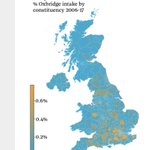



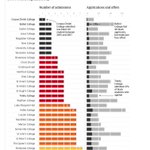


The proportion of state school pupils accepted at the University of Cambridge dropped this year for the first time in a decade. telegraph.co.uk/news/2024/06…

FOI requests found Cambridge flagged at least 289 private schools for “low participation in Oxbridge” when assessing applications. This was 19% of applicants who received this consideration, despite only around 6% of UK students being privately educated. varsity.co.uk/news/27386

Almost 300 private schools benefited from “widening participation” measures in the past 3 years varsity.co.uk/news/27386
Sure Start – England’s first large programme to provide holistic support to families with children under 5 – generated big improvements in the educational performance of children from low-income backgrounds. ifs.org.uk/news/sure-start-g…

Girls, disadvantaged students and those in the North West and South West less likely to go to university, even with high GCSE grades. epi.org.uk/publications-and-…

NHS England’s long term workforce plan for the NHS, published in June 2023, has projected that 13% of England’s medical students in 2031 will be apprentices bmj.com/content/384/bmj.p293…

For schools in multi-academy trusts (MATs), on average the smaller the MATs they are in, the lower their FSM rates and the larger the FSM gap with their catchment area. suttontrust.com/our-research…

Schools affiliated with non-Christian religions are the most socially selective overall while Catholic schools continue to be the most socially selective in the top 500. suttontrust.com/our-research…
The gap in FSM rates between the top schools for Progress 8 and the average school is widening. suttontrust.com/our-research…
disadvantaged pupils are less likely to get into top schools even if they have one in their local area suttontrust.com/our-research…
the top 500 comprehensive schools in England still show a significant gap between the rates of Free School Meal eligibility in the local area they draw their students from and the FSM rates of their actual intakes suttontrust.com/our-research…
One of the reasons why socio-emotional skills are not a major driver of achievement inequality is that, despite the differences between them, both advantaged and disadvantaged children were found to have reasonably high levels of these skills overall cam.ac.uk/research/news/disa…
While children from wealthier backgrounds were found to have somewhat higher levels of socio-emotional skills on average, the impact of these discrepancies on the overall achievement gap was modest. cam.ac.uk/research/news/disa…
In some countries, social and emotional learning is big business. The industry was valued at $1.5 billion in the US in 2020, and projected to reach $3.9 billion by 2025. cam.ac.uk/research/news/disa…
In almost every country in the world, wealth and socioeconomic status significantly predicts children’s academic success. cam.ac.uk/research/news/disa…
A global study of 240,000 students challenges the widespread policy conviction that bridging the academic gap between rich and poor students hinges on improving the latter’s work ethic, mindset and socio-emotional skills. cam.ac.uk/research/news/disa…
‘High-quality university provision is expensive and must be paid for. Ultimately if the growing numbers of graduates do not bear this cost, then their poorer non-graduate peers do’ @HEPI_news hepi.ac.uk/2023/11/08/fundin…

‘Most foundation-year students progress to full degrees, performing as well as other students; the graduates are incredibly impressive. This is about identifying and nurturing talents from under-resourced backgrounds who would otherwise be missed.” theguardian.com/education/20…

“Foundation years represent one of most promising social mobility vehicles we have at our disposal amid increasingly difficult circumstances for widening access efforts as competition for elite degree places intensifies.’ theguardian.com/education/20…
‘There is a little bit of ‘what’s the catch?’. I did have one student who said to me: ‘Are you telling me that I could get into Oxford with BBB?’ And I said yes, I am telling you that.”
theguardian.com/education/20…