

MTA Lendület Functional Metal Complexes Research Group
Szeged, Hungary
Joined September 2020
- Tweets89
- Following45
- Followers257
- Likes363




Our Hungarian-Austrian research project with Prof. Gergely Szakács (Uni. Med. Vienna) has received funding (2025-28, NRDI, FWF) on 8-hydroxyquinolines for enhanced targeting the collateral sensitivity in multidrug-resistant cancer.
nkfih.gov.hu/english/nrdi-fu…
Check out our new paper on 2-formylpyridine guanylhydrazones to see the effect of the C=S → C=NH replacement on the solution and anticancer properties, published in J. Inorg. Biochem.
sciencedirect.com/science/ar…

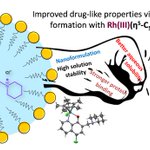
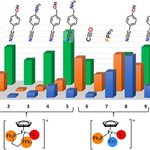
Check out our new paper on organorhodium complexes with enhanced aqueous solubility targeting multidrug resistance in Inorg. Chem.
pubs.acs.org/doi/10.1021/acs…

EnyedyLab retweeted

It is a great privilege to introduce the Plenary Speakers for the 7th EuChemS Inorganic Chemistry Conference.
September 7-11, 2025
Belgrade, Serbia
#EuChemS #Plenary #Speakers #Conference #Belgrade #Serbia #Inorganic #Chemistry #Science

Check out our inter-laboratory study within @CostNectar action on the question: How reliable is the evaluation of DNA binding constants?
sciencedirect.com/science/ar…

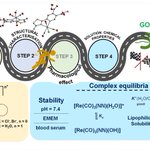
Check out our new paper, which is the first systematic solution speciation studies on fac-tricarbonylrhenium(I) complexes. Thanks to the group of Iztok Turel for the nice collaboration.
pubs.acs.org/doi/10.1021/acs…

EnyedyLab retweeted

As #EuroBIC17 is now over, we thank all participants, speakers and sponsors for an unforgettable week. It has been a blast to welcome you to Münster and we hope that you have had a great time. We are looking forward to seeing you in 2026 for EuroBIC-18 @univgroningen.

Check out our new paper in J. Med. Chem. on Cu(II) complexes of thiosemicarbazones with methylmorpholine substituent, inhibiting both ribonucleotide reductase and tubulin polymerization. A joint work with the groups of V.B. Arion and G. Szakács.
pubs.acs.org/doi/10.1021/acs…

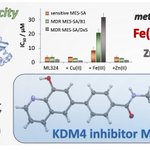
Check out our new paper on the complexation of the histone demethylase inhibitor, ML324, with essential metal ions published in Journal of Inorganic Biochemistry.
sciencedirect.com/science/ar…

EnyedyLab retweeted

Vienna Doctoral School in Chemistry offers 3 fully funded PhD positions at the Department of Biophysical Chemistry! Apply until 14.04.24! For project descriptions and starting dates please click here: doschem.univie.ac.at/applica…
EnyedyLab retweeted

Great ending of the week😉 Our new publication with @EnyedyLab and @meszarosjanosp about estradiol-based conjugates and their copper complexes with anticancer activity has been published in Inorganics:
doi.org/10.3390/inorganics12…

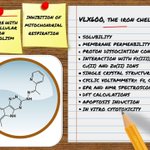
Check out our new paper on the complexation of the anticancer iron chelator drug, VLX600, with essential metal ions published in Inorganic Chemistry.
pubs.acs.org/doi/full/10.102…

EnyedyLab retweeted

Congratulation to Orsolya Dömötör! Very nice cooperation project about in vitro biodistribution studies on clinically approved FGFR inhibitors... sciencedirect.com/science/ar…
Our new paper has been published on anticancer [RuCp(N,N)(P)]+ complexes in the European Journal of Medicinal Chemistry in a collaboration with A. Valente and A. I. Tomaz.
sciencedirect.com/science/ar…
Our new paper in J. Inorg. Biochem. on Fe(II)-cyclopentadienyl complexes in a collaboration with the team of Andreia Valente.
sciencedirect.com/.../abs/pi…

EnyedyLab retweeted

Today I started to work in my new office that used to be the Nobel Prize-winner Albert Szent-Györgyi's at the Department of Molecular and Analytical Chemistry @Uni_Szeged Hungary.

EnyedyLab retweeted
Today, I got a fantastic welcome at my alma mater University of Szeged, Hungary 🎉🎊🎈🍾💫😍


What a year! An other Hungarian researcher among the Nobel Laureates. Nobel Prize in Physics 2023:
Ferenc Krausz
Max Planck Institute of Quantum Optics, Garching and Ludwig-Maximilians-Universität München, Germany
nobelprize.org/prizes/physic…

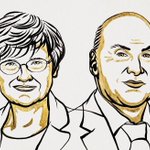
What great news, Katalin Karikó, an Alumna of University of Szeged (Hungary), has been awarded the 2023 Nobel Prize in Physiology or Medicine (jointly with Drew Weissman).
nobelprize.org/prizes/medici…

EnyedyLab retweeted

BREAKING NEWS
The 2023 #NobelPrize in Physiology or Medicine has been awarded to Katalin Karikó and Drew Weissman for their discoveries concerning nucleoside base modifications that enabled the development of effective mRNA vaccines against COVID-19.
