

Biologist, Field Entomologist & Quantitative Methodologist in Ecology, Conservation & Epidemiology @ifakarahealth…. Views R' mine.
Tanzania
Joined February 2016
- Tweets571
- Following3.2K
- Followers874
- Likes1.7K





A pleasure hosting the Vice Principal for Research & Knowledge Exchange, University of Glasgow @UofGlasgow, at @ifakarahealth. We shared our research and discussed strengthening our long-standing collaboration.


35
Mohamed Jumanne retweeted

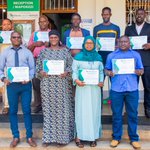
Privileged to be in #Arusha, a city with a deep-personal story, to present on vector control initiatives in #EastAfrica & the situation in #Tanzania.During the Institutional Biosafety Committee risk analysis training organized by the African Union @NEPAD_Agency & @ifakarahealth


Mohamed Jumanne retweeted

🦟MALARIA FIGHT:
Scientists now target mosquito reproductive traits ⚔️
Can mosquito mating habits help us fight malaria? 🤔 New research in Tanzania led by @ifakarahealth and partners shows how age and artificial red light influence mosquito reproduction - findings that could help develop smarter vector control strategies like sterile insect techniques and genetic-based approaches. 🔬🧬
This breakthrough marks a major step in the fight against malaria! 🌍💪
📖 Read the full study published in the Journal of Medical Entomology below.
>> ihi.or.tz/blog/news/malaria-…
>> #IFAKARANews #Malaria #MosquitoControl #PublicHealth

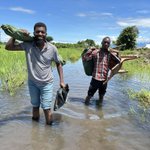
Braving the rainy season to collect a single row of a dataset 📈 —one muddy step at a time. This is what it takes to generate life-saving evidence at @ifakarahealth . #MalariaDay2025

Mohamed Jumanne retweeted
We had a wonderful tour and discussion in our #MosquitoCity @ifakarahealth with Dr Lutz Hegemann, President, Global Health & Sustainability at @Novartis. Amazed by the ongoing work and excited to see the longest mosquito tunnel, the 'Marathon Tunnel.'

Mohamed Jumanne retweeted
Back to the familiar buzz at Mosquito City, @ifakarahealth! After gaining valuable skills in Computational Epidemiology at @UofGSBOHVM, I am excited to combine field epidemiology, parasite & vector biology, and AI-driven approaches for advancing mosquito-borne disease control.

I did it!🎊. I’ve mastered Quantitative Methods in Biodiversity, Conservation, and Epidemiology with #Distinction from @UofGlasgow ! ‘Asante’ my incredible supervisors and support team: @Fredros_Inc prof Jason Mattiopoulos @drheatherferg @ekaindoa @halfan30 @ifakarahealth


Mohamed Jumanne retweeted
#IASC2024:
Uniting for global health solutions!
@Ifakarahealth kicked off its conference with powerful opening remarks from the Director of Science Dr. Ally Olotu and Chief Executive Director Dr. Honorati Masanja, inspiring us to reflect on how we can strengthen our efforts to tackle pressing health challenges. 💡
Our department heads shared insights on leveraging partnerships, innovation, and community-driven solutions while emphasizing our commitment to investing in people through training. 🧪👩🔬
Special thanks to Dr. Ntuli Kapologwe from @wizara_afyatz for affirming to support the implementation of evidence-based solutions discussed during the conference! 🤝
>> ihi.or.tz/our-events/607/det…
>> #IFAKARAevents #Innovation #ResearchImpact


The Ifakara Annual Scientific Conference #IASC2024 @ifakarahealth …….. happening in Bagamoyo, Tanzania from today to 30th November 2024.

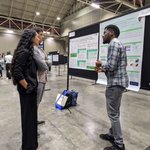
“Joint species distribution modeling & co-occurrence patterns of mosquitoes species in domestic settings in southeastern Tanzania”.
#astmh2024

Mohamed Jumanne retweeted
MALARIA CONTROL:
Resistance in mosquito species raises concerns
🔬 A recent study led by @Ifakarahealth in collaboration with @LSTMvector, @KEMRI_Kenya, @sangerinstitute and @UofGlasgow reveals new genetic mutations in Anopheles funestus, a key malaria-transmitting mosquito in Tanzania 🇹🇿.
The study identified the kdr L976F mutation, which confers resistance to DDT (a pesticide once widely used) but doesn’t affect the efficacy of pyrethroids insecticides used in bed nets. 🦟
Continuous monitoring to track these mutations is essential for effective malaria control, underscores the scientists! 🌍💪
>> ihi.or.tz/blog/news/mala…
>> #IFAKARAnews #MalariaControl #InsecticideResistance

Mohamed Jumanne retweeted

Fantastic pre-viva talk by @IssaMshani1 today on his PhD work "Screening of Malaria Infections Using AI-Powered Infrared Spectroscopy"
An impressive breadth and depth, spanning epidemiology to parasitology, physical chemistry to computing science.
@ifakarahealth @UofGSBOHVM

Mohamed Jumanne retweeted

New study shows efficacy of attractive targeted sugar baits in reducing malaria vector abundance in low-endemicity settings of northwest Mali
~
This study tested the use of Attractive Targeted Sugar Baits (ATSBs) for controlling malaria vectors. The researchers were aiming to reduce the number of older, infectious malaria-carrying mosquitoes in villages in northern Mali. They placed the ATSBs near homes in some villages, and found a 41% reduction in the number of female Anopheles gambiae mosquitoes compared to villages without the ATSBs. There were also fewer mosquitoes carrying malaria parasites in the villages with ATSBs. This suggests ATSBs could be a useful tool to help lower malaria transmission in dry, low-risk areas.
Unlike recent studies conducted in the the more vegetated African savanna in east and southern africa, this study in nothern Mali found that ATSB technology works particularly well in the semi-arid, sparsely vegetated regions. Here, the limited natural vegetation means fewer competing sugar sources for mosquitoes, allowing the traps to be more effective in attracting and reducing the population of malaria-carrying mosquitoes
~
Traore et al 2024 malariajournal.biomedcentral…

Mohamed Jumanne retweeted

🚨Our paper is out!
Discovery of Knock-Down Resistance in the Major African #Malaria Vector Anopheles funestus
@odero_joe & team found unexpected mutation in #mosquitoes confering DDT resistance
@UofGSBOHVM @VectorsGlasgow @LSTMnews @malariagenomics
onlinelibrary.wiley.com/doi/…

Hongera sana Dr @odero_joe 🫡🫡

Congratulations Dr @odero_joe on passing his viva today with no corrections!
SO SO SO proud of you!
Huge thanks to both examiners @hilary_ranson @LSTMnews and @martllewellyn @UofGSBOHVM and convenor #TonyPage
Thank you to supervisors @Fredros_Inc @drheatherferg @DaveW43883848


Mohamed Jumanne retweeted

Community engagement is an important aspect in vector control. We had an opportunity to present to the community the objectives of our project and how we will deploy traps inside their houses. Also we discussed potential mosquito breeding habitats followed by Q&A session.

Hongera sana Dr. @Najatferouz 🫡

Congrats to the DR Najat Kahamba @Najatferouz -just passed her brilliant PhD on the ecology of the malaria vector Anopheles funestus. Thx to examiners @MafaldaSViana & Luigi Sedda, & @JMatthiopoulos @Fredros_Inc @LucaNelli_ @Baldini_Fra @VectorsGlasgow @UofGSBOHVM @ifakarahealth


113
Mohamed Jumanne retweeted
The Garki Project: A Masterclass on Malaria Epidemiology and Control
~
Lead Panelists:
Prof. Thomas Smith, SwissTPH & Uni of Basel, Switzerland &
Prof. Gerard Killeen (University of Cork, Ireland and Ifakara Health Institute, Tanzania).
Additional Experts:
Dr. Chioma Amajoh, Retired, Formerly Nigerian NMCP Director; started Career in Garki District in 70s
Prof. Brian Greenwood, LSHTM; Worked in Nigeria during Garki project, Visited the site severally
Prof. Graham White, Retired; Trained the Entomology team in the Garki project
Mr. Mohammed Omar Jumanne – Medical Entomologist, Ifakara Health Institute & Uni of Glasgow
Co-Hosts: Fredros & Co
When: Aug 22, 2024 14 – 4.30pm EAT: Register in advance using this link:
uofglasgow.zoom.us/meeting/r…
Discussion Guide (15-20 mins/Question – Total 2hrs 30 mins)
1. Why was the Garki Project initiated, and what were its primary objectives? We will explore the historical context, goals, and the specific challenges the project aimed to address in malaria control in Africa. Why was Garki district selected? What was such a project necessary? What were the preceding circumstances?
2. Why is the Garki Project considered a landmark study in the history of malaria research? We will discuss with the experts the unique aspects of the Garki project that set it apart from other studies. We will look at its scale (both geographical and resource-wise), interdisciplinary approach and duration. At the core of this, we will also discuss the integration of mathematical modeling and why this was considered so important 40 years ago. Why has Garki remained such an important source of detail for malaria modelers today?
3. What was the study design? An important questin here is to contrast the Garki process with how modern malariologists would design such a study today. Why was such a design chosen? What were the strengths and weakneses? There are some obvious strengths and also some weaknesses, for example, the fact that the larviciding aspect was so minimal and was in the end largely ignored. How did the non-random assignment of interventions influence the outcomes
4. What were the most significant findings of the Garki Project regarding malaria transmission and control? We will highlight the key results in terms of vector behavior, parasite prevalence, and the effectiveness of control interventions. We will of course begin from baseline surveys conducted in Garki before the interventions were rolled out; how the interventions were planned and then what the key results were
5. How did the outcomes of the Garki Project meet or differ from the initial expectations? Further to summarizing the results, we will also discuss the anticipated versus actual results, and any surprises that emerged from the study. The study extended a bit after the intervention period, so this discussion will include that aspect as well.
6. In what ways did the Garki Project influence subsequent malaria control strategies in Africa? Consider the legacy of the project and its impact on policy, research, and control programs across the continent. How might things have been different? Consider the period between the Kampala conference and its declarations? The start of the Garki project, and the abandonment of large-scale malaria campaigns in Africa and the lull that followed until the period of the Roll Back Malaria founding in 1998 and the Abuja conference in 2000? What role did the Garki project results play in this context?
7. What were the key entomological insights gained from the Garki Project, particularly regarding vector behavior and insecticide resistance? Garki has an extraordinarily rick entomological dataset. And also some rather unique ways of doing the measurements. A lot has changed since then but there are many of the aspects that endure. We will do a deep dive into findings related to the main malaria vectors in Garki at the time, focusing in particular on An. gambiar complex and Anopheles funestus. We will look at issues such as, exophily, and the challenges faced in controlling these vectors. We will discuss how vectorial capacity was estimated back then and how they dealt with factors such as seasonality.
8. What were the main parasitological observations during the Garki Project, especially in relation to immunity and parasite dynamics? We will discuss the study’s findings on the relationship between malaria infection, immunity development, and parasite prevalence. In particular, we will relate this to questions about Delayed versus resurgent malaria, especially in young kids. Prof. Brian Greenwood , who worked in Nigeria (Zaria) at the time and visited Garki several times during the project, will participate in this part of the discussion.
9. How relevant are the parasitological findings from the Garki Project to current malaria elimination efforts in Africa? We will discuss how these findings can be applied to contemporary challenges in reducing malaria transmission. This will be expanded to include discussions on the “often less-discussed” idea of giving chloroquine to residents presenting with fever once the project was completed. In addition, we will cover how lessons from this project have influenced recent discussions around MDA and its variants
10. Mathematical Modeling: Why and How did the Garki Project use mathematical models to predict malaria transmission, and what were the strengths and limitations of these models? What informed the use of mathematical modelling so intensely, almost 40 years ago? I hope we can analyse the role of modeling in the project and its effectiveness in simulating real-world malaria transmission. What was the complementarity here between field biology, clinical practice and mathematical modlling? What were the decisions about the t=data to be collected? We will revisit the models used in the moject and how they were validated , and how they have improved since then?

Mohamed Jumanne retweeted
The GARKI Project: A MasterClass in Malaria Epidemiology & Control.
~
When: Aug 22, 2024 14:00 EAT Featuring: Prof. Tom Smith (@SwissTPH) and Prof. Gerry Killeen (@UCC& @ifakarahealth @killeen_gerry). The 46th Edition of our the IFAKARA|GLASGOW Masterclasses
~Since God has googled us, we will also be joined by some experts from back in the days; including Prof. Graham White, who was sent by WHO to Garki in early 70s to train the Entomology team in the project and Dr. Chioma Amajoh, a one time Nigerian NMCP director who also began her career in Garki District in the 70s
~
@ifakarahealth @UofGSBOHVM
~ Register in advance here: tinyurl.com/y8fp3kew

Mohamed Jumanne retweeted
UNVEILED:
1st INOVEC Conference keynote speakers
🎉 With the 1st International INOVEC Conference just around the corner, @IfakaraHealth and @IRD_fr, in collaboration with the European @INOVEC_Project, are thrilled to introduce our keynote speakers from @ifakarahealth and @UofGlasgow. 🎉🤝
They will discuss "Predicting the Risk of Aedes-Borne Diseases in Dar es Salaam" and explore how to prepare for the effects of climate change on the emergence of zoonotic mosquito-borne diseases. 🌦️🌡️🦟
🇹🇿 Join us in Dar es Salaam, Tanzania, or virtually from August 26-28, 2024, and engage in critical discussions on “Advances in Surveillance and Control Methods for Aedes-borne Diseases and Urban Vectors.” 🦟🔬
⏰ Don’t miss tomorrow's update at 10 AM when we reveal more keynote speakers.
>> ihi.or.tz/special-event/even…
>> #IFAKARAevents #InovecCon2024
