


Entitygreen retweeted

$BTC has not seen 3 consecutive green hourly candles in more than 2.5 days.
The last daily candle that gained +2% or more was 16 days ago.
The last green weekly candle was 54 days ago.
Entitygreen retweeted

if only we could have a liquidation wick instead of this gay orderly selling.
3-Tap? @RektProof




Entitygreen retweeted

外网最近很火的一个学习方法:MIT 学霸用 AI,在48小时内快速吃透一门陌生学科。
第一步不是直接问 ChatGPT“给我总结一下”,而是先建立一个足够可靠的 AI 知识库。
他上传了6本该领域的经典教科书、15篇研究论文,以及这门学科的全部课堂讲义。
这样 AI 的回答就不再只是网上东拼西凑,而是基于指定资料帮他梳理知识。
资料准备好以后,他只问 AI 三个问题。
1⃣第一个问题:这个领域有哪些被普遍接受的核心共识?请整理出它的底层概念、关键原则和整体框架,并解释这些知识之间的关系。
这个问题的作用不是总结材料,而是先画出整门学科的知识地图。你需要先知道哪些是地基、哪些是分支,再决定时间应该花在哪里。
2⃣第二个问题:这个领域目前存在哪三个根本性争议?请分别说明各方的观点、依据和反对理由。
一个领域真正有价值的地方,往往不是大家都背得出来的结论,而是专家还在争论什么。看懂这些分歧,才能理解不同理论的边界、证据和隐藏假设,不会把课本上的每句话都当成绝对真理。
3⃣第三个问题:根据这些资料生成10道测试题,覆盖核心概念、因果关系、实际应用和主要争议,先不要提供答案。
接下来关掉资料,自己回答。答完以后再把答案交给 AI,让它逐题批改,并继续追问:
“我的回答遗漏了哪些关键点?哪些地方只是记住了结论,却没有真正理解?”
这套方法的精髓,不是让 AI 替你读书,而是让它帮你完成三件事:通过领域共识建立知识骨架,通过领域分歧看清理论边界,再通过测试题暴露自己的认知漏洞。
很多人所谓的 AI 学习,只是把“自己看总结”变成了“让 AI 生成总结”,大脑依然没有参与加工。
这套方法反过来利用 AI 增加学习难度:逼你比较、判断、回忆、输出,再接受纠错。虽然过程更痛苦,却更接近真正有效的学习。
当然,48小时不可能让人真正精通数学、物理这类需要长期训练的学科。
但它确实能让你快速搭起知识框架,找到最重要的问题,避免在陌生领域里漫无目的地看资料。AI负责整理地图,你负责真正走一遍。
ocw.mit.edu/


Entitygreen retweeted

There is literally no excuse not to do it


Entitygreen retweeted

It's sadly appropriate that the founding father of the GPU seems to have been banging mistresses in parallel, rather than sequentially.
Entitygreen retweeted

No amount of intensity can make up for a lack of consistency. You can’t keep missing days.
Entitygreen retweeted

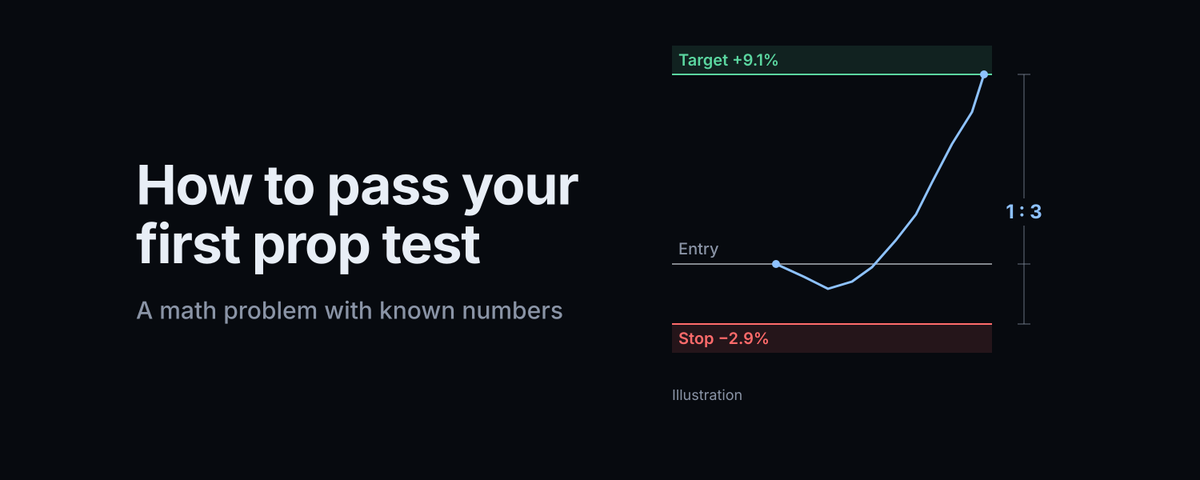
Most traders fail their first prop test before the first trade: no plan, too many trades, wrong account.
Here's exactly what I'd tell a friend 👇

Entitygreen retweeted

SAFE POSITION SIZE ACCORDING TO CAPITAL (STOCK MARKET)
Account Size → Suggested Risk Per Trade (1–2% Rule)
•$100 account → Risk $1–$2 per trade
•$200–$300 account → Risk $4–$6 per trade
•$400–$500 account → Risk $8–$10 per trade
•$600–$700 account → Risk $12–$14 per trade
•$800–$900 account → Risk $16–$18 per trade
•$1,000–$2,000 account → Risk $20–$40 per trade
•$3,000–$4,000 account → Risk $60–$80 per trade
•$5,000–$6,000 account → Risk $100–$120 per trade
•$7,000–$8,000 account → Risk $140–$160 per trade
•$9,000–$10,000 account → Risk $180–$200 per trade
What This Means in Stocks
In the stock market, survival is not about picking the “best stock.”
It’s about controlling how much you lose when you’re wrong.
Your position size (how many shares you buy) should depend on:
•Your total capital
•Your stop-loss distance
•Your risk percentage (usually 1–2% per trade)
Example
If you have a $1,000 account and follow the 2% rule:
•2% of $1,000 = $20 maximum loss
•If your stop-loss is $2 below entry
•You can buy 10 shares ($20 ÷ $2 risk per share)
Your position size decides if you survive in the stock market.
Not your strategy.
Not your indicator.
Over-positioning = fast losses.
Controlled risk = long-term survival.
In stocks, capital preservation comes first. Profits come second.
Entitygreen retweeted

For over 4days now, I haven't sleep. I've been studying this video over and over again.
Entitygreen retweeted

ANDREAS ANTONOPOULOS PERFECTLY EXPLAINS HOW HE SECURES HIS #BITCOIN IN UNDER 2 MINUTES:
"I WOULD CERTAINLY NOT PUT MY ENTIRE NET WORTH ON MY COMPUTER"
"I ASSUME EVERYTHING I’M DOING IS MONITORED, INCLUDING MY PASSPHRASES, INCLUDING MY KEYS"
"I BOOT ONTO A COMPLETELY BRAND NEW MACHINE OFF A CD"
"I PRINT PAPER WALLETS, AND THOSE KEYS HAVE NEVER BEEN ONLINE"
NOT YOUR KEYS, NOT YOUR BITCOIN 🔥