🇬🇧 Proud Englishman and father 🏴|| Write fiction || 🇬🇧 || DM for credit or removal
Tokyo, Japan
Joined February 2025
- Tweets399
- Following773
- Followers1.1K
- Likes3K










Englishman in Old York retweeted

We want Athelstan on the fourth plinth at Trafalgar Square for our 1100 birthday next year! 🏴🇬🇧❤️💪

Englishman in Old York retweeted

Heave-Ho! -Cullercoats, Northumberland, 1928.
Wonderful footage of the Cullercoats lifeboat being hauled by sheer manpower through the town, with crowds turning out to watch and lend a hand.
At the time this film was made, Cullercoats was in the historic county of Northumberland, today it forms part of North Tyneside, Tyne and Wear.
This wasn't an emergency launch but a community Lifeboat Day, raising funds for the lifeboat service. You can see the local women of the town who would be collecting donations with miniature lifeboat collecting boxes.
A wonderful insight of a fishing community and its close connection with the lifeboat.
#Northumberland #RNLI #Lifeboat #1920s


Englishman in Old York retweeted

Angram is a tiny hamlet in Upper Swaledale, between the villages of Muker and Keld. The surrounding natural environment is rich: the wet grasslands at Angram Bottoms support a diverse flora and is designated a Site of Special Scientific Interest.
📸 Karen Hyde Photography

ALT Stone barn nestled in lush green fields with a winding dry stone wall leading towards it under a cloudy sky.


Englishman in Old York retweeted

The youth of today wouldn’t know what this was / is .. only a certain generation would 😀

Englishman in Old York retweeted

Nelson got a column. These men got nothing. ⚓
1808 to 1867: the West Africa Squadron. 🇬🇧
Sixty years hunting slave ships. ⛵
1,600 ships taken. 150,000 people freed. ⛓️
Two thousand British sailors died doing it. 🪦
Malaria. Yellow fever. Sewn into their own hammocks. 🌊
There is no national monument. 🏛️
Not one. ❌
Be part of us. ☝️🇬🇧
Be Proud Of Us. 🙏🇬🇧
Yum.

A steak and kidney pudding is a pound of beef and half a pound of ox kidney sealed inside a crust made of the fat from around the kidney, steamed in a basin under a cloth for five hours, and when the cloth comes off and the knife goes in, the gravy that has made itself inside runs out across the plate and the whole table leans in.
The crust is suet: the hard white fat that sits round a beef kidney, grated into flour with cold water and nothing else, and it is the fat doing the work. In the steam it does not crisp like a pie lid. It goes soft, dense and slippery, soaked with gravy on the inside and like a dumpling on the out, and a wedge of it on the fork with the meat is the dish. Inside, the shin was cut into cubes and tossed in seasoned flour, the kidney into pieces the size of a thumbnail, both raw, packed in with an onion and a splash of water, and the lid pinched over. No stock, no wine, no granules. Five hours of the cheapest, hardest-working cut on the animal cooking in its own blood and juice with the kidney giving it depth, until it cuts with a spoon.
Mrs Beeton printed it in 1861 and put oysters in with the kidney, because oysters were a penny a dozen and a poor man's meat. The French called the English Les Rosbifs, and the English called it John Bull's pudding. Every pub and chop house in the country had the basins in the copper at eleven, lifted out with a hook, turned onto the plate with a wobble, and the first cut sending the steam to the ceiling. In the mill towns it was Saturday dinner. On the Clyde it was Kate and Sidney. Soldiers in two wars wrote home asking for it.
Every part of it is the animal: the fat in the crust, the shin, the kidney, the gravy made from nothing but themselves. The vegetables arrived in a separate dish and nobody fought over them.
The one in the plastic tub, microwaved for four minutes, is lean diced beef, vegetable suet and a starch sauce, and it tastes of the tub. The real one still exists in a few pubs, with the cloth, and when it comes to the table men of seventy go quiet.

14


Englishman in Old York retweeted
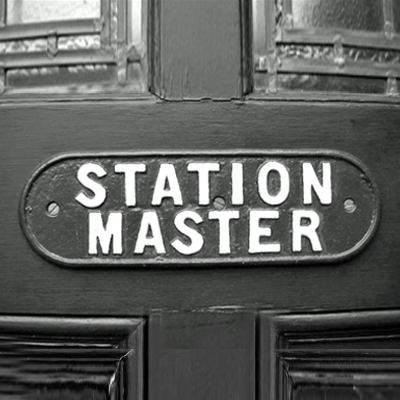
A1 Class steam locomotive no. 60037 Hyperion, with the 'Flying Scotsman' service at Newcastle-upon-Tyne station, c 1952.
Photograph by Bishop Eric Treacy


Englishman in Old York retweeted
A remarkable piece of First World War film showing wounded soldiers and nurses at an army hospital in Wandsworth during the rehabilitation process.
Rather than lying in their wards, the recovering men are outside taking part in sports and games. Recreation and exercise became an important part of rehabilitation, helping wounded servicemen rebuild their strength and morale, before discharge, or if able a return to military service
Wandsworth was a major centre for treating wounded soldiers during the war. Wandsworth Council records that more than 62,000 patients were treated during the war.
#WW1 #Wandsworth #London #MilitaryHistory